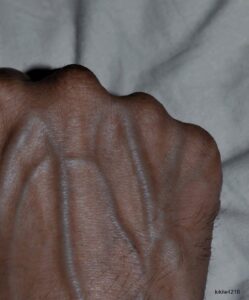
At some point, most people notice them—veins becoming more visible across the arms, hands, shoulders, or even legs. For some, it happens gradually with exercise. For others, it appears suddenly, sparking curiosity or concern. In fitness culture, visible veins—often called “vascularity”—are widely associated with being lean, athletic, and in peak physical condition. But the truth is more nuanced. While visible veins can indeed reflect certain aspects of fitness, they are not a standalone indicator of health. Instead, they represent a combination of factors working together beneath the surface.
Understanding why veins become visible requires looking beyond aesthetics and into how the body stores fat, builds muscle, regulates blood flow, and responds to internal and external changes. What you see on the surface is only the final expression of deeper biological processes.
One of the most influential factors is body fat percentage. Beneath the skin lies a layer of subcutaneous fat that acts as insulation and energy storage. When this layer is thicker, veins are less visible because they are literally covered. As body fat decreases, this layer becomes thinner, making the veins underneath easier to see. This is why individuals with lower body fat—such as athletes, runners, or people who consistently train—often display more prominent veins, especially in areas like the forearms or biceps.
However, low body fat alone is not the whole story. Muscle development also plays a major role. As muscles grow through resistance training, they push outward against the skin. This expansion brings veins closer to the surface and can make them appear more pronounced. In combination with low body fat, this creates the classic “vascular” look often associated with strength training and bodybuilding.
Blood flow and circulation add another layer to this effect. During exercise, the body increases blood flow to working muscles, causing veins to expand temporarily—a process known as vasodilation. This is why veins often appear more visible during or immediately after a workout. The familiar “pump” feeling in the gym is partly due to this increased blood flow filling the muscles and surrounding vessels.
Hydration status also has a surprisingly strong influence. When the body is well-hydrated, tissues hold more fluid, which can slightly soften the appearance of veins. In contrast, dehydration reduces fluid volume in tissues, making veins stand out more sharply. This is one reason why athletes preparing for competitions sometimes appear extremely vascular—they may be temporarily manipulating water balance to enhance definition. However, this effect is short-lived and not necessarily healthy if taken to extremes.
Temperature is another factor people often overlook. In warm environments, blood vessels expand to help release heat, making veins more visible. In cold conditions, vessels constrict to conserve heat, reducing their appearance. This is why veins can seem to “disappear” in colder weather and become more prominent in heat or after a hot shower.
Genetics, however, set the baseline for everything. Some people naturally have thinner skin, more superficial veins, or vascular structures that sit closer to the surface. These individuals may display visible veins even without particularly low body fat or intense training. Others may need significant fat loss and muscle development before seeing similar results. This genetic variation explains why two people with similar fitness levels can look very different in terms of vascularity.
Age also plays a role. As people get older, skin gradually loses collagen and elasticity, becoming thinner and more transparent. At the same time, subcutaneous fat may decrease in certain areas. Together, these changes make veins more noticeable, even in individuals who are not especially lean or muscular. In this context, visible veins are less about fitness and more about natural aging processes.
Hormones contribute as well. Higher levels of testosterone, for example, are associated with increased muscle mass and lower body fat, both of which enhance vascularity. Hormonal fluctuations in women—such as during the menstrual cycle, pregnancy, or menopause—can also influence fluid retention and blood flow, temporarily affecting how veins appear.
While visible veins are often interpreted as a sign of good fitness, they are not a guarantee of overall health. It is entirely possible to have prominent veins and still lack cardiovascular fitness, balanced nutrition, or proper recovery. Conversely, someone can be very healthy and fit without having highly visible veins, simply due to genetics or body composition.
In some cases, increased vein visibility can signal something worth paying attention to. Sudden or unusual changes—especially if accompanied by pain, swelling, or discoloration—may indicate conditions such as Varicose veins or Deep vein thrombosis. These are not related to fitness aesthetics but to circulation problems that may require medical evaluation.
Varicose veins typically appear as enlarged, twisted vessels, often in the legs, caused by weakened valves that allow blood to pool. They can lead to discomfort, heaviness, or swelling. Deep vein thrombosis, on the other hand, is more serious and involves a blood clot forming in a deep vein, usually in the leg. While visible surface veins alone do not confirm these conditions, they can sometimes accompany other symptoms that should not be ignored.
Dehydration is another non-obvious cause of increased vascularity. When fluid levels drop, veins may appear more prominent, but this is not a sign of improved fitness—it is a temporary physiological response. Similarly, certain medical conditions that affect metabolism or circulation can subtly influence how veins look.
Lifestyle factors also play a role in long-term vascular health. Regular exercise improves circulation and strengthens blood vessels, supporting healthy vein function. On the other hand, smoking can damage blood vessel walls, while excessive alcohol use can disrupt normal circulation patterns. Diet matters as well—nutrients that support skin health, such as protein and collagen, can indirectly affect how veins appear by maintaining skin thickness and elasticity.
In fitness culture, visible veins are often treated as a goal. Social media, gym environments, and physique competitions tend to reinforce the idea that more vascularity equals better results. While this can be motivating, it can also lead to unrealistic expectations. Some individuals may chase extreme leanness or use unhealthy methods—like severe calorie restriction or dehydration—to achieve a certain look. These approaches can harm hormonal balance, energy levels, and overall well-being.
A more sustainable perspective is to view visible veins as a byproduct rather than a primary objective. When someone trains consistently, eats well, stays hydrated, and maintains a healthy body composition, vascularity may naturally increase. But it should not come at the expense of health or balance.
From a practical standpoint, the most reliable way to support healthy vascularity is through steady, evidence-based habits. Strength training helps build muscle, which enhances the structural visibility of veins. Cardiovascular exercise improves circulation and vessel function. A balanced diet supports both fat loss and overall health, while proper hydration ensures that changes in appearance reflect real progress rather than temporary fluctuations.
It is also important to track progress using multiple indicators—not just visual cues. Energy levels, strength gains, endurance, sleep quality, and overall well-being provide a more complete picture of health than appearance alone. Visible veins can be part of that picture, but they are only one piece.
Psychologically, understanding the factors behind vascularity can reduce unnecessary comparison. Not everyone will develop highly visible veins, and that is not a failure. It simply reflects differences in genetics, skin structure, and body composition. Recognizing this helps shift the focus from appearance to performance and health.
Ultimately, visible veins tell a story—but not a simple one. They reflect a combination of body fat levels, muscle development, blood flow, hydration, genetics, and environmental influences. In many cases, they are a natural result of consistent training and a lean physique. In others, they may be influenced by temporary conditions or underlying factors that deserve attention.
The key is interpretation. Instead of seeing visible veins as a definitive sign of fitness—or as something to chase at all costs—it is more useful to view them as one signal among many. When combined with strength, endurance, good nutrition, and overall well-being, they can reflect positive adaptation. When they appear suddenly or alongside unusual symptoms, they can serve as a prompt to look deeper.
In the end, the goal is not simply to look a certain way, but to build a body that functions well, feels strong, and supports long-term health. Visible veins may come and go depending on circumstances, but true fitness is defined by consistency, balance, and resilience—qualities that extend far beyond what can be seen on the surface.