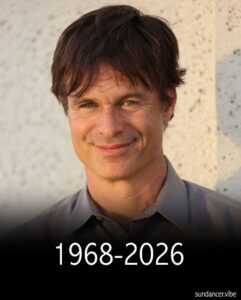
The passing of Patrick Muldoon at the age of 57 marks the end of a steady and enduring career in television and film, one that spanned more than three decades and touched multiple generations of viewers. Best known for his work in daytime and prime-time dramas as well as a memorable role in a cult science fiction film, Muldoon carved out a space in the entertainment industry defined less by fleeting stardom and more by consistency, adaptability, and professional dedication. His death, reportedly the result of a sudden heart attack at his Beverly Hills home, has prompted both shock and reflection among fans and colleagues who followed his work over the years.
Born on September 27, 1968, in San Pedro, California, Muldoon grew up in a working-class environment that shaped his grounded approach to life and career. From an early age, he showed an interest in performing, a passion that would eventually guide his academic and professional decisions. While attending college, he pursued acting opportunities and quickly demonstrated both the talent and determination necessary to succeed in a competitive industry. His early appearances on television, including a guest role on a popular sitcom in the late 1980s, served as an introduction to the medium and a stepping stone toward more substantial roles.
One of his first recurring roles came on a well-known teen comedy series, where he played a charming and confident character who appeared in multiple episodes. Though not yet a household name, Muldoon’s screen presence was already evident. He brought a natural ease to his performances, balancing charisma with approachability. These qualities would become defining traits throughout his career, allowing him to move fluidly between different genres and formats.
His major breakthrough arrived in 1992 when he was cast as Austin Reed on a long-running daytime soap opera. The role proved to be transformative, elevating Muldoon into the spotlight and establishing him as a recognizable face among television audiences. Austin Reed was written as a complex character—handsome and kind-hearted, yet often entangled in emotional and interpersonal conflicts that drove the show’s narrative. Muldoon embraced the role with sincerity, contributing to storylines that ranged from romantic entanglements to family drama and personal redemption.
During his initial run on the show from 1992 to 1995, Muldoon became a central figure in several major plot arcs. His character’s relationships, particularly those involving love triangles and shifting alliances, captured the attention of viewers and helped sustain the show’s popularity during that period. Soap operas rely heavily on the ability of actors to convey emotion across long, evolving storylines, and Muldoon demonstrated a strong command of this format. His portrayal resonated with fans, many of whom developed a lasting connection to the character.
After departing the show in the mid-1990s, Muldoon transitioned into prime-time television, taking on a markedly different role in a popular evening drama series. Here, he played Richard Hart, a character defined by ambition, manipulation, and moral ambiguity. This role allowed Muldoon to explore a darker, more complex persona, showcasing his range as an actor. The shift from daytime hero to prime-time antagonist highlighted his versatility and willingness to take creative risks.
Richard Hart’s storylines were filled with corporate intrigue, power struggles, and emotionally charged confrontations. Muldoon’s performance added a sharp edge to the ensemble cast, contributing to the show’s reputation for dramatic intensity. By successfully inhabiting a character so different from Austin Reed, he demonstrated that he was not limited to a single type of role. Instead, he proved capable of adapting to the demands of different narratives and audiences.
In addition to his television work, Muldoon made a notable impact in film. His role as Zander Barcalow in a 1997 science fiction action movie introduced him to a new audience and added another dimension to his career. The film, which depicted a futuristic war between humans and alien creatures, combined action, satire, and visual spectacle. Though initially met with mixed reactions, it later gained recognition as a cult classic, with fans appreciating its layered commentary and distinctive style.
Muldoon’s character in the film was a confident and competitive soldier, embodying both the bravado and vulnerability of a young man caught in extraordinary circumstances. His performance contributed to the film’s dynamic ensemble, and over time, it became one of the roles most frequently associated with his name. For Muldoon, the project represented an opportunity to engage with a genre he had long admired. He often spoke about his appreciation for science fiction and the excitement of participating in a production that aligned with his personal interests.
As the years progressed, Muldoon continued to build a diverse portfolio of work. He appeared in a range of television series and films, taking on roles that varied in scope and genre. From crime dramas to action thrillers and independent productions, he remained active in an industry known for its unpredictability. This consistency was a testament to both his work ethic and his ability to adapt to changing trends within entertainment.
Beyond acting, Muldoon also explored opportunities behind the camera. He became involved in producing, founding a company through which he developed and supported various film and television projects. This transition reflected a broader interest in storytelling and creative collaboration. By taking on a producing role, he gained greater control over the types of projects he pursued, as well as the chance to contribute to the industry in new ways.
At the time of his passing, Muldoon was reportedly involved in multiple projects at different stages of development. His continued activity underscores a career defined not by a single peak, but by sustained engagement. Even after decades in the industry, he remained committed to his craft, seeking out new opportunities and challenges.
Those who worked with Muldoon frequently described him as professional, reliable, and easy to collaborate with. In an environment often characterized by high pressure and strong personalities, these qualities set him apart. He was known for arriving prepared, respecting his colleagues, and maintaining a positive presence on set. Such attributes, while less visible to the public, are essential to long-term success in the entertainment world.
Muldoon’s personal life, in contrast to his professional achievements, remained relatively private. He did not cultivate a high-profile celebrity persona, choosing instead to focus on his work and personal relationships. He is survived by his longtime partner, Miriam Rothbart, as well as his parents and sister. The circumstances of his passing—sudden and unexpected—have added a layer of poignancy to the tributes that have followed.
In the days since his death, fans have revisited his performances, sharing memories and reflections across various platforms. For many, his roles were more than just entertainment; they were part of daily routines and formative experiences. Soap operas, in particular, have a unique ability to create lasting connections between characters and audiences. Muldoon’s portrayal of Austin Reed exemplified this phenomenon, as viewers followed the character’s journey over multiple years and storylines.
Similarly, his work in prime-time television and film introduced him to audiences who may not have been familiar with his earlier roles. This cross-generational appeal contributed to a broad and diverse fan base. While he may not have achieved the level of global superstardom associated with some of his contemporaries, his impact was nonetheless significant. He built a career that resonated with viewers in different contexts and at different times.
The entertainment industry, like many others, is often focused on novelty and rapid change. Careers can rise and fall quickly, and longevity is not guaranteed. In this context, Muldoon’s sustained presence is noteworthy. He navigated shifts in the industry, from the dominance of network television to the rise of independent film and evolving audience preferences. Through it all, he remained active and engaged, adapting to new opportunities while maintaining the core qualities that defined his work.
His passing also serves as a reminder of the unpredictability of life. Despite remaining professionally active and seemingly in good health, he was taken suddenly, leaving behind unfinished projects and unrealized plans. This reality has prompted reflection not only on his career, but also on the broader nature of health and mortality.
In remembering Patrick Muldoon, it is important to consider the full scope of his contributions. He was an actor who moved between genres and formats with ease, a professional who earned the respect of his peers, and a creative individual who sought to expand his role within the industry. His legacy is not defined by a single performance, but by a body of work that reflects dedication, versatility, and resilience.
As fans and colleagues continue to process the news of his passing, the focus remains on the work he leaves behind. His performances continue to be available through reruns and streaming platforms, allowing new audiences to discover his work and longtime fans to revisit familiar moments. In this way, his presence endures, not only in memory but in the ongoing life of the stories he helped bring to the screen.
Ultimately, Patrick Muldoon’s career stands as an example of what it means to build a lasting presence in a challenging and ever-changing industry. He may not have sought the spotlight in the way some actors do, but he earned recognition through consistency, adaptability, and a genuine commitment to his craft. His passing at 57 is a loss to the entertainment community, but his work remains a testament to a career well-lived and a legacy that will continue to resonate with audiences for years to come.