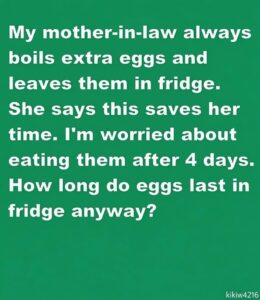
Hard-boiled eggs are one of the simplest, most practical foods you can keep in your fridge. They’re quick to prepare, packed with protein, and easy to grab when you need a fast meal or snack. It’s no surprise that many households boil eggs in batches to save time during busy weeks.
But this convenience often comes with a common question—especially in family settings:
“Are these still safe to eat after a few days?”
If you’ve ever opened the fridge, spotted a container of boiled eggs from earlier in the week, and hesitated, you’re not alone. Let’s break it down clearly so you can feel confident about what’s safe—and what’s not.
How Long Do Hard-Boiled Eggs Last?
The general guideline from food safety experts is simple:
- In the shell: Up to 7 days in the refrigerator
- Peeled: About 5–7 days, if stored properly
This assumes your fridge is kept at or below 4°C (40°F) and the eggs were handled correctly after cooking.
If your eggs are around 4 days old, they are still well within the safe window in most cases.
Why Storage Matters More Than Time Alone
Not all eggs age the same way. How you store them plays a huge role in how long they stay safe and fresh.
Here’s what makes the biggest difference:
1. The Shell Is Natural Protection
Keeping eggs unpeeled helps preserve freshness. The shell acts as a barrier against bacteria and prevents the egg from absorbing odors.
2. Fridge Placement Is Important
Store eggs in the main compartment, not the door. The door experiences temperature fluctuations every time it’s opened, which can speed up spoilage.
3. Cooling Them Quickly Helps
After boiling, placing eggs in an ice bath stops the cooking process and helps maintain texture and quality.
4. Clean Storage Prevents Contamination
Always use clean containers. Cross-contamination from other foods can shorten shelf life.
Are Eggs Still Safe After 4 Days?
In most situations—yes.
If the eggs:
- Were boiled properly
- Cooled soon after cooking
- Stored in the fridge consistently
- Kept in a clean container
…then 4-day-old hard-boiled eggs are perfectly safe to eat.
The hesitation many people feel comes from uncertainty, not actual risk. When handled correctly, these eggs remain both safe and nutritious within that timeframe.
How to Tell If a Hard-Boiled Egg Has Gone Bad
Even with guidelines, it’s always smart to check before eating. Trust your senses.
Watch for these warning signs:
- Strong sulfur or rotten smell when peeled
- Slimy or sticky texture on the egg white
- Unusual discoloration (beyond a harmless green-gray ring around the yolk)
- Strange or off taste
If anything feels off—don’t risk it. Throw it away.
Common Misconception: The Green Ring
You might notice a greenish-gray ring around the yolk.
This is not spoilage.
It’s a harmless reaction between sulfur and iron during overcooking. While it may look unappealing, it doesn’t mean the egg is unsafe.
Best Storage Tips to Keep Eggs Fresh Longer
To get the most out of your boiled eggs, follow these simple practices:
- Store eggs unpeeled whenever possible
- Use an airtight container for peeled eggs
- Keep them away from strong-smelling foods
- Label containers with the boiling date
- Avoid stacking heavy items on top (prevents cracking)
For peeled eggs:
- You can store them in a sealed container
- Or submerge them in water (change water daily)
What About Freezing?
Freezing whole hard-boiled eggs isn’t ideal—the whites become rubbery.
However:
- Yolks can be frozen and used later in recipes
- Older eggs can be repurposed into dishes like:
- Egg salad
- Deviled eggs
- Casseroles
This helps reduce waste while keeping meals practical.
Why People Worry (and Why It’s Understandable)
In many homes, especially where food is prepared in advance, it’s common for someone—like a parent or in-law—to cook extra and store it for later.
The concern usually isn’t about the eggs themselves, but about uncertainty:
- How long have they been there?
- Were they stored properly?
- Is it still safe?
These are valid questions. But with basic knowledge and a few habits—like labeling and proper storage—you can remove that doubt entirely.
A Quick Safety Checklist
Before eating a stored hard-boiled egg, ask:
- Has it been less than 7 days?
- Was it refrigerated the whole time?
- Does it smell normal?
- Does the texture feel firm, not slimy?
If the answer is yes across the board—you’re good to go.
The Bottom Line
Hard-boiled eggs are not nearly as fragile as people assume.
When handled properly:
- They last up to a week
- They remain safe after several days
- And they retain their nutritional value
That container of eggs sitting in your fridge for four days?
It’s probably just fine.
Final Thought
Sometimes, food safety concerns come from unfamiliarity rather than actual risk. A small amount of knowledge can turn hesitation into confidence.