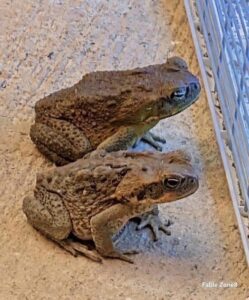
Encountering a toad in your home or yard can be a surprising experience. These small, quiet amphibians tend to appear suddenly, often without any clear indication of how they arrived. One moment your garden or doorstep seems ordinary, and the next, a toad is sitting motionless in a shaded corner or slowly making its way across the ground. For many people, this unexpected visit sparks curiosity or even mild concern. Questions naturally arise: Why is it here? Is it a sign of something unusual? Should it be removed?
In most cases, the explanation is far simpler than it might initially seem. The presence of a toad is typically the result of natural behavior rather than anything symbolic or mysterious. Toads are driven by basic survival needs, and their movements are guided by the search for suitable conditions. When they appear in a particular space, it is almost always because that environment provides what they need to survive.
To understand why a toad might show up in your yard or home, it helps to consider how these animals live. Toads require moisture to keep their skin hydrated, as their skin plays a crucial role in respiration and water absorption. Unlike many other animals, they cannot rely solely on internal systems to regulate hydration. This makes them particularly sensitive to dry conditions. As a result, they are naturally drawn to areas that retain moisture—places such as damp soil, shaded garden beds, or spots near water sources.
Shelter is another important factor. Toads spend much of their time hiding to avoid predators and harsh environmental conditions. During the day, they seek out cool, dark spaces where they can remain protected. This often leads them to areas around human structures, including under porches, beneath outdoor furniture, inside garages, or near the foundations of buildings. These locations provide the kind of stable, sheltered environment that toads prefer.
Food availability also plays a significant role. Toads primarily feed on insects and other small invertebrates. Spaces that attract insects—such as gardens, outdoor lighting, or areas with organic debris—can become ideal feeding grounds. If your yard supports a healthy insect population, it may naturally attract toads looking for an easy and consistent food source.
When all these elements come together—moisture, shelter, and food—a space becomes highly appealing to a toad. From its perspective, your yard is not an unusual destination; it is simply a suitable habitat. Its presence is less about intrusion and more about opportunity. It has found a place that meets its needs, even if only temporarily.
Toads are primarily nocturnal, meaning they are most active during the evening and nighttime hours. During the day, they tend to remain hidden, conserving moisture and avoiding exposure to heat. This is why many people only notice them after sunset or during early morning hours. Their activity often increases after rainfall or during periods of high humidity, when the environment becomes more favorable for movement and feeding.
If a toad is found inside a home, it is usually there by accident. It may have entered through an open door, slipped through a small gap, or followed insects attracted to indoor lighting. Once inside, it is likely disoriented and simply looking for a way back out. Despite their somewhat rough appearance, toads are harmless to humans. They do not chase, attack, or behave aggressively. Their instinct is to avoid interaction, often remaining still or moving slowly away when approached.
Understanding this behavior can help shift the initial reaction from concern to calm observation. Rather than viewing the toad as a problem, it becomes easier to see it as a temporary visitor that has wandered into the wrong place. Gently guiding it back outside is usually all that is needed.
Beyond their neutral presence, toads can actually provide meaningful benefits to the environment around your home. One of their most valuable roles is natural pest control. Toads consume a wide variety of insects, including mosquitoes, flies, beetles, and other small creatures that can become nuisances or even pose health risks. A single toad can eat dozens of insects in one night, quietly reducing the population of pests without the need for chemical interventions.
For those who maintain gardens, this can be particularly advantageous. Instead of relying on pesticides—which can harm beneficial insects, contaminate soil, and disrupt ecosystems—having toads nearby supports a more balanced and sustainable approach. They contribute to a natural cycle in which predators and prey exist in equilibrium, helping maintain the health of the environment.
In this sense, a toad is not merely a passive presence but an active participant in the ecosystem. Its role may go unnoticed, but its impact is real. By feeding on insects, it helps protect plants, reduce irritation from pests, and support a more comfortable outdoor space.
Another important aspect of toads is their sensitivity to environmental conditions. Amphibians, including toads, are often considered indicators of ecological health. Their skin is highly permeable, meaning it can absorb substances directly from the environment. This makes them particularly vulnerable to pollution, chemicals, and habitat disruption.
Because of this sensitivity, toads tend to thrive in areas where the environment is relatively clean and balanced. If a toad is living in your yard, it can be an encouraging sign that the local ecosystem is in good condition. It suggests that the soil, water, and surrounding habitat are supportive of life, free from excessive toxins or disturbances.
This perspective adds another layer of meaning to their presence. Rather than being an inconvenience, a toad can be seen as a quiet indicator that your environment is functioning well. It reflects a level of harmony that benefits not only wildlife but also the people who live there.
While science provides clear explanations for the behavior and presence of toads, cultural interpretations offer a different kind of insight. Across various traditions and belief systems, toads have been associated with symbolic meanings that go beyond their biological role. These interpretations are not based on empirical evidence, but they reflect the ways in which humans have historically connected with the natural world.
One of the most common symbolic themes associated with toads is transformation. This idea is closely linked to their life cycle. Toads begin their lives as tadpoles in water, gradually undergoing a process of metamorphosis that allows them to live on land. This transformation is both dramatic and essential, representing a shift from one form of existence to another.
Because of this, toads are often seen as symbols of change, growth, and adaptability. Encountering a toad can be interpreted as a reminder that transformation is a natural part of life. It may suggest a period of transition, encouraging openness to new experiences or perspectives.
In some cultural traditions, toads are also associated with luck and prosperity. Certain practices view them as symbols of abundance or positive energy. In these contexts, their presence is considered a good sign, representing opportunities or favorable outcomes. Decorative representations of toads are sometimes used intentionally in homes to attract these qualities.
Other interpretations focus on balance and renewal. Toads, as creatures that live both in water and on land, can be seen as bridging different elements. This duality lends itself to symbolic meanings related to harmony, adaptability, and the integration of different aspects of life. Their presence may be viewed as a gentle reminder to maintain balance or to address areas that feel stagnant.
It is important to approach these interpretations with a balanced perspective. While they can be meaningful on a personal or cultural level, they are not explanations for why a toad appears in a specific place. The primary reasons remain rooted in natural behavior and environmental conditions. However, these symbolic ideas can add a layer of reflection, allowing people to find personal significance in an otherwise ordinary encounter.
Ultimately, the appearance of a toad in your home or yard is a simple event with multiple dimensions. From a practical standpoint, it indicates that the environment provides moisture, shelter, and food. From an ecological perspective, it suggests a level of environmental health and balance. And from a cultural viewpoint, it can be interpreted as a symbol of transformation, luck, or harmony.
Rather than reacting with fear or discomfort, it can be helpful to take a moment to observe and understand. The toad is not there to cause harm. It is simply following its instincts, navigating the world in search of suitable conditions. Its presence is a small reminder of the natural processes that continue around us, often unnoticed.
In a broader sense, encounters like this highlight the connection between human spaces and the natural world. Even in developed areas, wildlife finds ways to coexist, adapting to the environments we create. Recognizing this connection can foster a greater sense of awareness and appreciation.
The next time you come across a toad, whether in your garden or near your home, consider what it represents—not as a sign of something unusual, but as a reflection of the environment itself. It is a living indicator of moisture, shelter, and ecological balance. It is a participant in the cycle of life that continues quietly alongside human activity.