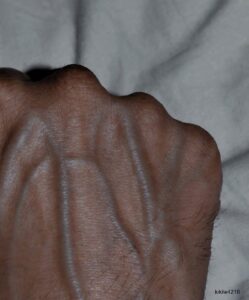
🧬 The Main Reason: Body Fat and Muscle
The most common reason veins become visible is lower body fat.
- Beneath your skin is a layer of fat (subcutaneous fat)
- When that layer is thinner, veins sit closer to the surface
- This makes them easier to see
At the same time:
- Muscle growth pushes veins outward
- More muscle = more pressure near the surface
- Result = more pronounced veins
This is why people who lift weights regularly often notice increased vascularity over time.
🏋️♂️ What “Vascularity” Means in Fitness
In gyms and bodybuilding circles, visible veins are often associated with:
- Low body fat
- Good muscle definition
- Consistent training
For example:
- Men often see more veins around 8–12% body fat
- Women may see them around 15–20%, depending on genetics
But this isn’t a strict rule—it varies a lot between individuals.
🧬 Genetics: The Factor You Can’t Control
Some people naturally have more visible veins—even without extreme fitness levels.
Genetics influence:
- Skin thickness
- Vein placement (how close they are to the surface)
- Natural vascular structure
So two people with the same body fat can look completely different.
🧴 Skin Thickness and Tone
Your skin plays a bigger role than most people realize.
- Thinner skin → veins show more easily
- Thicker skin → veins appear less visible
- Skin tone and pigmentation also affect contrast
This is why vascularity can vary widely across individuals and ethnic backgrounds.
🔥 Temporary Factors That Make Veins Pop
Sometimes veins become more visible for short periods due to normal body responses:
Heat
- Causes vasodilation (blood vessels expand)
- Makes veins more prominent
Exercise
- Increased blood flow
- “Pump” effect pushes veins outward
Dehydration
- Less fluid under the skin
- Veins appear sharper (but this isn’t healthy long-term)
Sodium & Carbs
- Can influence water retention
- Affect how “flat” or “full” you look
💧 Hydration: A Double-Edged Sword
Hydration levels can change how veins look:
- Well-hydrated: skin looks fuller, veins less sharp
- Dehydrated: veins look more pronounced
That “extra vascular” look from dehydration is often misleading—it’s not a sign of better fitness.
👴 Age and Visible Veins
As you get older:
- Skin loses collagen
- Becomes thinner and less elastic
- Fat distribution changes
This naturally makes veins more visible—even without changes in fitness.
⚖️ Do Visible Veins Mean You’re Healthy?
Not necessarily.
They can reflect:
- Low body fat
- Good muscle development
- Active lifestyle
But they don’t guarantee:
- Good cardiovascular health
- Hormonal balance
- Proper nutrition
You can be very lean and still have underlying health issues—or have minimal vascularity and be perfectly healthy.
⚠️ When Visible Veins Might Signal a Problem
Most visible veins are harmless. But there are situations where you should pay attention.
1. Varicose Veins
- Thick, twisted, bulging veins (often in legs)
- Caused by weakened valves
- May come with pain, swelling, or heaviness
2. Sudden Changes
- Veins becoming very prominent quickly
- Especially in one area
3. Pain or Swelling
- Could indicate circulation issues
- Needs medical evaluation
4. Possible Conditions
In rare cases, visible veins may be linked to:
- Circulatory disorders
- Blood clots (like deep vein thrombosis)
- Chronic venous insufficiency
👉 If veins are painful, swollen, or changing rapidly, it’s worth seeing a doctor.
🏃♂️ Athletes and Extreme Vascularity
High-level athletes (bodybuilders, fighters, endurance athletes) often show extreme vascularity due to:
- Very low body fat
- High muscle mass
- Intense training
But extreme vascularity—especially competition-level—often involves:
- Temporary dehydration
- Carb manipulation
- Short-term strategies
These are not meant to be maintained year-round.
🧠 The Psychological Side
Visible veins have become a kind of “status symbol” in fitness culture.
They’re often associated with:
- Discipline
- Strength
- Aesthetic appeal
But this can lead to:
- Unrealistic expectations
- Comparison with others
- Chasing appearance over health
Not everyone will have highly visible veins—and that’s completely normal.
🥗 How to Achieve Healthy, Natural Vascularity
If your goal is to increase vascularity in a healthy way:
Focus on:
- Gradual fat loss (not crash dieting)
- Strength training (3–5x per week)
- Balanced nutrition (adequate protein)
- Regular cardio
Avoid:
- Extreme dehydration
- Overtraining
- Unsafe shortcuts (like steroids or diuretics)
🧪 Supplements and “Pump” Effects
Some supplements can temporarily increase vascularity by improving blood flow:
- Citrulline
- Arginine
- Beetroot extract
They enhance nitric oxide, which widens blood vessels—but effects are temporary and mild compared to overall fitness.
⚖️ The Balanced Perspective
Visible veins are best understood as:
👉 A byproduct, not a goal
They reflect:
- Body composition
- Genetics
- Lifestyle habits
But they are just one piece of the puzzle.
✅ Final Takeaway
If you have visible veins, it likely means:
- You have relatively low body fat or
- You have favorable genetics or
- You’re experiencing temporary factors like heat or exercise
Sometimes, it’s a combination of all three.
But the most important point is this:
👉 Visible veins don’t define your health—your habits do.
Focus on:
- Strength
- Energy levels
- Consistency
- Overall well-being