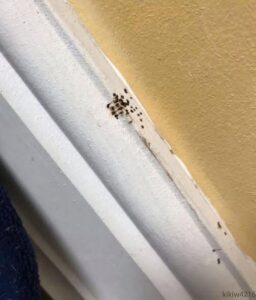
At first glance, tiny black dots in your kitchen rarely raise concern. Most people assume they’re nothing more than crumbs, pepper, coffee grounds, or dust that somehow escaped routine cleaning. It’s easy to wipe them away and move on without a second thought.
But in many cases, those specks are not random at all.
They can be insect droppings—commonly referred to as “frass”—and they often represent one of the earliest visible signs that pests are already active in your home. What makes this particularly important is timing: by the moment you notice these dots, the insects responsible may already be living, feeding, and reproducing nearby.
Kitchens, in particular, are highly vulnerable environments. They provide everything pests need to survive—food, warmth, moisture, and shelter. And because much of that activity happens out of sight (inside cabinets, behind appliances, or within food packaging), the problem can grow quietly before becoming obvious.
Recognizing these early warning signs—and responding properly—can make the difference between a minor inconvenience and a full-scale infestation.
1. What Are Those Black Dots, Really?
The small black specks you’re seeing are often waste left behind by insects as they move through your kitchen. While the idea may be unpleasant, understanding what you’re looking at is the first step toward solving the problem.
These droppings typically appear:
- Dark brown or black
- Very small, often resembling ground pepper
- Grainy or slightly irregular in shape
- Found in clusters or repeated patterns
Unlike dust or food debris, they don’t just appear once. A key sign is persistence—if you clean them and they return within a day or two, it strongly suggests an active source.
Different pests leave slightly different droppings:
- Cockroaches: small black specks or smear-like marks
- Pantry beetles: fine, grain-like particles near food sources
- Weevils: often found inside grains or flour
- Ants: may leave debris piles near nesting areas
The location of the dots is just as important as their appearance.
2. Where You’re Most Likely to Find Them
Pests tend to travel along edges and hide in protected areas, so their droppings often show up in predictable places:
- Along baseboards and wall edges
- Inside cabinets and pantry shelves
- Near food containers or storage areas
- Behind or underneath appliances
- Around door frames or window sills
These areas provide both concealment and easy access to food. If you start noticing dots in corners or tight spaces, it’s a sign to investigate further—not just clean the surface.
3. Why Kitchens Attract Pests So Easily
Your kitchen is, from a pest’s perspective, an ideal environment.
It offers:
- Food sources: crumbs, spills, open packages
- Moisture: sinks, pipes, condensation
- Warmth: especially behind appliances
- Shelter: cracks, gaps, and clutter
Even small amounts of food residue can sustain pests. A few crumbs behind a toaster or a slightly open bag of flour is enough to attract and support a population.
And once pests find a reliable food source, they don’t just visit—they stay.
4. How Infestations Quietly Grow
One of the most misleading aspects of pest problems is how suddenly they seem to appear.
In reality, infestations build gradually.
Many insects lay eggs in hidden places:
- Inside dry foods like flour, rice, or cereal
- In cracks and seams of cabinets
- Behind walls or under appliances
When those eggs hatch, larvae begin feeding immediately. As they grow, they produce more droppings and eventually mature into adults, continuing the cycle.
Because this process happens out of sight, you may not notice anything until visible signs—like black dots—start appearing regularly.
By that point, the population may already be well established.
5. Health Risks You Shouldn’t Overlook
It’s easy to think of this as just a cleanliness issue, but there are real health considerations involved.
Insect droppings can:
- Contaminate food and surfaces
- Carry bacteria from unsanitary areas
- Trigger allergic reactions in sensitive individuals
- Contribute to poor indoor hygiene
Certain pests, especially cockroaches, are known to spread harmful bacteria by moving between waste sources and food preparation areas.
Even if the risk in a single instance is low, ongoing exposure increases the chances of contamination—particularly in kitchens where food is handled daily.
6. The Importance of Acting Early
The earlier you respond, the easier the problem is to manage.
At an early stage, pests are often confined to a small area. But if ignored, they spread—both in number and location—making removal more difficult and time-consuming.
That’s why those tiny black dots matter. They are not just debris—they are signals.
7. What You Should Do Immediately
If you suspect the dots are insect-related, start with a structured response:
1. Clean thoroughly
Wipe all surfaces, vacuum corners, and remove visible debris.
2. Inspect food items
Check dry goods carefully—especially flour, rice, pasta, spices, and pet food.
3. Discard contaminated items
If anything shows signs of pests, it’s safer to throw it away.
4. Use airtight containers
Store all pantry items in sealed containers to prevent access.
5. Check hidden areas
Look behind appliances, inside cabinets, and along edges.
If the dots return after cleaning, that’s a strong indication the source is still active.
8. When to Take Stronger Action
If the problem persists, additional steps may be necessary:
- Use traps to identify and reduce pest populations
- Seal cracks and entry points
- Reduce moisture by fixing leaks
- Consider professional pest control if the infestation spreads
There’s no benefit in waiting too long—early intervention is always easier and more effective.
9. Prevention: The Long-Term Solution
Once the immediate issue is handled, prevention becomes the priority.
Simple habits can make a big difference:
- Clean surfaces regularly
- Sweep and vacuum floors frequently
- Avoid leaving food out overnight
- Take out trash consistently
- Rotate pantry items to avoid long-term storage
- Keep areas dry and well-ventilated
Sealing small gaps around cabinets, walls, and floors can also reduce entry points significantly.
10. A Balanced Perspective
Not every black speck is a sign of infestation. Sometimes it really is just dirt or food residue.
But the key difference is consistency.
If the dots:
- Reappear after cleaning
- Show up in the same areas
- Increase over time
Then it’s worth taking seriously.
Ignoring it doesn’t make it go away—it allows it to grow.
11. Final Thoughts
Tiny black dots in your kitchen may seem trivial, but they can carry important information about what’s happening behind the scenes.
They are often one of the first visible clues that pests are present—long before you actually see the insects themselves.
Responding early doesn’t just solve a small problem. It prevents a larger one.
By staying observant, maintaining good hygiene, and acting quickly when something seems off, you can protect your food, your home, and your overall living environment.
Because in situations like this, what looks small and harmless at first can quickly become something much more difficult to manage.
And the difference between those outcomes often comes down to one simple decision:
Pay attention—or ignore it.