It’s easy to assume that some foods will never surprise you. Few dishes feel as familiar and universally understood as pizza. Whether it’s ordered late at night, shared with friends, or eaten quietly at home, it carries a sense of predictability. You expect a golden crust, melted cheese, and a balanced combination of textures and flavors that rarely deviate from the norm.
So when something looks slightly off, even in a small way, it can disrupt that sense of certainty.
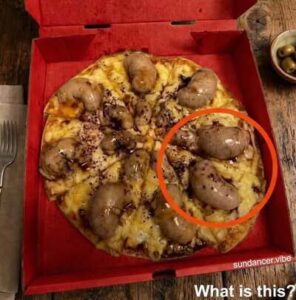
That’s exactly what happens the first time you open a pizza box and notice unusual bubbles scattered across the surface. Not the tiny, barely visible blisters you might ignore, but distinct, rounded domes rising through the melted cheese—almost as if the pizza itself is breathing.
At first glance, it’s enough to make you hesitate.
The Moment of Doubt
Food is deeply tied to visual expectation. Before taste or smell comes into play, we judge what we see. A familiar dish creates a mental template, and anything that deviates from that template—even slightly—can trigger uncertainty.
When a pizza arrives covered in bubbles, your brain immediately starts asking questions:
- Was it cooked correctly?
- Did something go wrong in the oven?
- Is it safe to eat?
This reaction is instinctive. Humans are wired to question irregularities in food as a protective measure. But in this case, that instinct can be misleading.
Because those bubbles? They’re not a mistake.
They’re science in action.
The Hidden Life of Dough
To understand what’s happening, you have to start with the foundation of any pizza: the dough.
Pizza dough is not a static substance. It’s alive—at least in the early stages—thanks to yeast. During fermentation, yeast consumes sugars and produces carbon dioxide gas. This gas becomes trapped within the dough’s gluten structure, forming tiny air pockets throughout.
This process is part of fermentation, and it’s essential for creating the light, airy texture that makes pizza enjoyable.
Even after the dough is shaped and stretched, those air pockets remain embedded within it. They may be invisible from the outside, but they’re there—waiting.
What Happens Inside the Oven
When the pizza enters a hot oven, everything changes rapidly.
The intense heat triggers multiple reactions at once:
- The trapped gases expand
- Moisture inside the dough turns into steam
- Proteins and starches begin to set
- The outer surface starts to crisp
This expansion of gases is an example of thermal expansion, a basic principle of physics. As temperature rises, gas molecules move faster and spread out, increasing pressure inside the dough.
At the same time, water molecules convert into steam, adding even more internal pressure.
Normally, this pressure distributes evenly, contributing to the rise of the crust. But pizza isn’t just dough—it’s topped with sauce and cheese.
And that’s where things get interesting.
The Role of Melted Cheese
Cheese might seem like a passive topping, but it plays a crucial role in bubble formation.
As cheese melts, it transforms into a soft, flexible layer that sits on top of the dough. Depending on the type used—most commonly mozzarella—it develops elasticity and stretch.
This melted layer can act like a seal.
Instead of allowing steam and gas to escape freely, the cheese traps pockets of air beneath it. As pressure builds, those pockets push upward, forming visible bubbles.
The size and number of bubbles depend on several factors:
- Moisture content of the cheese
- Thickness of the layer
- Distribution across the dough
In areas where cheese is thicker or more evenly spread, bubbles are more likely to form and grow.
Steam: The Invisible Force
While expanding gas plays a role, steam is often the driving force behind larger bubbles.
Water present in the dough and toppings converts into vapor under high heat. This process, known as evaporation, creates pressure that seeks an escape route.
If that escape route is blocked—by cheese, sauce, or uneven surface tension—the steam accumulates.
Eventually, it pushes upward.
That upward force creates the smooth, dome-like bubbles that can appear across the surface of a pizza.
Why Some Pizzas Bubble More Than Others
Not all pizzas develop noticeable bubbles, and the difference often comes down to technique and conditions.
Several variables influence bubble formation:
1. Dough Fermentation
Longer fermentation creates more gas pockets, increasing the likelihood of bubbling.
2. Oven Temperature
Hotter ovens—especially those used in traditional pizza-making—intensify expansion and steam production.
3. Dough Thickness
Thinner dough allows pressure to concentrate in smaller areas, leading to more pronounced bubbles.
4. Cheese Type and Placement
High-moisture cheeses and even distribution encourage steam trapping.
5. Baking Surface
Stone or steel surfaces transfer heat quickly, amplifying the effect.
In fact, in styles like Neapolitan pizza, bubbling and blistering are often seen as signs of proper technique rather than flaws.
Texture: More Than Just Appearance
Beyond visual curiosity, bubbles also affect texture.
When a bubble forms and sets during baking, it creates a slightly different structure in that area:
- The cheese becomes lighter and more airy
- The crust beneath may be thinner or more crisp
- The bite can feel less dense
These subtle variations add complexity to the eating experience.
Instead of uniform texture, you get contrast—something that enhances the overall enjoyment of the pizza.
The Psychology of “Imperfect” Food
So why do bubbles sometimes feel unsettling?
The answer lies in expectation.
Most people are used to standardized, visually consistent food—especially from large chains or mass production. Uniformity becomes associated with quality.
When something deviates from that uniformity, it can feel wrong, even when it’s not.
This reaction isn’t about the food itself. It’s about perception.
Once you understand the science behind the bubbles, that perception changes. What once looked like a flaw becomes a feature.
A Shift in Perspective
The most interesting part of this experience isn’t the bubbles themselves—it’s how quickly your interpretation of them can change.
At first:
- They seem unusual
- They create hesitation
- They raise questions
After understanding:
- They make sense
- They feel natural
- They become interesting
Nothing about the pizza changes. Only your understanding does.
And that shift transforms the experience entirely.
The Science Behind Everyday Cooking
Pizza is just one example of how science operates in everyday food.
Cooking is full of transformations driven by physics and chemistry:
- Proteins denature and firm up
- Sugars caramelize and deepen flavor
- Water moves, evaporates, and redistributes
- Air expands and contracts
Each of these processes contributes to the final result.
Most of the time, they remain invisible. But occasionally—like with pizza bubbles—they reveal themselves in ways you can see.
Why Imperfection Matters
There’s a tendency to associate perfection with consistency. But in cooking, variation often signals authenticity.
Handmade foods, high-heat cooking, and natural fermentation all introduce small differences:
- Slightly uneven crusts
- Variations in color
- Unexpected textures
These differences are not flaws. They’re evidence of process.
In fact, many culinary traditions value these variations because they reflect skill, technique, and natural interaction between ingredients.
From Hesitation to Appreciation
The next time you see bubbles on a pizza, the reaction will likely be different.
Instead of hesitation, there may be curiosity.
Instead of doubt, there may be appreciation.
You might even notice details you previously ignored:
- How the bubbles form in certain areas
- How they collapse when touched
- How they affect texture when you take a bite
What once seemed unfamiliar becomes part of the experience.
A Broader Lesson
This small moment with a pizza carries a larger idea.
We often rely on expectations to interpret the world. When something doesn’t match those expectations, we question it.
Sometimes that questioning is necessary.
But other times, it simply reflects a gap in understanding.
In those moments, a little curiosity can change everything.
Conclusion
Those strange bubbles on your pizza aren’t mistakes. They’re the visible result of heat, pressure, moisture, and structure working together in real time.
They represent:
- The activity of fermentation
- The effects of thermal expansion
- The movement of evaporation
In other words, they’re a small window into the science of cooking.
And once you understand that, they stop being strange.
They become fascinating.
So the next time you open a pizza box and see those glossy, dome-like bubbles staring back at you, don’t hesitate.
Take a bite.
You’re not just eating pizza—you’re experiencing a process that’s been quietly happening all along.