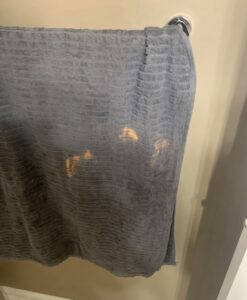
There are few household frustrations more confusing than pulling freshly washed towels out of the laundry only to discover strange orange, rust-colored, or yellowish stains spreading across the fabric. The towels smell clean, they have just been washed, and yet the discoloration remains stubbornly visible no matter how many times they go back into the machine.
For many people, the stains seem to appear out of nowhere.
One day the towels look perfectly fine.
Then suddenly faint orange patches begin showing up around the edges, across the middle, or in irregular spots that seem impossible to explain. Over time, the stains may darken, spread, or become so deeply embedded that the towels begin to look permanently damaged.
Naturally, this leads to frustration.
People often assume the towels are poor quality, the detergent is defective, or the washing machine is malfunctioning. But in most cases, these stubborn stains are not random at all. They are usually caused by a combination of very common household factors working quietly in the background over time.
Once you understand what is actually happening, the mystery becomes much easier to solve.
And more importantly, the problem usually becomes preventable.
One of the biggest hidden causes of orange towel stains is hard water—especially water containing iron or high mineral content.
Hard water refers to water rich in dissolved minerals such as calcium, magnesium, and sometimes iron. While these minerals are often harmless for drinking and daily use, they can gradually create buildup inside fabrics during repeated washing cycles.
Iron is particularly important here.
When tiny iron particles in water are exposed to oxygen, they oxidize and create a rust-like orange color. Towels, especially thick cotton towels, absorb large amounts of water during washing and drying. Over time, they begin trapping microscopic mineral particles inside the fibers.
At first, the buildup is invisible.
But after enough accumulation, the minerals eventually appear as faint yellow-orange discoloration that slowly becomes more noticeable with each wash.
Hot water can make this process even worse.
Higher temperatures speed up certain chemical reactions and help minerals bind more tightly to fabric fibers. Since towels are frequently washed in hot water for hygiene purposes, they often become the first laundry items to show staining.
Homes using well water commonly experience this issue, though municipal water systems in some areas also contain enough iron or mineral content to contribute to discoloration.
If multiple towels develop similar orange stains despite regular cleaning, hard water is often a major clue.
Another surprisingly common source of towel discoloration comes not from the water itself, but from skincare products and substances transferred from the body onto the fabric.
Modern skincare routines involve numerous ingredients that interact with fabrics in unexpected ways. Lotions, sunscreens, facial creams, body oils, serums, and acne treatments can all leave residues behind after use.
One ingredient in particular is especially notorious: benzoyl peroxide.
Commonly found in acne treatments, benzoyl peroxide can bleach fabrics unevenly and create orange, yellow, or faded-looking patches on towels, pillowcases, and clothing. Many people assume these marks are ordinary stains when they are actually chemical reactions occurring within the fibers themselves.
The problem becomes even more noticeable when product residue combines with hard water minerals.
Together, oils, minerals, and skincare ingredients create a sticky buildup inside the towel that traps discoloration more effectively over time.
Sweat and natural body oils also contribute to this process.
Human skin naturally releases oils and salts throughout the day. After showers, workouts, or skincare routines, towels absorb these substances repeatedly. If they are not rinsed away completely during washing, residue accumulates gradually inside the fabric.
This buildup acts almost like a magnet for minerals and detergent particles.
Eventually, what begins as invisible residue transforms into visible staining.
That is why face towels and frequently used bathroom towels often discolor faster than less-used linens.
Laundry habits themselves can also unintentionally worsen the issue.
One of the most common mistakes people make is using too much detergent.
It sounds counterintuitive because many assume more detergent equals cleaner laundry. In reality, excessive detergent often creates the opposite effect. Modern washing machines, especially high-efficiency models, require surprisingly small amounts of soap to clean properly.
When too much detergent is added, the machine may struggle to rinse everything out completely.
Leftover detergent residue clings to the towel fibers, trapping oils, minerals, and dirt particles inside the fabric. Over time, this creates ideal conditions for discoloration and stiffness.
Fabric softeners and dryer sheets can contribute as well.
Although they may initially make towels feel softer or smell pleasant, these products often coat the fibers with a waxy layer that reduces absorbency. Once coated, towels become more likely to trap mineral particles and body oils instead of releasing them during washing.
Ironically, products designed to improve towel softness can actually shorten towel freshness and performance over time.
Overloading the washing machine creates another problem.
When too many towels are packed tightly into one load, water and detergent cannot circulate effectively. Towels rub against one another without rinsing thoroughly, leaving residue behind after every cycle.
Even if the towels appear clean immediately after washing, microscopic buildup continues accumulating silently over weeks and months.
Drying habits matter too.
Excessively high dryer heat can essentially “bake” residue into the fabric fibers, making stains more difficult to remove later. Repeated exposure to extreme heat may also weaken fibers and dull towel colors over time.
Fortunately, once the causes become clear, preventing orange towel stains is usually very manageable.
Small routine changes often make a significant difference.
One of the simplest and most effective adjustments is reducing detergent use. Most households use far more soap than necessary. Using smaller amounts helps towels rinse more thoroughly and reduces residue buildup dramatically.
Adding white vinegar during the rinse cycle can also help.
Vinegar naturally breaks down soap residue and mineral deposits, leaving towels feeling fresher and cleaner without coating the fibers. Many people notice improved softness and absorbency after switching from fabric softener to occasional vinegar rinses.
Importantly, vinegar should be used in moderation and not mixed directly with bleach products.
Avoiding fabric softeners altogether is another helpful step. Towels generally perform better long-term without heavy coatings interfering with absorbency.
If hard water is a significant issue in your home, additional solutions may help further.
Installing a water softener can reduce mineral content throughout the house, benefiting not only towels but also appliances, plumbing, and skin comfort. For those not ready for larger installations, laundry additives designed to neutralize hard water minerals may still reduce buildup during washing.
Paying attention to skincare products also matters.
Allowing lotions, sunscreen, or acne treatments to absorb fully before using towels can minimize transfer onto fabrics. Some people even keep separate face towels specifically for skincare routines involving benzoyl peroxide or heavily pigmented products.
Washing towels in smaller loads improves rinsing effectiveness considerably as well. Giving towels enough room to circulate freely helps remove oils, detergent, and mineral particles more completely during each cycle.
Moderating dryer heat can further protect the fabric.
Medium heat or air-drying occasionally helps preserve softness, color, and absorbency while reducing the risk of setting stains permanently.
For towels that already have visible orange stains, there is still hope in many cases.
Soaking towels in warm water mixed with white vinegar can help dissolve some mineral buildup. Oxygen-based bleach products may also lighten stains gently without the harshness associated with chlorine bleach.
However, success often depends on how long the stains have been present and how deeply residue has penetrated the fibers.
The earlier the buildup is addressed, the easier it usually becomes to reverse.
Understanding the science behind these stains also changes how people view the problem emotionally.
Orange towel stains are not necessarily signs of poor housekeeping or low-quality products. In most homes, they result from ordinary factors interacting gradually over time: mineral-rich water, product residue, detergent buildup, heat, and repeated use.
Individually, none of these factors seem serious.
Together, they slowly transform towel fibers until discoloration finally becomes visible.
Once those patterns are recognized, preventing future stains becomes far less frustrating.
Instead of constantly replacing towels or feeling confused about recurring discoloration, small adjustments create long-term improvements. Towels stay fresher, softer, more absorbent, and visually cleaner for much longer.
There is also something satisfying about solving a problem that once felt mysterious.
What seemed random suddenly becomes understandable.
And what seemed unavoidable becomes manageable.
Ultimately, maintaining towels is not about perfection.
It is about balance.
Using appropriate detergent amounts.
Allowing proper rinsing.
Reducing residue.
Protecting fibers from excessive buildup.
And understanding how everyday habits quietly affect fabric over time.
With just a few simple changes, those stubborn orange stains often stop returning altogether—leaving towels cleaner, brighter, softer, and far more durable after every wash.