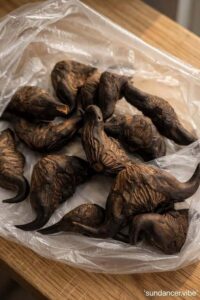
The Mysterious Horned Bat Nuts Known as Dried Water Caltrops (Singhada)
Dried water caltrops, commonly known as bat nuts, buffalo nuts, ling nuts, or singhada, are among the most visually striking and culturally rich traditional foods found across Asia. Their dark, horned shells resemble small carved relics or ancient natural artifacts, often misleading first-time observers into thinking they are inedible or purely decorative. Yet beneath their intimidating exterior lies a soft, starchy kernel that has nourished communities for centuries.
These unusual aquatic fruits come from floating plants in the genus Trapa, especially species such as Trapa natans and Trapa bicornis. They grow in calm freshwater ecosystems—lakes, ponds, marshes, and slow rivers—spreading across the surface in dense mats of floating leaves while their roots anchor into muddy sediment below.
Aquatic Origins and Natural Growth Cycle
Water caltrops thrive in warm, nutrient-rich waters where competition from land crops is minimal. Unlike traditional grains grown in dry fields, they develop in submerged environments, making them especially valuable in regions prone to seasonal flooding. The plant produces floating leaves that capture sunlight while its fruits mature underwater over several months.
As the fruit develops, it gradually forms a hard outer shell with distinctive horn-like protrusions. These horns vary depending on species and region—some curve upward sharply like bat wings, while others extend outward like buffalo horns. This unusual shape is not artificial but a natural adaptation that helps protect the seed inside.
Historically, communities living near wetlands in countries such as China, India, Bangladesh, Thailand, and Vietnam learned to harvest these fruits seasonally, developing sustainable methods long before industrial agriculture existed.
Historical and Cultural Roots
Historical records suggest that water caltrops have been consumed in East Asia for thousands of years. In China, references to their use date back to ancient agricultural practices during dynastic periods, including the Han Dynasty era, when wetland farming was an important part of rural food systems.
For ancient communities, water caltrops were more than just food. They represented survival, adaptability, and ecological intelligence. They could grow in flooded regions where rice or wheat might fail, making them a dependable seasonal resource. Families often gathered together during harvest time, collecting floating pods by hand and transporting them for drying.
Drying became essential because fresh caltrops spoil quickly. Once dried, the shells harden into the black horned pods commonly seen in markets today, allowing them to be stored for long periods and traded across regions.
Fresh vs Dried Forms
Fresh water caltrops are quite different from their dried counterparts. When newly harvested, they appear green, purple, or reddish-brown with a soft, moist interior. Their taste is mildly sweet and refreshing, often compared to water chestnuts. In many rural markets, fresh caltrops are boiled or steamed and eaten as seasonal snacks.
However, their high water content makes them unsuitable for long-distance trade. Drying transformed them into a durable food source that could be transported across regions and consumed year-round. This preservation method allowed water caltrops to become a stable part of food systems in ancient Asia.
Nutrition and Survival Value
Inside the hard shell lies a nutrient-dense kernel rich in complex carbohydrates. This makes water caltrops an important energy source, particularly for labor-intensive communities such as farmers, traders, and travelers.
They also contain dietary fiber, potassium, manganese, and small amounts of antioxidants. While not a complete protein source, their slow-digesting carbohydrates provide sustained energy, which historically made them valuable during long workdays or periods of food scarcity.
In traditional societies, foods like these were not simply supplements—they were foundational survival ingredients integrated into daily life.
Singhada in Indian Culture
In India, singhada holds special significance, especially in fasting traditions. During religious fasting periods, many grains are avoided, so alternative foods become essential. Because singhada is naturally gluten-free and considered suitable for fasting, it became widely used in ritual diets.
Singhada flour, made by grinding dried kernels, is used to prepare flatbreads, pancakes, sweets, and festival dishes. In many households, foods made from singhada are associated with devotion, discipline, and seasonal spiritual observance.
This cultural role gives water caltrops meaning beyond nutrition—they become part of religious identity and ritual structure.
Traditional Medicine and Beliefs
In traditional Chinese medicine, water caltrops were classified as cooling foods believed to reduce internal heat, support digestion, and promote balance in the body. They were often consumed during hot seasons or after eating rich, oily foods.
Practitioners sometimes incorporated them into soups or herbal preparations aimed at restoring internal equilibrium. While modern science is still studying their properties, interest in their antioxidant content and low glycemic impact continues to grow.
Even if not fully validated by contemporary clinical research, their long-standing medicinal use reflects centuries of observational knowledge.
Harvesting and Preparation Rituals
The preparation of dried water caltrops is a process that requires patience and effort. The shells are extremely hard and cannot be opened easily. Traditionally, they are boiled or roasted for extended periods to soften them before cracking.
Families often prepare them together, turning the process into a shared activity. The act of cracking open each shell becomes part of the experience, creating anticipation and social bonding.
This communal preparation transforms the food from a simple ingredient into a cultural experience tied to memory, family, and seasonal tradition.
Flavor and Culinary Uses
Once cooked, the kernels have a mild, nutty, slightly sweet flavor. Their texture is starchy and firm, similar to chestnuts or potatoes. Because of their neutral taste, they absorb surrounding flavors easily.
In Chinese cuisine, they may be roasted, boiled, or added to soups and braised dishes. In Southeast Asia, they are often sold by street vendors, served warm in paper bags, and eaten as snacks similar to roasted chestnuts in winter markets.
In countries like Thailand and Vietnam, they also appear in desserts with coconut milk, sugar syrup, or sticky rice, blending naturally into sweet culinary traditions.
Sustainability and Ecological Importance
Water caltrops are part of a broader category of aquatic crops that include lotus roots and water chestnuts. These plants demonstrate how ancient societies used wetlands not just for fishing but also for agriculture.
Because they grow in water rather than soil, they offer alternative farming possibilities in regions affected by flooding or land scarcity. In modern sustainability discussions, such crops are increasingly recognized for their ecological efficiency and resilience.
They require no traditional farmland expansion and can coexist with aquatic ecosystems when properly managed, making them relevant to future food security discussions.
Modern Culinary Rediscovery
In recent years, chefs and food researchers have begun revisiting traditional ingredients like water caltrops. As global interest in heritage foods grows, these unusual pods are being reimagined in modern cuisine.
They are used in purees, pastries, dumplings, crisps, and gourmet plating elements. Their unusual appearance also makes them visually appealing in fine dining presentations, where storytelling is as important as flavor.
Health-conscious consumers are also drawn to them due to their minimally processed nature and gluten-free properties.
Psychological and Cultural Symbolism
Beyond their culinary role, water caltrops carry symbolic meaning in many cultures. Their horned shape is sometimes associated with protection, resilience, and strength. In certain traditions, they were believed to ward off negative influences or bring good fortune during harvest celebrations.
They are also connected to seasonal cycles, water fertility, and abundance. Their presence in festivals reflects gratitude for harvests and respect for natural ecosystems.
Social Memory and Generational Food Culture
For many families, water caltrops are tied to childhood memories—market visits, seasonal cooking, and shared family gatherings. These experiences create emotional connections that go beyond nutrition.
Grandparents teaching children how to crack shells, vendors selling steaming batches, and families sharing warm bowls during festivals all contribute to a living cultural memory.
Such traditions help preserve continuity between generations in rapidly modernizing societies.
Challenges in Global Recognition
Despite their richness, water caltrops remain relatively unknown outside Asia. Their intimidating appearance discourages unfamiliar consumers, and their preparation requires time and effort.
Additionally, limited availability in mainstream global markets restricts exposure. As traditional food knowledge declines in urban environments, younger generations may have fewer opportunities to encounter them.
However, digital media and global culinary exploration are gradually changing this.
Digital Age and Global Curiosity
Social media has played a major role in introducing water caltrops to global audiences. Videos showing their unusual horned shells and the satisfying cracking process often attract curiosity and fascination.
Food creators and cultural educators highlight them as examples of hidden global foods, expanding awareness beyond regional boundaries.
Conclusion: A Food Hidden in Plain Sight
Dried water caltrops represent far more than a strange-looking snack. They embody centuries of ecological adaptation, cultural tradition, and culinary creativity across Asia.
From ancient wetlands in China and the historical agricultural systems of the Han Dynasty to modern kitchens and global culinary experimentation, they have maintained a continuous presence in human food history.
Their story reflects how communities transform simple natural resources into meaningful cultural symbols. Beneath their hard, horned shells lies not only a nutritious kernel but also a deep history of survival, identity, and shared human experience.
In a world increasingly shaped by standardized global foods, water caltrops remain a reminder that some of the most remarkable ingredients are also the most overlooked—waiting quietly in lakes, markets, and memories to be rediscovered.