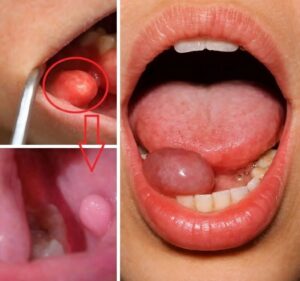
Discovering a sudden bump inside the mouth can feel surprisingly alarming. Many people notice it unexpectedly while brushing their teeth, eating, speaking, or simply running their tongue along the inside of the lips or cheeks. The swelling may appear smooth, shiny, bluish, translucent, pink, or even slightly purple. Because it often seems to develop suddenly and may resemble a blister or cyst, it can immediately trigger fear and anxiety.
People frequently worry that the bump could represent something dangerous such as an infection, tumor, or oral cancer. However, one of the most common explanations for this type of swelling is actually a benign and relatively harmless condition known as an oral mucocele.
Although the appearance of a mucocele can seem dramatic, especially when it grows larger or develops a bluish color, it is usually not serious. In many cases, it develops because of a minor injury or blockage affecting one of the small salivary glands inside the mouth. These tiny glands constantly produce saliva to help lubricate oral tissues, support digestion, and maintain moisture. When one of their ducts becomes damaged or blocked, saliva can collect beneath the surface of the soft tissue, forming a smooth fluid-filled bump.
The result is what many people describe as looking like a tiny water balloon, blister, or bubble beneath the skin inside the mouth.
Despite its appearance, a mucocele is generally noncancerous, noninfectious, and manageable. Understanding how it forms, what symptoms to watch for, and when professional evaluation is necessary can help reduce unnecessary fear while ensuring proper care when needed.
One of the first signs of an oral mucocele is usually a soft, round swelling that develops suddenly or gradually over a short period of time. The bump often feels smooth and movable beneath the surface of the tissue. It may seem squishy or fluid-filled when touched gently with the tongue.
Color varies depending on the depth of the trapped saliva beneath the tissue. Superficial mucoceles commonly appear translucent, bluish, pearly, or slightly purple because the fluid sits close to the surface. Deeper mucoceles may appear more pink or flesh-colored and blend more naturally with surrounding tissue.
The lower lip is by far the most common location. This area experiences frequent accidental trauma from chewing, biting, or friction against the teeth. However, mucoceles can also develop inside the cheeks, under the tongue, on the floor of the mouth, or in other soft tissue areas where minor salivary glands are located.
One confusing aspect of mucoceles is that they are often painless. Even when the bump looks large or unusual, many people experience little or no discomfort at all. Some only discover it accidentally while eating or speaking. Others notice it while examining their mouth in the mirror after sensing something unfamiliar with their tongue.
In some cases, the swelling changes size over time. A mucocele may shrink temporarily, rupture on its own, flatten out, and then refill later. This cycle can make the condition feel unpredictable and frustrating, especially when it repeatedly returns after seeming to disappear.
Larger mucoceles may begin interfering with daily activities such as speaking, chewing, or comfortably closing the mouth. Some people become highly aware of the bump because their tongue constantly touches it throughout the day. Others accidentally bite the area repeatedly, which can increase irritation and prolong healing.
The underlying cause of most mucoceles is relatively simple: trauma or blockage involving a minor salivary gland duct.
Inside the mouth are numerous tiny salivary glands responsible for releasing saliva through very small ducts. If one of these ducts becomes injured or obstructed, saliva can no longer flow normally into the mouth. Instead, the fluid leaks into surrounding tissue or accumulates behind the blockage.
This trapped saliva creates the characteristic swelling associated with a mucocele.
Minor trauma is the most common trigger. Many people accidentally bite their lower lip while eating, talking, concentrating, or sleeping without even realizing it. Repeated lip chewing habits, nervous biting, braces, sharp teeth edges, rough dental fillings, or irritation from dental appliances can also damage the delicate salivary ducts.
Stress-related habits sometimes contribute as well. People under stress may unconsciously chew on the inside of their lips or cheeks repeatedly throughout the day, increasing the risk of irritation and duct injury.
Importantly, mucoceles are not contagious. They are not caused by viruses, bacteria, or poor oral hygiene. They are also not typically linked to serious disease. However, because many oral conditions can appear similar initially, persistent or unusual lesions should still be evaluated professionally.
When a similar saliva-filled swelling develops specifically on the floor of the mouth, it may be called a ranula. Ranulas arise from larger salivary glands beneath the tongue and sometimes require closer medical attention because they can grow larger and affect speech or swallowing more significantly.
Although mucoceles are usually harmless, professional evaluation remains important in certain situations. Any oral lesion that persists for more than a couple of weeks, grows rapidly, changes color significantly, bleeds, hardens, becomes painful, or repeatedly returns should be examined by a dentist, oral surgeon, or healthcare provider.
This recommendation does not mean every bump is dangerous. Rather, it reflects the importance of accurate diagnosis. Several oral conditions can resemble one another visually, including fibromas, infections, blood vessel lesions, cysts, inflammatory conditions, or, less commonly, oral cancers.
A dental professional can often diagnose a mucocele simply by examining its appearance, location, texture, and history. They may ask questions such as:
- When did the bump first appear?
- Has it changed size?
- Have you accidentally bitten the area?
- Does it hurt?
- Has it ruptured or returned before?
- Are there any associated symptoms?
In typical cases, additional testing may not be necessary. However, if the lesion appears unusual, behaves unpredictably, or persists despite treatment, further evaluation may be recommended. Occasionally, removal and laboratory examination may be performed to confirm the diagnosis and rule out other conditions.
For many people, the reassuring news is that small mucoceles often heal on their own without major intervention. Once irritation stops and the affected duct begins recovering, the trapped saliva may gradually reabsorb into surrounding tissue.
Healing time varies depending on the size of the lesion and whether repeated trauma continues. Some disappear within days while others persist for weeks or fluctuate in size repeatedly.
One of the most important recommendations during healing is to avoid irritating the bump further. Many people feel tempted to squeeze, bite, poke, or intentionally pop the swelling, especially if it becomes annoying. However, doing so can worsen inflammation, increase irritation, introduce bacteria, or increase the likelihood of recurrence.
Even if the mucocele bursts naturally, repeatedly traumatizing the tissue often prevents proper healing and allows the problem to continue returning.
Simple home care measures can support healing and reduce discomfort. Gentle warm saltwater rinses may help keep the area clean and soothe irritated tissue. Maintaining good oral hygiene is important because it reduces bacterial buildup and supports overall healing within the mouth.
Avoiding spicy, acidic, crunchy, or sharp foods may also reduce irritation while the tissue recovers. Drinking adequate water and minimizing habits such as lip biting or cheek chewing can help prevent ongoing trauma.
The key goal is to allow the damaged tissue and salivary duct an opportunity to heal naturally.
If a mucocele becomes persistent, repeatedly returns, grows larger, or interferes with eating and speaking, professional treatment may become necessary. Fortunately, treatment options are usually straightforward and highly effective.
One common approach is minor surgical removal. During this procedure, the dentist or oral surgeon removes both the mucocele and the affected salivary gland tissue to reduce the risk of recurrence. This is typically performed under local anesthesia and usually involves minimal discomfort.
Laser treatment is another option used in some cases. Lasers allow precise removal of tissue while minimizing bleeding and potentially speeding healing. Cryotherapy, which uses freezing techniques, may also be considered in certain situations.
Recovery from these procedures is generally quick. Most people return to normal eating and speaking relatively soon afterward, although temporary tenderness or mild swelling may occur during healing.
Follow-up care is important to ensure the area heals properly and that recurrence does not occur.
Prevention of future mucoceles often depends on identifying and reducing repeated irritation inside the mouth. For individuals who unconsciously bite their lips or cheeks, increased awareness of the habit can make a significant difference.
Stress management may also help because anxiety and tension frequently contribute to unconscious chewing habits. Some people benefit from substituting safer oral habits such as chewing sugar-free gum or practicing relaxation techniques during stressful periods.
Dental issues should also be addressed when relevant. Sharp tooth edges, poorly fitting dental appliances, rough fillings, or braces causing repeated friction can continue damaging soft tissues unless corrected.
Regular dental checkups play an important role because dentists can identify subtle sources of irritation that patients may not notice themselves.
Good oral hygiene supports overall tissue health as well. Gentle brushing, flossing, avoiding harsh mouth products, and staying hydrated all contribute to healthier oral tissues that recover more effectively after minor injury.
Emotionally, discovering an unusual bump inside the mouth can trigger disproportionate fear because oral health problems are highly visible and constantly noticeable during daily activities like eating and speaking. The unfamiliar appearance of a translucent or bluish swelling naturally causes concern.
However, understanding what a mucocele actually is often brings significant reassurance.
A mucocele is usually the body’s response to a small injury involving a salivary duct. It may look dramatic because of the trapped fluid and coloration beneath thin oral tissue, but it is generally benign and manageable.
Many people are surprised to learn how common these lesions actually are. Dentists and oral specialists encounter them regularly, especially on the lower lip where accidental trauma occurs frequently.
The most important message is not to panic while also not ignoring persistent symptoms. A smooth fluid-filled bump inside the mouth is often harmless, but professional evaluation remains wise when lesions fail to heal, repeatedly return, or behave unusually.
Fortunately, the vast majority of mucoceles heal well either naturally or with minor treatment.
What initially appears frightening often turns out to be a temporary and treatable condition with an excellent prognosis.
In the end, discovering a sudden translucent or bluish bump inside the mouth can certainly feel unsettling, especially when it appears unexpectedly and resembles something serious. Yet in many cases, the explanation is relatively simple: a small salivary gland duct became injured or blocked, leading to a harmless accumulation of saliva beneath the tissue.
With proper care, avoidance of repeated irritation, and professional evaluation when necessary, most oral mucoceles resolve successfully without long-term complications.
Understanding the condition helps replace fear with perspective.
What may first seem alarming is often simply the mouth’s temporary response to a small everyday injury — one that the body can usually heal effectively with time, care, and occasional professional support when needed.