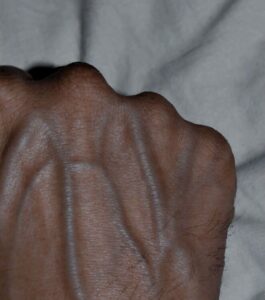
Visible Veins Explained: What Your Vascularity Really Says About the Body
Visible veins—often referred to as vascularity—are frequently associated with athletic physiques, but their meaning is far more nuanced than appearance alone. In most cases, vascularity reflects a combination of body fat levels, muscle development, genetics, hydration status, and temporary physiological conditions rather than a single indicator of fitness or health.
Understanding what causes veins to become more visible helps separate aesthetic perception from biological reality.
Body fat and muscle as primary factors
The most significant factor influencing vascularity is body fat percentage. When body fat decreases, there is less subcutaneous tissue covering the veins, making them more visible beneath the skin. This is why individuals who engage in consistent strength training or endurance exercise often notice increased vascularity in areas such as the arms, shoulders, and legs.
Muscle development further enhances this effect. As muscles grow, they push veins closer to the surface of the skin, increasing their visibility. This is especially noticeable during or after exercise when blood flow increases and muscles temporarily expand due to increased circulation.
However, visible veins are not a definitive marker of superior health. A person can be healthy without prominent vascularity, and another individual can have visible veins while still having underlying health issues unrelated to fitness.
The role of genetics
Genetics play a substantial role in how vascular a person appears. Some individuals naturally have thinner skin or veins that are positioned closer to the surface, making them more visible even at moderate or higher body fat levels. Others may train extensively and still have less visible vascularity due to deeper vein placement or thicker dermal layers.
This variability explains why comparing vascularity between individuals can be misleading. The same training program or body composition can produce very different visual outcomes depending on inherited traits.
Hydration and temporary physiological changes
Vascularity is also highly responsive to short-term physiological conditions. Hydration levels can influence how prominent veins appear. Mild dehydration reduces fluid beneath the skin, often making veins look more pronounced.
Environmental factors such as heat also contribute. Warm temperatures cause blood vessels to dilate in a process called vasodilation, increasing blood flow near the skin’s surface. This is why veins often appear more visible during hot weather or after physical activity.
Exercise itself has a strong effect. During workouts, increased blood flow and muscle engagement create the “pump” effect, temporarily enhancing vascularity. Conversely, cold temperatures can cause vasoconstriction, reducing vein visibility.
These fluctuations highlight that vascularity is not a fixed trait but a dynamic one influenced by moment-to-moment conditions.
Hormonal and age-related influences
Hormones also play a role in vascular appearance. Testosterone, for example, supports muscle growth and can indirectly contribute to more visible veins in individuals with higher muscle mass. This is one reason vascularity is often more noticeable in men, though it is by no means exclusive to them.
In women, hormonal cycles, pregnancy, and changes in blood volume can temporarily affect vein visibility. These variations are natural and reflect normal physiological adaptation rather than abnormal conditions.
Age is another factor. As skin naturally thins and loses elasticity over time, veins become more visible regardless of changes in fitness level. This is a normal part of aging and not necessarily connected to health or exercise habits.
When visible veins may signal medical concerns
While vascularity is often harmless and related to fitness or physiology, there are cases where visible veins can indicate underlying medical conditions.
One common example is varicose veins, which are enlarged, twisted veins that most often appear in the legs. These may be accompanied by discomfort, swelling, heaviness, or aching sensations.
More serious concerns arise when vein changes are sudden, painful, or localized to one area. Symptoms such as redness, warmth, swelling, or sharp pain could indicate vascular issues such as a clot or inflammation, which require medical attention.
The key distinction lies in context. Gradual, symmetrical vascularity in active individuals is typically normal. Sudden or painful changes are not.
Misinterpretation of vascularity in fitness culture
In fitness culture, visible veins are often mistakenly interpreted as a universal sign of peak health or elite conditioning. In reality, vascularity is influenced by many non-fitness-related factors, making it an unreliable standalone metric.
Focusing solely on appearance can lead to misunderstanding body composition and health. Two individuals with identical fitness levels may look very different due to genetics, hydration, or skin thickness.
This is why professionals emphasize broader indicators of health such as strength, endurance, cardiovascular performance, energy levels, recovery quality, and overall well-being.
The dynamic nature of the human body
One of the most important aspects of vascularity is its variability. Veins can appear more or less visible within minutes depending on temperature, activity, hydration, and emotional state. Stress, for example, can also influence circulation and temporarily affect how veins present under the skin.
This variability demonstrates that the human body is not static. Instead, it constantly adapts to internal and external conditions.
Conclusion: what vascularity really means
Visible veins are best understood as a visual byproduct of several overlapping factors rather than a direct measure of health or fitness. Body fat levels, muscle development, genetics, hydration, hormones, age, and temporary physiological changes all contribute to how vascular a person appears.
While vascularity can be a natural result of training and leanness, it should not be overinterpreted or used as the primary benchmark of physical health. Real wellness is reflected in consistent habits—balanced nutrition, regular movement, quality sleep, and overall functional strength.
When viewed correctly, visible veins are simply one expression of how complex and adaptive the human body truly is.