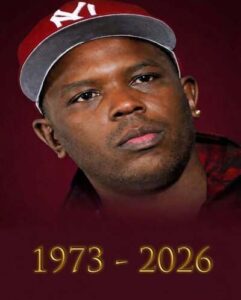
Remembering Oliver Power Grant and the Quiet Architecture of Cultural Revolution
The passing of Oliver Power Grant at the age of 52 has prompted reflection not only on an individual life, but on a broader truth about cultural movements: the most transformative forces are not always the most visible. While music history often centers performers and lyricists, the structures that sustain revolutions in sound, identity, and commerce are frequently built by strategists working outside the spotlight.
Grant belonged to that category. His role in the early formation and expansion of Wu-Tang Clan illustrates how cultural ecosystems depend on more than artistry alone. They require vision, coordination, and an understanding of how creativity can be translated into lasting infrastructure.
This is not merely a story about hip-hop. It is a story about how ideas become institutions.
The Hidden Layer of Movements
Every major cultural shift has two layers. The first is visible: performers, artists, and public figures whose work defines the aesthetic of an era. The second is structural: the organizers, planners, and strategists who ensure that momentum does not dissipate.
Oliver Power Grant existed in that second layer.
In the early 1990s, hip-hop was undergoing rapid transformation. It was no longer a localized expression of urban culture—it was becoming a global industry. But that transition came with instability. Artists often lacked ownership, direction, and long-term strategy. Creative output was abundant, but sustainable frameworks were rare.
Within that environment, the emergence of the Wu-Tang Clan represented a structural innovation as much as an artistic one. The group was not simply a collection of rappers—it was a decentralized creative network. And behind that structure were individuals like Grant, who understood that cultural longevity required business intelligence as much as artistic brilliance.
The Wu-Tang Model: A New Blueprint
The traditional music industry model in the early 1990s relied heavily on centralized control. Record labels dictated production, distribution, and branding. Artists were often positioned as products rather than stakeholders.
The Wu-Tang Clan disrupted this structure.
Rather than functioning as a conventional group, they operated as a collective with individual autonomy. Members could pursue solo careers while still contributing to a unified identity. This model created multiple revenue streams, expanded creative output, and strengthened cultural reach simultaneously.
Within this framework, artists like Method Man and GZA emerged as both individual voices and parts of a larger system.
Grant’s influence was aligned with this philosophy of structured independence. His contributions helped reinforce the idea that artistic freedom and organizational discipline were not opposites—they were complementary forces.
Strategy as Cultural Infrastructure
One of Grant’s most significant contributions was his understanding of culture as infrastructure.
In most industries, infrastructure refers to physical systems: roads, buildings, distribution networks. In cultural movements, infrastructure takes a different form. It includes branding, intellectual property, business ventures, and identity systems that allow creativity to scale without losing coherence.
The Wu-Tang Clan’s expansion into fashion through initiatives like Wu Wear was not simply merchandising. It was a redefinition of what a music collective could be. Music became the foundation for a broader ecosystem of expression, extending into clothing, language, and lifestyle.
Grant’s strategic mindset helped support this expansion. Rather than viewing music as the end product, the collective treated it as the starting point for a larger cultural enterprise.
This shift would later become standard in the entertainment industry, where artists routinely operate as multi-platform brands. But at the time, it was pioneering.
The Power of Quiet Leadership
One of the most defining aspects of Grant’s role was his preference for working outside public visibility. In an industry that often rewards attention, this choice is significant.
Quiet leadership does not mean passive leadership. It often requires deeper engagement with long-term planning, conflict navigation, and structural thinking. It is less about recognition and more about continuity.
Those who worked with Grant often described his contributions as foundational rather than performative. He was part of the architecture that allowed creative figures to operate at full capacity without being constrained by logistical or strategic limitations.
This type of role is frequently overlooked in cultural narratives because it does not produce easily recognizable outputs like albums or performances. Yet without it, many cultural movements would collapse under their own momentum.
Independence and the Economics of Control
One of the most revolutionary aspects of the Wu-Tang Clan’s model was its emphasis on ownership.
At a time when many artists signed contracts that limited their creative and financial autonomy, Wu-Tang’s structure allowed members to retain control over their individual careers while contributing to a collective brand.
This approach reframed success. It was no longer solely about chart performance or label backing. It became about equity, intellectual property, and long-term value creation.
Grant’s alignment with this philosophy reflected a broader understanding of economic independence as a form of cultural power. By supporting systems that allowed artists to retain ownership, he contributed to a shift that would influence generations of musicians and entrepreneurs.
Today, the idea of artists as business owners is widely accepted. But in the early stages of hip-hop’s commercialization, it was still emerging.
Cultural Identity as a Shared System
The Wu-Tang Clan was never just a musical group—it was a symbolic system. Its identity was built on shared language, aesthetic consistency, and narrative cohesion.
This system extended beyond music into fashion, visual identity, and even mythology. Fans did not just consume songs; they engaged with a world.
Grant’s role in supporting this ecosystem highlights the importance of coherence in cultural movements. Without structural alignment, even the most powerful artistic ideas can fragment.
By reinforcing systems of identity and organization, he helped ensure that Wu-Tang’s influence would extend beyond a single era or album cycle.
Global Expansion and Cultural Translation
As the Wu-Tang Clan’s influence spread internationally, their model proved adaptable across cultures.
Their music resonated in regions far beyond its origins because it combined specificity with universality. It was deeply rooted in local experience but expressed in a way that could be globally understood.
This balance between authenticity and accessibility is difficult to maintain. Too much abstraction weakens identity; too much specificity limits reach.
The strategic framework supporting the collective helped preserve that balance. It allowed the group to expand without diluting its core identity.
The Invisible Work Behind Visibility
One of the most overlooked truths in cultural history is that visibility depends on invisible labor.
For every public figure, there are often multiple individuals ensuring that logistics, strategy, and coordination function smoothly. Without them, public-facing success becomes unstable.
Grant’s work represents this principle clearly. His contributions were not designed for public recognition, but for operational stability.
This kind of labor rarely appears in mainstream narratives, yet it is essential to sustaining cultural ecosystems over time.
Legacy Beyond Music
The influence of the Wu-Tang Clan extends far beyond hip-hop. It has impacted business models, branding strategies, and creative entrepreneurship across industries.
Artists today routinely build independent labels, fashion brands, and multimedia ventures. This approach reflects a broader shift toward creative ownership and diversification.
While many factors contributed to this evolution, the Wu-Tang framework played a foundational role. And within that framework, Grant’s strategic influence helped reinforce the systems that made such expansion possible.
His legacy is therefore not confined to one group or genre. It exists in the broader logic of how modern creative industries operate.
Reflection on Mortality and Influence
The passing of a cultural architect often triggers a re-evaluation of what influence actually means. Public recognition is only one form of impact. Structural influence—how systems function, how ideas persist, how movements sustain themselves—is often more enduring.
Grant’s life invites reflection on this distinction.
While artists may define moments, strategists often define longevity. One creates visibility; the other creates continuity.
Both are essential, but they operate on different timelines.
The Enduring System
What remains after a cultural movement matures is not only its music or imagery, but its systems: how it organized itself, how it treated ownership, how it structured collaboration.
The Wu-Tang Clan remains influential not only because of its artistic output, but because of its model.
And that model, shaped in part by individuals like Grant, continues to inform how artists think about independence, collaboration, and cultural entrepreneurship.
Final Reflection
Oliver Power Grant’s legacy is not defined by a single achievement, but by the accumulation of strategic choices that helped shape one of the most influential movements in modern music history.
His work demonstrates that cultural transformation is rarely the result of isolated genius alone. It is the product of networks—of visionaries, artists, and strategists working in alignment.
In remembering him, we are also reminded of something larger: that the most enduring forms of cultural influence are often built quietly, structured carefully, and sustained through commitment rather than visibility.
And in that sense, his contribution continues to live not only in memory, but in the ongoing evolution of music, business, and creative independence across generations.