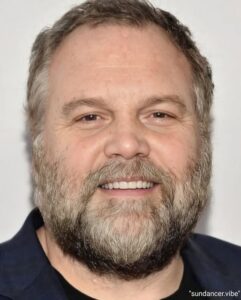
The Transformation That Changed Everything for Vincent D’Onofrio
When audiences first encountered Vincent D’Onofrio in Full Metal Jacket, they did not see a rising young actor experimenting with his craft. They saw Leonard Lawrence — a fragile, overwhelmed Marine recruit whose psychological unraveling becomes one of the most haunting arcs in modern war cinema. What many viewers did not realize at the time was how radically the actor had altered himself to create that illusion, or how deeply the role would echo through the rest of his life.
The transformation was not simply physical. It was total. D’Onofrio reshaped his body, altered his appearance, and immersed himself in a character designed to be emotionally destabilizing. The result was a performance so convincing that audiences struggled to separate fiction from reality. In many ways, the success of the role created an unexpected paradox: it launched his career while simultaneously obscuring his identity behind one of cinema’s most tragic figures.
This is the story of how that transformation happened, what it cost him, and how he ultimately built a career that extended far beyond a single unforgettable role.
A Young Actor Searching for a Breakthrough
Before Hollywood recognition, D’Onofrio’s life reflected the uncertainty of many aspiring performers in New York City. He moved between auditions, temporary jobs, and small theater opportunities, rarely knowing whether acting would become a sustainable career or remain a lifelong pursuit of unstable ambition.
He worked physically demanding jobs to survive — security work, delivery work, and labor-intensive gigs that allowed him to stay afloat while continuing to study acting. These experiences shaped his understanding of physicality and presence, two traits that would later define his screen performances. Unlike many actors who enter the industry through immediate visibility, his path was gradual and rooted in persistence rather than early recognition.
This period of his life also shaped his emotional range. Observing people from different walks of life — workers, artists, celebrities, and everyday commuters — gave him a grounded perspective that would later translate into his ability to portray complex, psychologically layered characters.
When the opportunity to audition for Full Metal Jacket arrived, it was not simply another role. It was a turning point that would define the trajectory of his entire career.
Stanley Kubrick’s Demanding Vision
Working with Stanley Kubrick meant entering a world defined by precision, repetition, and psychological intensity. Kubrick was known for pushing actors far beyond conventional limits, demanding emotional authenticity that often required extensive physical and mental commitment.
For the role of Leonard Lawrence, Kubrick needed someone who could embody vulnerability without reducing the character to caricature. The role demanded awkwardness, emotional instability, and a physical transformation that would visually reinforce the character’s psychological breakdown.
D’Onofrio initially did not resemble the character Kubrick envisioned. At the time, he was athletic and physically fit, far from the awkward Marine recruit the script required. Kubrick reportedly encouraged him to gain weight, alter his posture, and reshape his physical presence entirely.
The transformation became one of the most extreme physical changes an actor had undertaken for a major film at that time. D’Onofrio gained a substantial amount of weight, reportedly nearing eighty pounds, fundamentally altering his appearance. Combined with a shaved head and altered body language, the transformation made him nearly unrecognizable.
But the physical change was only part of the process. Kubrick’s directing style required emotional consistency under repeated takes, forcing D’Onofrio to maintain psychological intensity throughout long, exhausting shooting schedules.
The result was a performance that felt disturbingly real — because, in many ways, it was grounded in lived physical and emotional strain.
Becoming Leonard Lawrence
The character of Leonard Lawrence is one of the most tragic figures in modern war cinema. Initially presented as awkward and socially disconnected, he becomes increasingly isolated under military pressure. The psychological collapse that follows is both devastating and unforgettable.
D’Onofrio’s performance is often remembered for its gradual progression rather than any single moment. The character does not break suddenly; he deteriorates slowly, shaped by humiliation, isolation, and emotional exhaustion.
To achieve this level of realism, D’Onofrio fully immersed himself in the character’s physical and emotional state. His altered appearance made the transformation even more convincing, blurring the boundary between actor and role for audiences who had no reference for his real-life identity.
What made the performance particularly powerful was its restraint. Rather than exaggerating emotional breakdown, D’Onofrio played it with subtlety — small changes in posture, voice, and expression that accumulated into a devastating psychological portrait.
By the time the film reached its climax, the character had become fully separated from his earlier self. This progression remains one of the most studied examples of character development in film acting.
When the Audience Could No Longer Tell the Difference
After the release of Full Metal Jacket, the reaction to D’Onofrio was immediate and unexpected. Many viewers did not distinguish between the actor and the character he portrayed. The intensity of the performance created a lingering impression that extended beyond the screen.
In everyday life, he reportedly experienced altered social reactions. Strangers responded to him differently, often based on assumptions formed from his character rather than his real personality. The transformation had been so complete that it temporarily reshaped public perception of who he was.
This phenomenon highlights a recurring challenge for actors who undergo extreme transformations: audiences often attach the emotional memory of a character to the performer themselves. In D’Onofrio’s case, the association was particularly strong because the character was so visually and emotionally distinctive.
Fortunately, the physical transformation was temporary. Within a relatively short period after filming, he returned to his normal appearance. However, the psychological awareness of how easily identity could be reshaped left a lasting impression on him.
A Career Defined by Versatility
Rather than becoming trapped by his breakthrough role, D’Onofrio used it as a foundation for a long and varied career. He did not pursue conventional leading-man roles. Instead, he gravitated toward complex characters that required emotional depth and unpredictability.
Throughout the 1990s and early 2000s, he appeared in a wide range of films that showcased his ability to adapt. His performances consistently emphasized emotional realism rather than superficial charisma.
His most widely recognized television role came later as Detective Robert Goren in Law & Order: Criminal Intent. The character combined intelligence, eccentricity, and emotional intensity, allowing D’Onofrio to explore psychological complexity in a long-form format. The role introduced him to a new generation of viewers and reinforced his reputation as a deeply committed actor.
Years later, he once again transformed himself for the role of Wilson Fisk, also known as Kingpin, in Daredevil. The character demanded both physical presence and emotional vulnerability, qualities D’Onofrio balanced with remarkable precision. Rather than portraying a simple villain, he created a layered figure capable of tenderness, rage, and fragility.
These roles demonstrated a consistent theme in his career: transformation as a form of storytelling.
Life Beyond the Screen
Outside of acting, D’Onofrio’s life has included relationships, family responsibilities, and personal reflection. He has spoken in interviews about the influence of his upbringing and early life experiences on his emotional development.
He became a father and navigated long-term relationships while balancing the demands of a demanding career. Like many actors with intense professional commitments, his personal life experienced periods of change, adjustment, and reevaluation.
Despite his public recognition, he has often maintained a relatively private personal presence, focusing attention on his work rather than celebrity status. This separation between professional identity and personal life reflects a consistent pattern in his career choices.
He has also expressed interest in creative pursuits beyond acting, including directing and other artistic forms of expression, demonstrating that his engagement with storytelling extends beyond performance alone.
The Legacy of a Transformative Performance
The impact of Full Metal Jacket on D’Onofrio’s career cannot be overstated. It established him as an actor willing to undergo extreme transformation in pursuit of authenticity. However, it also demonstrated how quickly audiences can conflate performance with identity.
What makes his career notable is not just the breakthrough itself, but the way he built upon it. Instead of resisting typecasting through avoidance, he embraced complexity. He consistently chose roles that required emotional risk and psychological depth.
This willingness to engage with difficult characters became one of his defining artistic strengths. Directors and audiences alike came to associate him with authenticity, unpredictability, and emotional realism.
Over time, the initial identity confusion that followed Full Metal Jacket evolved into respect for his versatility. The very qualities that once caused misunderstanding eventually became the foundation of his reputation.
Conclusion: A Career Built on Risk and Reinvention
The story of Vincent D’Onofrio is ultimately a story about transformation — not just physical transformation, but artistic and emotional evolution. His breakthrough role demonstrated both the power and the consequences of total immersion in character work.
While the experience briefly blurred the boundary between actor and role in the public eye, it also opened the door to a career defined by range, depth, and consistency. From early struggles in New York to iconic roles in film and television, his journey reflects a commitment to authenticity that continues to resonate.
In the end, his legacy is not defined by a single character, no matter how unforgettable that character may be. It is defined by a willingness to take risks, to disappear into roles, and to re-emerge each time with something new to offer.
That is why his performances continue to endure — not because they are easy to watch, but because they feel undeniably real.