Jewelry has a unique way of preserving memories.
A simple ring can remind you of a loved one. A necklace may bring back memories of a special vacation. A bracelet might represent a milestone, a friendship, or a meaningful moment in life. Unlike many possessions that come and go, jewelry often remains with us for years, sometimes even generations.
Unfortunately, no matter how treasured a piece may be, time eventually leaves its mark.
Silver darkens. Brass becomes dull. Gold-filled jewelry loses some of its brightness. German silver develops discoloration that hides its beauty beneath a layer of oxidation and grime.
Many people assume there is only one solution when this happens: spend money on professional cleaning services or purchase specialized products promising miraculous results.
The truth is much simpler.
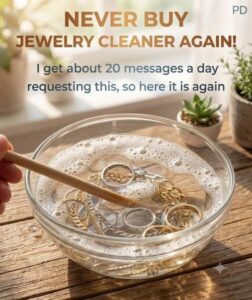
One of the most effective jewelry-cleaning techniques can be performed at home using ingredients that are already sitting in most kitchens.
It requires only a few minutes, costs almost nothing, and relies on a fascinating scientific reaction rather than aggressive scrubbing.
For countless people, this simple method has become a favorite way to restore shine and extend the life of treasured jewelry.
Why Jewelry Becomes Tarnished
To appreciate why this method works so well, it helps to understand what tarnish actually is.
Many metals naturally react with their environment. Air contains oxygen, moisture, and trace sulfur compounds that gradually interact with exposed metal surfaces.
When these reactions occur, a thin layer of oxidation develops.
Over time, that layer becomes visible as discoloration.
Sterling silver is especially vulnerable because sulfur compounds in the air bond with the silver surface, creating a dark coating known as tarnish.
Brass undergoes oxidation that causes it to lose its warm golden appearance.
German silver, despite its name, contains no actual silver and can become gray, yellowish, or dull after prolonged exposure to air and moisture.
Even gold-filled jewelry can lose its sparkle due to accumulated oils, dirt, cosmetics, lotions, and environmental contaminants.
These changes happen gradually.
Most people don’t notice them until one day they compare an old piece to a new one and realize how much shine has disappeared.
Fortunately, much of the damage is superficial and reversible.
The Problem With Harsh Cleaners
Many commercial jewelry cleaners rely on powerful chemicals designed to remove oxidation quickly.
While effective, these products are not always ideal.
Some contain strong ingredients that can irritate skin.
Others produce unpleasant odors.
Certain abrasive cleaners may gradually wear down delicate details, decorative engravings, or thin metal layers over repeated use.
In addition, many specialty cleaners are surprisingly expensive considering how frequently jewelry needs maintenance.
This is why so many people are turning to simpler alternatives.
A homemade solution can often deliver excellent results without introducing unnecessary chemicals into the process.
The Ingredients You’ll Need
One of the greatest advantages of this method is its simplicity.
You only need a few household items:
- 1 tablespoon baking soda
- 1 tablespoon salt
- 1 cup very hot water
- A few drops of liquid dish soap
- Aluminum foil
- A heat-safe bowl
- A soft microfiber or lint-free cloth
Most households already have these supplies available.
That means there is no need to make a special shopping trip or spend money on products you may only use occasionally.
The Science That Makes It Work
At first glance, the process seems almost magical.
Tarnished jewelry goes into the bowl.
A few minutes later, it comes out noticeably cleaner and brighter.
The explanation lies in chemistry.
When hot water combines with salt and baking soda, it creates an electrolyte solution.
The aluminum foil serves as a sacrificial metal.
As the jewelry touches the foil, an electrolytic reaction begins.
The sulfur compounds responsible for tarnish are transferred from the jewelry onto the aluminum foil.
Instead of scraping tarnish away mechanically, the reaction essentially reverses part of the oxidation process.
This allows the metal’s natural shine to reappear with minimal abrasion.
That is why the method can be surprisingly gentle despite producing dramatic results.
Step One: Prepare Your Cleaning Bowl
Begin by selecting a heat-safe bowl large enough to hold the jewelry you intend to clean.
Line the bottom of the bowl with aluminum foil.
Many people recommend placing the shiny side facing upward, although direct contact is more important than which side faces up.
Heat one cup of water until it becomes very hot but not actively boiling.
Boiling water can be unnecessarily harsh for certain jewelry components.
Place the baking soda and salt into the bowl.
Carefully pour the hot water over the ingredients.
Stir gently until everything dissolves completely.
Add several drops of liquid dish soap.
The soap helps break down oils, makeup residue, lotions, and dirt that may have accumulated on the jewelry’s surface.
Within seconds, your cleaning solution is ready.
Step Two: Add The Jewelry
Carefully place the jewelry into the bowl.
Make sure every piece touches the aluminum foil.
This direct contact is essential because the chemical reaction depends upon it.
If cleaning multiple items simultaneously, spread them out whenever possible.
Chains should be separated gently.
Rings and earrings should remain fully submerged.
Avoid overcrowding the bowl.
Giving each piece adequate exposure improves the overall results.
Step Three: Let Chemistry Do The Work
Now comes the easiest part.
Wait.
The reaction begins almost immediately.
Within a few minutes, you may notice:
- Tiny bubbles forming
- Slight changes in water clarity
- A faint sulfur-like smell
- Discoloration appearing on the aluminum foil
All of these signs indicate the process is working.
Allow the jewelry to soak for approximately five to ten minutes.
Pieces with heavier tarnish may require additional time.
However, it is wise to check progress periodically rather than leaving items unattended for extended periods.
Many people are amazed by the transformation that occurs during this short waiting period.
Jewelry that seemed destined for replacement suddenly begins looking attractive again.
Step Four: Rinse Thoroughly
After soaking, carefully remove the jewelry.
Remember that the water may still be quite hot.
Using a spoon or pair of tongs can make handling safer.
Rinse each piece thoroughly under cool running water.
This removes any remaining residue and stops the cleaning process.
Pay close attention to intricate areas where solution may become trapped.
Proper rinsing ensures a clean finish and prevents buildup from remaining behind.
Step Five: Dry And Buff
Use a soft cloth to dry the jewelry carefully.
Avoid rough fabrics that could create tiny scratches.
Pat the pieces dry and gently buff the surface.
As moisture disappears, the restored shine becomes increasingly visible.
The results can be remarkably satisfying.
Silver often regains its mirror-like brilliance.
Brass appears warmer and more vibrant.
German silver looks noticeably brighter.
Gold-filled pieces recover much of their original glow.
Many items appear years younger after only a few minutes of treatment.
Jewelry That Requires Extra Care
Although this cleaning method is generally safe for many metal pieces, not all jewelry should be treated the same way.
Use caution when cleaning:
- Pearls
- Opals
- Turquoise
- Coral
- Amber
- Jewelry with glued settings
- Delicate costume jewelry
These materials may react differently to heat, moisture, or prolonged soaking.
If a piece contains porous gemstones or adhesives, shorten the cleaning time and monitor it closely.
When dealing with valuable antiques or family heirlooms, consulting a professional jeweler remains a wise precaution.
Why So Many People Love This Method
There are countless cleaning tricks circulating online, but few remain popular for years unless they actually work.
This method continues to earn praise because it combines several important advantages.
It Is Affordable
The ingredients cost very little and are often already available at home.
It Is Fast
Most cleaning sessions require less than ten minutes.
It Is Simple
No specialized knowledge or equipment is necessary.
It Is Effective
Visible improvements often occur almost immediately.
It Is Convenient
Multiple pieces can be cleaned at once.
These benefits make it an appealing solution for busy individuals who want practical results without unnecessary expense.
The Importance Of Regular Jewelry Maintenance
Waiting until jewelry becomes heavily tarnished often makes cleaning more difficult.
Regular maintenance helps preserve both appearance and condition.
Many jewelry experts recommend periodic cleaning even when pieces still appear relatively bright.
A monthly cleaning schedule can significantly reduce buildup.
Simple habits can also help:
- Store jewelry in dry locations.
- Remove pieces before swimming.
- Avoid exposing jewelry to perfumes and hairsprays.
- Wipe pieces gently after wearing them.
- Keep silver items in anti-tarnish storage bags.
These small actions can dramatically slow the tarnishing process.
More Than Just A Cleaning Routine
There is another advantage to cleaning jewelry regularly.
It encourages inspection.
Many people discover loose stones, weakened clasps, worn prongs, or damaged links while cleaning.
Finding these issues early often prevents larger repairs later.
In some cases, a quick inspection can save a cherished piece from being lost entirely.
A few minutes of maintenance may protect years of sentimental value.
A Small Effort With Big Results
In an age where advertisements constantly promote expensive solutions, it is refreshing to discover that effective jewelry care can be remarkably simple.
A bowl, a sheet of aluminum foil, baking soda, salt, dish soap, and hot water are all it takes to restore life to many tarnished pieces.
The process requires very little time, very little money, and very little effort.
Yet the results can be dramatic.
Beyond restoring shine, this method helps preserve the memories attached to jewelry that often marks life’s most meaningful moments.
Whether it’s a treasured family heirloom, a wedding gift, or a favorite everyday accessory, regular care ensures those pieces continue looking their best for years to come.
Sometimes the most effective solutions are not found in expensive bottles or professional workshops.
Sometimes they are already waiting in your kitchen, ready to turn dull, tarnished jewelry into something that sparkles once again.