In recent years, online marketplaces have fundamentally changed the way people buy and sell goods. Whether someone is searching for a secondhand bicycle, selling an old smartphone, purchasing furniture for a new apartment, or finding affordable household items, digital platforms have made these transactions easier than ever before. With only a few clicks, strangers can connect, negotiate prices, and arrange exchanges without ever stepping into a traditional store.
Yet despite the convenience of digital commerce, one challenge remains stubbornly rooted in the physical world: the moment when buyer and seller finally meet face to face.
For many people, this stage of the process introduces uncertainty. Questions often arise about where the meeting should take place, whether the location is safe, and how much trust can reasonably be placed in someone known only through an online profile or a brief exchange of messages. While most transactions are completed without incident, reports of scams, theft, intimidation, and personal safety concerns have made many users more cautious.
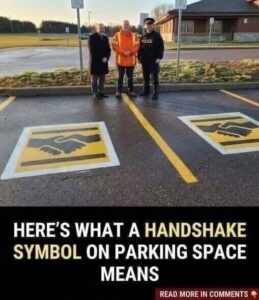
In response to these concerns, communities across North America and beyond have begun embracing a surprisingly simple solution. Marked by a recognizable handshake symbol painted on the pavement, designated safe exchange zones are providing secure locations where online buyers and sellers can meet with greater confidence.
At first glance, these spaces may appear unremarkable. They are often just a few parking spots located near public buildings, police stations, municipal offices, or other highly visible locations. However, the concept behind them reflects a thoughtful response to the realities of modern commerce. By creating clearly identified meeting areas designed specifically for online transactions, communities are helping reduce risk, discourage criminal behavior, and foster trust among strangers.
What seems like a modest innovation is quietly becoming an important part of the evolving relationship between digital technology and everyday life.
The Growing Popularity of Online Marketplaces
The rise of online buying and selling has been one of the most significant consumer trends of the past decade. Digital platforms have expanded access to goods, created opportunities for individuals to earn extra income, and encouraged the reuse of products that might otherwise be discarded.
People now routinely sell items they no longer need, from clothing and electronics to sporting equipment and home décor. Buyers benefit from lower prices and access to products that may not be available locally through traditional retail channels.
This shift has produced enormous convenience. Instead of hosting garage sales or placing classified advertisements in newspapers, individuals can reach thousands of potential buyers within minutes. Likewise, shoppers can compare options, negotiate directly, and find exactly what they need without leaving home.
However, while the discovery and negotiation phases occur online, the exchange itself often requires an in-person meeting. That transition from digital communication to physical interaction introduces a new set of considerations.
Unlike established retailers, individual marketplace users usually have no storefront, customer service desk, or secure business location. As a result, buyers and sellers must decide where to meet, often relying on convenience rather than safety.
For years, this aspect of the process received relatively little attention. Many people met in private driveways, isolated parking lots, or unfamiliar neighborhoods simply because those locations seemed practical at the time. Over time, however, concerns about security prompted communities to seek better alternatives.
The Origin of Safe Exchange Zones
The idea behind designated exchange areas emerged from a straightforward observation: if online transactions require strangers to meet, communities can help by providing locations specifically designed for that purpose.
Programs such as Project Safe Trade introduced the concept of publicly accessible exchange zones situated near law enforcement facilities or other monitored locations. These spaces offer visibility, lighting, accessibility, and a sense of accountability that many informal meeting spots lack.
In communities like Pembroke, Ontario, handshake-marked parking spaces have become visible symbols of this initiative. The painted handshake serves as an invitation and a reminder that safer options exist for completing transactions arranged online.
The concept does not require extensive infrastructure or expensive technology. In many cases, implementation involves little more than identifying an appropriate location, adding signage or pavement markings, and educating residents about the resource.
Despite its simplicity, the approach addresses a significant concern faced by millions of online marketplace users.
Why Location Matters
When it comes to personal safety, location plays a critical role.
A meeting arranged in a secluded area creates opportunities for misunderstandings and misconduct. Limited visibility, few witnesses, and restricted access to assistance can increase vulnerability for both parties.
By contrast, designated exchange zones are intentionally located in areas where people are likely to feel safer. These locations are generally well-lit, easy to access, and visible to members of the public. In many cases, they are positioned near buildings that maintain regular activity throughout the day.
The presence of a public setting changes the dynamics of the interaction. Individuals are often more comfortable inspecting products, discussing details, and completing transactions when they know they are in a secure environment.
Importantly, these spaces benefit both buyers and sellers equally. Safety concerns are not limited to one side of a transaction. Sellers may worry about carrying valuable items or handling cash, while buyers may be concerned about misrepresented products or personal security. A neutral meeting place helps address concerns for everyone involved.
The Power of a Simple Symbol
One of the most interesting aspects of these initiatives is the use of the handshake symbol itself.
Throughout history, the handshake has represented trust, agreement, cooperation, and mutual respect. It is widely recognized across cultures as a gesture associated with honesty and understanding.
When painted on a parking space, the symbol communicates its purpose instantly. People do not need lengthy explanations or detailed instructions to understand that the location is intended for safe exchanges.
Visual symbols often succeed because they simplify communication. Just as traffic signs convey important information quickly, the handshake icon serves as an easily recognizable signal that guides behavior.
Its effectiveness lies partly in its familiarity. The image conveys reassurance without appearing intimidating or overly official. It suggests partnership rather than enforcement, encouraging participation while promoting responsible conduct.
Building Trust in an Anonymous Marketplace
Trust has always been essential to commerce.
Traditionally, trust was established through reputation, community relationships, or repeated interactions. Local shop owners knew their customers, and customers knew where to find them if problems arose.
Online marketplaces operate differently. Buyers and sellers frequently interact only once and may have no prior connection. Digital profiles and ratings help, but they cannot eliminate all uncertainty.
Safe exchange zones help bridge this gap between digital anonymity and real-world interaction.
By providing a shared, recognized meeting place, communities create an environment where trust can develop more naturally. The location itself becomes part of the transaction process, offering reassurance before either party even arrives.
This added layer of confidence can encourage participation in online marketplaces, particularly among individuals who might otherwise hesitate to engage in transactions with strangers.
For many users, simply knowing that a safer meeting option exists can reduce anxiety and make the entire experience more positive.
Deterring Criminal Activity
Another important benefit of designated exchange zones is their ability to discourage wrongdoing.
Most criminal activity relies on opportunity. Individuals seeking to deceive, intimidate, or steal often prefer environments where they are less likely to be observed or identified.
A clearly marked public exchange area reduces those opportunities.
The visibility of the location, combined with its association with safety initiatives, can discourage individuals who might otherwise attempt fraudulent or harmful behavior. Even when law enforcement personnel are not directly involved in transactions, the proximity of public institutions creates a greater sense of accountability.
This deterrent effect may prevent incidents before they occur, which is often more effective than responding afterward.
Rather than relying solely on enforcement, safe exchange zones promote prevention through environmental design. By encouraging people to meet in safer locations, communities reduce the circumstances that allow problems to develop.
Supporting Community Well-Being
The benefits of these initiatives extend beyond individual transactions.
When communities invest in safety-oriented infrastructure, they send a message that residents’ well-being matters. Even a small project can demonstrate responsiveness to changing social and economic realities.
The rise of online commerce created new challenges that did not exist a generation ago. Safe exchange zones show how local governments, police services, and community organizations can adapt proactively.
These efforts contribute to a broader culture of awareness and responsibility. Residents become more conscious of personal safety considerations, and conversations about best practices become more common.
Over time, such initiatives can strengthen trust between community members and local institutions. People appreciate practical solutions that address real-world concerns without creating unnecessary complexity.
Encouraging Better Habits
One of the most valuable aspects of designated exchange zones is their influence on behavior.
When safer options are clearly available, people are more likely to make thoughtful decisions.
Instead of selecting a meeting location based solely on convenience, buyers and sellers are encouraged to consider factors such as visibility, accessibility, and security. This shift in mindset can have lasting effects.
Safety becomes a routine consideration rather than an afterthought.
Individuals who begin using designated exchange areas may also adopt other protective habits, including meeting during daylight hours, informing friends or family about plans, verifying item details beforehand, and maintaining records of communication.
These practices work together to reduce risk and improve overall transaction experiences.
Accessibility and Simplicity
A major reason for the growing popularity of safe exchange zones is their accessibility.
Unlike many modern solutions that rely on expensive technology or specialized equipment, these spaces require very little from users. There are no subscriptions, applications, registrations, or complicated procedures.
People simply agree to meet at the designated location.
This simplicity removes barriers that might otherwise discourage participation. Individuals of all ages and technical skill levels can benefit equally.
Accessibility also makes the concept highly scalable. Communities with limited budgets can implement similar programs without significant financial burdens. A few marked parking spaces and public awareness efforts can create meaningful improvements in local safety.
As a result, the model can be replicated in towns, cities, and regions with varying resources and needs.
The Future of Safe Exchanges
As online commerce continues to evolve, safe exchange zones may become increasingly integrated into digital platforms themselves.
Future marketplace applications could automatically recommend nearby exchange areas when users arrange meetings. Mapping services may highlight designated locations and provide safety guidance. Communities could expand programs to include secure package transfers, item inspections, and additional consumer protection resources.
Technology and physical infrastructure are likely to work together more closely in the years ahead.
Such integration would represent a natural progression. Online transactions begin digitally, but they often conclude in person. Connecting digital tools with designated meeting spaces can create a more seamless and secure experience from start to finish.
As awareness grows, these locations may become standard components of community planning rather than novel initiatives.
A Symbol of Adaptation
Perhaps the most remarkable aspect of the handshake-marked parking space is what it represents.
The symbol reflects society’s ability to adapt to changing circumstances. Online marketplaces transformed commerce at remarkable speed, creating opportunities and challenges that previous generations never encountered.
Communities could have viewed the resulting safety concerns as unavoidable consequences of technological progress. Instead, many chose to respond with practical, human-centered solutions.
The handshake symbol embodies that response.
It acknowledges that technology alone cannot solve every problem. Sometimes the most effective solutions involve thoughtful adjustments to the environments where people live, work, and interact.
By creating dedicated spaces for safe exchanges, communities demonstrate that innovation does not always require complexity. Meaningful improvements can emerge from simple ideas executed with care and purpose.
Conclusion
The painted handshake appearing in parking lots may seem insignificant at first glance, but its impact reaches far beyond the pavement beneath it.
These designated exchange zones address a growing need in an increasingly digital world. They provide safer locations for online buyers and sellers to meet, reduce opportunities for fraud and misconduct, encourage responsible decision-making, and strengthen trust within communities.
Their success highlights an important lesson about modern life. As technology changes the way people connect and conduct business, communities must continue adapting to ensure that convenience does not come at the expense of safety.
The handshake symbol offers a clear and accessible answer to that challenge. It represents trust, accountability, and shared responsibility—values that remain just as important today as they have always been.
In an era defined by rapid digital transformation, the simple act of marking a parking space has become a powerful reminder that thoughtful, community-driven solutions can make everyday interactions safer, more comfortable, and more trustworthy for everyone involved.