Before leaving home for a vacation, most people have a familiar checklist. They lock the doors, unplug unnecessary appliances, close or secure the windows, take out the trash, and make sure everything is ready for their return. Yet there is one small part of the house that is surprisingly easy to overlook: the sinks.
Kitchen and bathroom sinks may seem harmless when they are not being used, but leaving them unattended for several days or weeks can sometimes lead to unpleasant surprises. Strange odors can develop around drains, plumbing traps can lose water over time, and small insects may occasionally be attracted to damp areas or organic material inside drains.
Nobody wants to return from a relaxing trip only to walk through the front door and notice an unpleasant smell coming from the bathroom or kitchen. Fortunately, there is a simple household trick that can provide an extra layer of protection before you leave.
It involves something you probably already have in your kitchen: a drinking glass.
Why an Unused Sink Can Become a Problem
Every sink drain is connected to plumbing that usually contains a small amount of standing water. This water is held in a curved section of pipe known as a P-trap.
The water in the trap serves an important purpose. It creates a barrier that helps prevent sewer gases and odors from traveling backward through the drain and into your home.
When a sink is used regularly, fresh water periodically enters the trap and helps maintain that barrier. But if a sink remains unused for a long period, especially in a warm or dry environment, some of that water can gradually evaporate.
As the water level decreases, the trap may become less effective at blocking odors.
This is one reason an unused bathroom or kitchen can sometimes smell different after a long absence.
Small Insects May Also Be Attracted to Drains
Another issue associated with unused drains is the possibility of small insects appearing around them.
Drain flies, for example, can sometimes be found around sinks, showers, and other damp plumbing areas. They are attracted to the organic material and moisture that can accumulate inside drains.
This does not mean that every unused sink will develop an insect problem. However, keeping the drain covered can provide an additional physical barrier and make the opening less accessible.
That is where the upside-down glass trick comes in.
How the Upside-Down Glass Trick Works
The method is remarkably simple.
First, clean the sink thoroughly. Remove food particles, hair, soap residue, or other debris that may have collected around the drain.
Next, dry the sink and the area surrounding the drain.
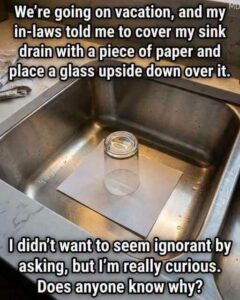
Place a clean paper towel over the drain opening. Then take an ordinary drinking glass and turn it upside down over the paper towel.
The glass creates a physical barrier over the drain, while the paper towel adds another layer between the opening and the surrounding room.
The purpose is not to permanently seal the plumbing. Instead, it is simply an easy way to reduce the movement of odors and discourage insects from coming through the opening while the sink is not being used.
Why Cleaning the Drain First Matters
Covering a dirty drain is not nearly as useful as cleaning it first.
Before leaving for vacation, take a few minutes to remove visible debris from the sink and drain. In a kitchen, this may include tiny food particles or grease. In a bathroom, hair, soap residue, and other buildup can accumulate around the drain.
Cleaning the area removes some of the material that could contribute to unpleasant odors.
A clean drain is also a better starting point for any preventive routine. The goal is to leave the sink as clean and dry as reasonably possible before covering it.
An Extra Step Before Covering the Drain
There is another simple step that can make the routine even more effective: run some water through the drain before you leave, particularly if the sink has not been used recently.
Allowing fresh water to enter the plumbing trap helps replenish the water barrier that can prevent unpleasant sewer gases from entering the home.
For a sink that has been sitting unused, running water for a short time before leaving can therefore be a useful part of your preparation.
Afterward, you can dry the visible sink surface and place the paper towel and upside-down glass over the drain.
For homes with multiple sinks, the same basic idea can be used in bathrooms, kitchens, laundry areas, or other locations where drains may remain unused during a trip.
What About Kitchen Sinks?
Kitchen sinks deserve particular attention because food residue can sometimes accumulate around drains.
Even tiny particles that are easy to overlook can contribute to unpleasant smells over time. Before a trip, clean the sink basin, wipe down the surrounding counter, and make sure there is no food waste left in the drain area.
If you have a garbage disposal, follow the manufacturer’s recommended cleaning and maintenance procedure rather than relying solely on a household trick.
The upside-down glass is best thought of as an additional barrier, not a substitute for proper cleaning or plumbing maintenance.
What About Bathroom Sinks?
Bathroom sinks can benefit from the same basic preparation.
Remove visible debris, clean around the drain, and make sure the sink is dry. If the sink has not been used for some time, running fresh water through it before leaving can help maintain the water in the plumbing trap.
Then place the paper towel over the drain and position the upside-down glass on top.
The setup takes only a few seconds, but it can provide peace of mind while you are away.
Don’t Forget Other Drains
Sinks are not the only drains in a home that can become noticeable during an extended absence.
Floor drains, showers, bathtubs, and other plumbing fixtures can also contain traps designed to hold water and prevent gases from entering living spaces.
If you are going to be away for a particularly long period, it may be worth checking the manufacturer’s or a plumber’s recommendations for maintaining those fixtures.
For drains that are rarely used, periodically adding water may help maintain the trap’s water barrier. However, some plumbing systems and fixtures can have special requirements, so avoid using chemicals or homemade mixtures unless you know they are appropriate for the plumbing.
A Small Habit That Can Make Returning Home Better
Travel preparation often focuses on major tasks: securing doors, checking appliances, arranging pets, protecting valuables, and making sure the refrigerator is in order.
Small plumbing details are easy to forget.
Yet taking a few minutes to clean and cover unused drains can help reduce the chance of coming home to unpleasant odors or unwanted insects around the sink.
The upside-down glass trick is appealing because it is inexpensive, simple, and requires no special equipment. A paper towel and an ordinary drinking glass can create a basic physical barrier that gives you one less thing to worry about while you’re away.
Of course, this method cannot solve serious plumbing problems. If you return home to persistent sewer odors, slow drainage, repeated insects, or signs of a plumbing issue, the underlying cause should be investigated rather than simply covered.
Still, for a normal home before a vacation, this little routine can be a useful addition to your departure checklist.
So before you close the door and head to the airport, take one final look at your sinks. Clean the drains, make sure the plumbing traps have water, dry the surrounding surfaces, place a paper towel over the opening, and turn a drinking glass upside down over it.
It may look like an odd little household ritual, but sometimes the simplest preparations can make coming home from vacation a much more pleasant experience.