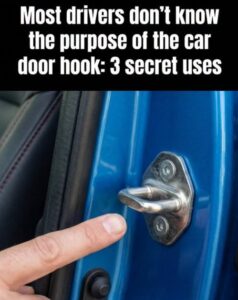
Have you ever opened your car door and noticed the small metal loop attached to the vehicle’s door frame?
It looks almost too simple to be important.
Some drivers assume it is just a hook, mounting point, or part of the door’s basic hardware. But that small piece of metal has a very specific purpose—and it plays an important role every single time you close your car door.
It is commonly called the door striker or latch striker.
You may not notice it during normal driving, but without it, the door latch would have nothing to securely grab onto.
What Does the Door Striker Actually Do?
When you close a car door, the latch mechanism inside the edge of the door moves around the metal striker attached to the vehicle’s body.
As the door reaches the closed position, the latch catches the striker.
That familiar click you hear is the latch engaging with the striker and holding the door firmly against the body of the vehicle.
It sounds simple, but the system has to be precisely engineered.
The striker must be positioned correctly so the door closes smoothly, the latch engages securely, and the door remains properly aligned with the surrounding body panels.
If the striker were positioned incorrectly, you might notice that the door requires excessive force to close, doesn’t sit flush with the body, or produces rattling and movement while driving.
An Important Part of Crash Protection
The striker isn’t merely there to make the door stay closed while you’re driving around town.
It is also an important component of the vehicle’s door-retention system.
During a collision, the doors can be subjected to forces far greater than those experienced during normal driving. The latch and striker work together to help keep the door closed and attached to the vehicle structure.
Keeping the door closed is an important part of maintaining the integrity of the passenger compartment during a crash.
Modern vehicles use sophisticated door latches, reinforced structures, and carefully engineered attachment points. The humble-looking striker is one small part of that larger safety system.
That is why it shouldn’t be treated as an ordinary hook.
It Also Helps Keep Your Ride Quiet
The striker has another job that becomes noticeable when something isn’t working correctly.
It helps keep the door firmly positioned against the body.
When the latch and striker are properly aligned, the door remains secure while the vehicle travels over bumps, potholes, and rough pavement.
If the door is loose or the striker becomes misaligned, you may hear annoying rattles or clicking noises coming from the door area.
In other words, that small piece of metal contributes to the quiet, solid feeling you experience when driving a properly maintained vehicle.
It Works With the Weather Seals
Your car door also relies on rubber weather seals to keep the outside environment where it belongs: outside.
These seals help prevent rainwater, dust, wind, and outside noise from entering the cabin.
For the seals to work effectively, the door needs to sit in the correct position against the body.
The striker helps maintain that position by providing a secure point for the latch to hold onto.
If the door isn’t closing correctly, the seals may not compress as intended. Over time, this can contribute to wind noise, water leaks, or other problems.
So the striker contributes indirectly to both comfort and weather protection.
Can You Use It as a Hook?
This is where things get interesting.
Because the striker is a strong-looking metal loop, some drivers have discovered practical accessories designed to attach to it.
Specially designed folding steps, for example, may use appropriate vehicle mounting points to help people reach roof racks, cargo boxes, or other equipment.
Some products also use vehicle door-frame attachment points to provide temporary support when getting into or out of a vehicle.
However, this does not mean you should attach whatever you want to the striker.
The fact that a component looks strong doesn’t automatically mean it has been designed to support additional loads.
The striker’s primary purpose is securing the door through the latch mechanism. Its suitability for accessories depends on the vehicle’s design and the specific product being used.
Always consult the vehicle owner’s manual and the accessory manufacturer’s instructions before attaching anything to it.
Don’t Hang Heavy Objects From It
This is particularly important.
A striker can withstand the forces associated with normal door operation and the vehicle’s engineered safety requirements, but that doesn’t mean it is a universal cargo anchor.
Adding weight or leverage to the wrong part of the door structure could potentially damage the striker, surrounding bodywork, latch mechanism, or weather seals.
It could also interfere with the door closing properly.
If an accessory is specifically designed for your vehicle and its manufacturer approves the attachment point, follow the stated weight limits and installation instructions.
Otherwise, it’s better to leave the striker alone.
Keep an Eye on Its Condition
Like many parts of a vehicle, the striker can accumulate dirt and grime over time.
Depending on the vehicle and climate, moisture and road contaminants can also contribute to corrosion.
During routine vehicle maintenance, it doesn’t hurt to inspect the striker and surrounding latch area.
Look for obvious signs of excessive wear, damage, looseness, or corrosion.
The door should close smoothly and latch securely without requiring unusual force.
If you notice that the door suddenly requires more effort to close, doesn’t sit correctly, rattles, or appears misaligned, it’s worth having the latch and striker inspected by a qualified technician.
Don’t ignore a door that isn’t closing properly.
Why Such a Small Part Matters
Cars contain thousands of components, and many of the most important ones are easy to overlook.
The door striker is a perfect example.
It doesn’t have a dashboard warning light.
It doesn’t make a dramatic sound when it works correctly.
You probably don’t think about it when you close your door and hear that familiar click.
But that tiny piece of metal helps the door latch do its job, contributes to the door’s secure alignment, reduces unwanted movement and noise, and supports the vehicle’s overall door-retention system.
It’s a reminder that automotive engineering isn’t only about engines, transmissions, screens, and complicated electronics.