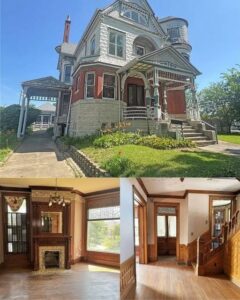
Few homes offer the opportunity to experience history as directly as this remarkable 1887 Queen Anne Victorian in Decatur, Illinois. Standing prominently within the Decatur Historic District, the residence combines impressive late-19th-century architecture, substantial living space, and a generous quarter-acre lot. With approximately 3,500 square feet across two main levels, the four-bedroom property provides an extraordinary setting for anyone who appreciates craftsmanship, architectural character, and the distinctive atmosphere of a historic home.
From the moment you approach the property, its elaborate exterior immediately captures attention. The home showcases an impressive combination of materials and decorative features, including rustic stone masonry, red brick, fish-scale shingles, carved woodwork, and a dramatic corner turret. These elements come together to create the unmistakable appearance of a Queen Anne Victorian residence, an architectural style celebrated for its variety of textures, asymmetrical forms, elaborate ornamentation, and distinctive rooflines.
The covered porte-cochère adds another memorable feature to the exterior while reinforcing the home’s historic character. The broad front porch creates an inviting entrance and features turned spindles and hand-carved brackets that demonstrate the level of detail used in the original construction. Above, high gables, the prominent turret, and an arched upper balcony contribute to a striking silhouette that gives the home a commanding presence within its neighborhood.
Although the exterior has developed an aged appearance over the years, many of the property’s original architectural elements remain remarkably impressive. The combination of historic masonry, decorative woodwork, and distinctive Victorian detailing provides a sense of authenticity that can be difficult to reproduce in a newer residence. For buyers who value original craftsmanship, the home offers an opportunity to live surrounded by features from another era.
The quarter-acre lot adds to the appeal. While the residence has a substantial footprint, the property also provides outdoor space that complements the architecture. The grounds offer an opportunity for landscaping, gardens, outdoor seating, or other improvements that could enhance the relationship between the home and its surroundings.
Stepping inside, the grand central foyer establishes the character of the residence immediately. Original details are prominent throughout the entrance, including gleaming oak floors, leaded glass transoms, carved woodwork, and an open staircase. Together, these features create an impressive first impression and provide a glimpse into the craftsmanship found throughout the home.
One of the most notable interior details is the quarter-sawn oak wainscoting. Rich woodwork covers portions of the walls and contributes warmth and depth to the interior. The substantial pocket doors are another exceptional feature. Constructed from solid wood, these oversized doors can be used to separate rooms when privacy is desired or opened to create a larger setting for gatherings and entertaining.
The home’s formal living room continues the architectural story. Tall ceilings create a sense of volume, while thick crown molding adds additional visual interest. Large windows allow natural light to enter the room, highlighting the historic finishes and giving the space an inviting atmosphere.
The deep window casings contain built-in pocket shutters, an especially interesting feature that reflects the practical craftsmanship of the period. Details such as these are increasingly uncommon in contemporary construction and help distinguish the home from properties designed according to modern building conventions.
Adjacent to the formal living room is a spacious great room measuring approximately 18 by 15 feet. The room includes a second fireplace, providing another focal point and adding warmth to the space. Tall double-hung windows overlook the grounds, connecting the interior with the surrounding property while allowing natural light to fill the room.
Throughout the residence, the combination of generous proportions and original details creates numerous possibilities for modern living. The home’s historic architecture provides a distinctive foundation, while its substantial size offers room for a variety of furniture arrangements, entertaining spaces, work areas, and everyday living needs.
The four-bedroom configuration also makes the property suitable for a household seeking more space. Bedrooms can potentially accommodate family members, guests, home offices, creative spaces, or other uses depending on the needs of the future occupants. The home’s two main levels provide a substantial amount of living area without sacrificing the architectural character that defines the property.
One of the most appealing aspects of owning a historic residence is the opportunity to preserve its character while making it functional for contemporary life. A property such as this can accommodate modern furnishings and conveniences while retaining the original elements that give it personality. Buyers may choose to highlight the oak floors, woodwork, pocket doors, fireplaces, windows, and other architectural details rather than replacing them with contemporary finishes.
The residence’s location within the Decatur Historic District further contributes to its identity. Historic districts often provide a distinctive neighborhood atmosphere, with established streetscapes and properties that reflect different periods of architectural development. For someone interested in historic homes, being part of such an environment can add another layer of appeal beyond the individual property itself.
At the same time, buyers considering a historic home should carefully evaluate its condition and understand any maintenance, renovation, or preservation considerations that may apply. An inspection by qualified professionals can help identify the condition of major systems and structural components. Prospective owners may also wish to research local historic-district requirements before planning exterior modifications, depending on the property’s applicable regulations.
The home’s age should be viewed as part of its identity, but it also makes careful due diligence particularly important. Roofing, masonry, electrical systems, plumbing, heating and cooling equipment, windows, and other components may require specialized attention in an older residence. Understanding the property’s current condition can help buyers make informed decisions about future maintenance and improvements.
For the right owner, however, these considerations are balanced by something difficult to replicate: genuine historic character. The scale of the rooms, quality of the woodwork, decorative exterior, original materials, and distinctive architectural features give the property a presence that modern construction rarely achieves.
This 1887 Queen Anne Victorian is more than simply a four-bedroom residence. It represents a surviving example of late-19th-century craftsmanship, with architectural details that tell the story of the era in which it was built. From the corner turret and porte-cochère outside to the oak floors, leaded glass, pocket doors, and carved woodwork inside, the home offers an unusually rich collection of historic features.
With approximately 3,500 square feet of living space and a quarter-acre lot, it also provides the scale necessary for comfortable modern living. Whether envisioned as a private residence, a carefully preserved historic property, or a long-term project for someone passionate about architecture, the possibilities are substantial.
For buyers drawn to homes with personality, history, and craftsmanship, this Decatur property presents a rare opportunity. Its prominent exterior, spacious interior, original architectural details, and established setting combine to create a residence with a distinctive sense of place.
Preserving a home like this means maintaining more than walls and rooms. It means caring for the craftsmanship, materials, and design details that connect the present with the past. With thoughtful stewardship, this remarkable Queen Anne Victorian can continue to stand as an impressive part of Decatur’s architectural landscape while providing its future owners with a truly distinctive place to call home.