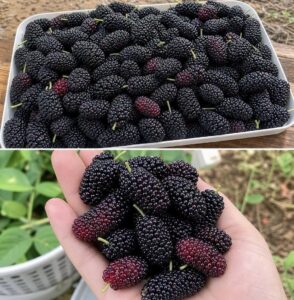
At first glance, the tiny dark fruits in the picture might look like ordinary blackberries. Their deep color and bumpy surfaces seem familiar, but a closer look reveals something distinctive: their slightly elongated shape, clusters of tiny rounded segments, and delicate stems.
These are mulberries, fruits that have been enjoyed in different parts of the world for centuries.
Depending on the variety, mulberries can range from white and pink to bright red, deep purple, and almost black. When fully ripe, many varieties develop a soft texture and a sweet flavor with a gentle tartness.
Their appearance is only part of their appeal. Mulberries provide dietary fiber, vitamin C, and a range of naturally occurring plant compounds. They can be enjoyed fresh when available, dried as a convenient snack, or incorporated into everyday meals.
Although no single fruit can guarantee good health, mulberries are an interesting addition to a varied diet. Here is what makes these small fruits worth a closer look.
What Exactly Are Mulberries?
Mulberries grow on trees belonging to the Morus genus. Several species are cultivated around the world, including black mulberry, red mulberry, and white mulberry.
Despite their names, the colors of mulberries can vary as the fruit develops and ripens.
Young fruits are generally firmer and lighter in color. As they mature, many become softer, juicier, and darker. Ripe fruits may be sweet, mildly tart, or a combination of both, depending on the species and growing conditions.
One particularly interesting feature is their structure. What looks like a single berry is actually a compound fruit formed from numerous small fruit units.
This gives mulberries their distinctive textured surface, which can sometimes resemble that of a blackberry.
However, mulberries and blackberries come from different plants. Blackberries grow on brambles in the Rubus genus, while mulberries grow on trees.
If you encounter a dark fruit that looks like a blackberry but grows on a tree, it may well be a mulberry.
Why Are Ripe Mulberries So Dark?
The rich purple and nearly black colors of many ripe mulberries come partly from natural pigments called anthocyanins.
These compounds belong to a larger group of plant substances known as polyphenols. They contribute to the colors of various fruits and vegetables, including blueberries, blackberries, and purple grapes.
Anthocyanins have attracted scientific interest because of their antioxidant activity in laboratory studies. Researchers continue to investigate how these compounds interact with the body and whether particular foods may contribute to long-term health.
However, there is an important distinction between promising laboratory findings and proven health outcomes in people.
A fruit’s dark color does not mean it can prevent or cure a disease. Mulberries are best appreciated as one nutritious food within a balanced eating pattern.
1. They Provide Dietary Fiber for Digestion
One of the useful features of whole mulberries is their dietary fiber.
Fiber contributes to normal digestive function and can help support regular bowel movements. It can also increase feelings of fullness, making fiber-rich foods a helpful part of satisfying meals and snacks.
Eating whole fruit offers an advantage over drinking juice because the intact fruit retains its natural fiber.
Mulberries can be incorporated into meals in several simple ways:
- Add fresh berries to plain yogurt.
- Sprinkle them over oatmeal or whole-grain cereal.
- Mix them into a fruit salad.
- Blend them into a smoothie.
- Pair them with nuts and seeds for a snack.
Fresh and dried mulberries differ in water content and nutrient concentration by weight. Dried fruit is more concentrated, so smaller portions can provide substantial amounts of natural sugar and energy.
People who monitor carbohydrate intake may find it useful to pay attention to portion sizes, especially when eating dried mulberries.
2. They Contain Vitamin C
Vitamin C is an essential nutrient that supports several important functions in the body.
It contributes to normal immune function, collagen formation, wound healing, and the absorption of iron from plant foods. It also acts as an antioxidant, helping protect cells from oxidative damage.
Mulberries can contribute to daily vitamin C intake, although the amount varies depending on the variety, freshness, storage conditions, and serving size.
Other useful sources include citrus fruits, kiwi, strawberries, guava, tomatoes, and bell peppers.
Eating a range of fruits and vegetables is generally a practical way to obtain vitamin C alongside other vitamins, minerals, and beneficial plant compounds.
Fresh mulberries can be particularly enjoyable when eaten soon after harvesting, but they are delicate fruits and can deteriorate relatively quickly.
3. Their Plant Compounds Have Antioxidant Activity
Mulberries contain several types of naturally occurring plant compounds, including anthocyanins and other polyphenols.
Antioxidants are substances that can help neutralize certain reactive molecules under particular conditions. The body also has its own antioxidant defenses, and these systems work together in complex ways.
The compounds found in mulberries have been investigated in laboratory and preliminary research for their biological effects.
However, the presence of antioxidants in a food does not automatically translate into a specific health benefit. The effects observed in laboratory experiments may not occur in the same way when people eat ordinary portions of the fruit.
Rather than focusing on a single antioxidant-rich food, it is more useful to consume a variety of colorful plant foods.
Mulberries can contribute to that variety while adding natural sweetness and flavor.
4. They Offer a Convenient Source of Natural Energy
Like other fruits, mulberries contain naturally occurring carbohydrates that the body can use for energy.
Fresh mulberries contain substantial water, while dried mulberries have much less water and therefore provide more concentrated energy per gram.
This difference makes dried mulberries convenient for travel, packed lunches, and quick snacks. They can also be added to homemade trail mixes with nuts, seeds, and other dried fruits.
Fresh berries may be more suitable when you want a juicy, refreshing snack.
Pairing fruit with a source of protein or healthy fat, such as plain yogurt or a handful of nuts, can help make a snack more satisfying.
Although mulberries provide useful nutrients, they are not a special energy booster. Their role is similar to that of other fruits: they supply carbohydrates and contribute to an overall varied diet.
5. They Can Help Add Variety to a Heart-Conscious Diet
Mulberries contain fiber and naturally occurring plant compounds, making them a reasonable choice for people seeking to eat more fruits and vegetables.
Research into berry-rich dietary patterns has explored relationships between fruit consumption, cardiovascular health, and other measures of well-being.
However, evidence about a particular fruit should not be confused with proof that it independently prevents heart disease.
Heart health depends on many factors, including overall dietary patterns, physical activity, sleep, smoking, blood pressure, and cholesterol levels.
Mulberries can fit into a heart-conscious eating pattern alongside vegetables, whole grains, legumes, nuts, and other fruits.
Their natural sweetness can also help make meals enjoyable without requiring large amounts of added sugar.
For example, fresh mulberries mixed into unsweetened yogurt can provide flavor without needing syrup or sweetened toppings.
6. They Contain Several Other Nutrients
In addition to fiber and vitamin C, mulberries provide smaller or varying amounts of other nutrients, depending on the variety and serving size.
These may include minerals such as potassium and iron, as well as vitamin K and other micronutrients.
Each nutrient has different functions. Potassium contributes to normal muscle and nerve function, while vitamin K plays an important role in blood clotting and bone metabolism.
The precise nutritional contribution depends on how much fruit you eat and whether it is fresh or dried.
Mulberries should not be treated as a replacement for a varied diet or as a concentrated source of every nutrient. Their value comes from contributing to the overall range of foods you consume.
People taking medication affected by vitamin K intake should follow their clinician’s advice about maintaining consistent dietary habits rather than making major changes without guidance.
7. Fresh or Dried: Which Is Better?
Both fresh and dried mulberries can be enjoyable, but they offer different practical advantages.
Fresh mulberries have a high water content and a soft, juicy texture. They work well in fruit salads, breakfast bowls, and desserts.
Dried mulberries are convenient to store and transport. Because water has been removed, their nutrients and sugars are more concentrated by weight.
When purchasing dried fruit, check the ingredient list for added sugar or other ingredients if you prefer an unsweetened product.
Fresh mulberries should be handled gently because they bruise easily. Store them in the refrigerator and wash them under clean running water shortly before eating. Discard fruit that is moldy, spoiled, or smells unusual.
If you harvest mulberries yourself, make sure you can identify the tree correctly and avoid fruit that may have been exposed to pesticides, road contaminants, or other sources of pollution.
Final Thoughts: A Small Fruit Worth Discovering
Mulberries may resemble blackberries at first glance, but these distinctive fruits have their own characteristics, flavor, and nutritional profile.
They provide dietary fiber, vitamin C, and naturally occurring plant compounds, while their sweet, juicy taste makes them easy to incorporate into everyday meals.
Whether eaten fresh, stirred into yogurt, added to oatmeal, or enjoyed in dried form, mulberries offer a simple way to bring more variety to your diet.
Their potential benefits should not be exaggerated, and they are not a cure for any illness. Nevertheless, they can be a nutritious part of a balanced eating pattern.