For years, Margaret believed that kindness, patience, and good manners were enough to maintain peaceful relationships with her neighbors. She was the kind of woman who greeted everyone with a smile, offered help whenever she could, and preferred resolving disagreements through calm conversations rather than arguments. After spending fifty years building a beautiful life with her husband, Harold, she valued peace more than anything else.
But everything changed after Harold passed away.
Suddenly, the house that had once felt full of laughter seemed painfully quiet. Margaret missed her husband’s morning greetings, his terrible jokes, and the comforting sound of his footsteps moving through the garden. Yet she gradually learned to live with the silence, finding comfort in caring for the home they had built together.
What she did not expect was that some people would begin treating her differently simply because she now lived alone.
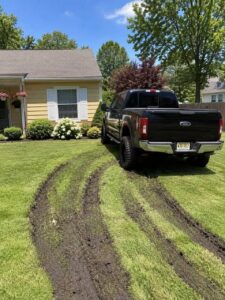
Her neighbors, a couple who owned a large pickup truck, had developed an irritating habit of driving across the edge of her lawn whenever they wanted to turn around or take a shortcut. At first, Margaret assumed it was accidental. She politely asked them to be careful, explaining that the grass had taken years to grow and that the tire marks were damaging it.
The husband laughed dismissively.
“It’s only grass,” he said. “It’ll grow back.”
Margaret said nothing more that day. She hoped they would respect her request.
They did not.
A few days later, she discovered fresh tire tracks cutting across the lawn. The following week, the same thing happened again. Each time, the damage became worse, leaving muddy ruts where she had once enjoyed watching birds search for worms in the morning sunlight.
To her neighbors, it was merely a convenient shortcut. To Margaret, it was a painful reminder that people sometimes mistake kindness for permission to disregard someone else’s rights.
That lawn was more than a patch of grass. Harold had helped her plant flowers along its borders. Together, they had spent countless weekends trimming the edges, removing weeds, and watching their garden flourish. Every corner held a memory.
Now, someone was destroying it simply because they believed she would not stand up for herself.
Margaret was furious. She considered marching to their front door and demanding an explanation. She imagined telling them exactly what she thought of their behavior.
Then she remembered something Harold used to say whenever a difficult situation arose.
“Never let someone else’s bad behavior decide what kind of person you become.”
Those words stayed with her.
Instead of acting out of anger, Margaret decided to approach the problem carefully. She understood that being polite did not mean she had to remain silent, and protecting her home did not require her to become hostile.
The following morning, she began documenting everything.
She took photographs of the tire marks from different angles and recorded the dates when she discovered the damage. She checked her property documents and reviewed the boundaries to ensure there was no confusion about where her land ended and the shared access area began.
She also contacted a local landscaping company to obtain an estimate for repairing the damaged lawn.
Then she installed security cameras overlooking her driveway and garden, making sure they were positioned to monitor her property appropriately.
For the first time since Harold’s death, Margaret felt herself regaining a sense of control.
A few days later, she sent her neighbors a polite but firm message.
She explained that their vehicle had repeatedly crossed her lawn, that the damage was being documented, and that they needed to stop using her property as a shortcut. She also requested that they discuss the cost of repairing the damaged grass.
Their response was dismissive.
The husband told her she was making a big deal out of nothing. His wife suggested that Margaret was simply lonely and looking for something to complain about.
The comments hurt more than she expected.
For a moment, she wondered whether it would be easier to ignore the problem. She was tired of dealing with conflict and missed the days when Harold could help her handle difficult conversations.
But then she looked out at the damaged lawn and remembered why she had started.
She was not asking for special treatment. She was asking for basic respect.
So she continued keeping records, saving messages, and documenting every new incident. She remained careful not to threaten, insult, or provoke her neighbors. She wanted a solution, not revenge.
Weeks passed, and the couple continued behaving as though her requests meant nothing.
Then, one afternoon, Margaret’s security camera captured the pickup truck crossing her lawn once again.
This time, she had clear documentation of the incident.
She reviewed the footage, saved the relevant recording, and added it to her existing records. She then contacted a local property professional to confirm the boundary information and sought guidance about the appropriate steps available to her if the behavior continued.
Margaret was no longer relying on promises or hoping that her neighbors would suddenly become considerate. She had facts, photographs, messages, and a clear record of what had happened.
Eventually, the husband approached her while she was tending to her flowers.
“We need to talk about this lawn situation,” he said.
Margaret put down her gardening tools and faced him calmly.
“Of course,” she replied.
He explained that he had not realized how much trouble the situation had caused. He suggested that perhaps they could find a way to settle the matter without involving other people.
Margaret listened without interrupting.
Then she explained that the repeated driving had damaged her property, that she had already requested the behavior stop, and that the lawn needed professional repairs. She showed him the photographs and the estimate she had obtained.
Most importantly, she made her position unmistakably clear.
“I want us to remain on civil terms,” she said. “But my property is not a shortcut. The damage needs to be addressed, and your truck cannot continue crossing my lawn.”
There was no shouting. No insults. No dramatic threats.
Just a woman stating what she expected and refusing to be pushed aside.
Faced with the evidence, her neighbors finally began taking the matter seriously. After further discussion, they agreed to contribute to the repair costs and stop driving across her property.
For Margaret, the agreement was a relief.
She hired a landscaper to repair the damaged areas, restore the soil, and reseed the grass. The work took time, and the lawn did not become perfect overnight. But slowly, the muddy tracks disappeared beneath fresh growth.
One morning, as she stood near the garden watching the sunlight spread across the grass, Margaret felt something she had not experienced in months.
Peace.
Not the fragile kind that depended on everyone else behaving well, but the deeper peace that came from knowing she could protect herself when necessary.
She thought about Harold and wished he could have seen how she had handled the situation. He would probably have smiled, nodded, and reminded her that she had always been stronger than she realized.
His absence still hurt. Nothing could replace the life they had shared or erase the loneliness that sometimes settled over the house.
But she no longer viewed living alone as a weakness.
She had learned that she could make difficult decisions, establish boundaries, and defend her interests without sacrificing her values. She did not need to become aggressive to become assertive, and she did not need anyone’s permission to expect respect.
Her neighbors had assumed that her quiet nature meant she would eventually surrender. Instead, her patience had allowed her to approach the dispute with a clear head, gather the necessary evidence, and pursue a practical solution.
In the end, Margaret reclaimed more than her lawn. She reclaimed her confidence.
The lesson she learned was simple: kindness is a strength, but kindness without boundaries can invite people to take advantage of you.
You can be respectful without being submissive. You can forgive without accepting repeated disrespect. And you can stand up for yourself without allowing anger to control your decisions.
Sometimes, the strongest response is not a confrontation or an act of revenge. It is a calm decision to document what happened, communicate clearly, and take the appropriate steps to protect what belongs to you.
Margaret had spent years believing that keeping the peace meant avoiding conflict at all costs. Now she understood something more important.