Before leaving for vacation, most people make a checklist of things to do around the house. They lock the doors, close the windows, unplug unnecessary electronics, and make sure their valuables are safely stored away. Some even ask a neighbor to collect their mail or check on their home while they’re gone.
But there’s one small detail that many homeowners overlook: the kitchen and bathroom sinks.
It might seem strange to think that a sink could cause problems while you’re away, especially when everything appears clean and dry. However, leaving your plumbing unused for days or weeks can sometimes lead to unpleasant odors, unexpected messes, and other surprises when you return.
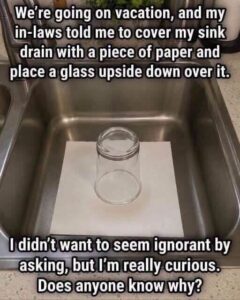
That’s why a simple household trick involving an upside-down glass and a piece of paper has attracted attention. While this method can help cover a drain opening, understanding what it can and cannot do is important before relying on it during your vacation.
Why Your Sink Can Smell After a Vacation
One of the most common reasons for unpleasant drain odors is the plumbing trap.
Beneath most sinks is a curved section of pipe called a P-trap or, in some installations, an S-trap. Its purpose is to retain a small amount of water that creates a barrier between your home and the sewer system.
Under normal circumstances, that water prevents sewer gases from traveling back through the drain and entering your kitchen or bathroom.
However, if a sink remains unused for a long time, some of the water in the trap can gradually evaporate. This is more likely to happen during hot weather, in dry indoor conditions, or when a property remains vacant for an extended period.
When the water seal becomes too low or disappears, unpleasant smells may begin drifting into the room.
Imagine returning from a relaxing two-week holiday, opening your front door, and being greeted by a strong, unpleasant odor coming from the bathroom. Instead of enjoying the first few minutes back home, you may find yourself searching for the source of the smell.
Fortunately, this problem is often preventable.
What Does the Upside-Down Glass Trick Do?
The idea is straightforward: cover the sink drain with a piece of paper and place an upside-down glass over it before leaving.
The glass acts as a physical cover, while the paper provides a simple layer between the glass and the sink surface.
Depending on the sink’s shape and how the objects are positioned, this arrangement may help keep dust and debris away from the drain opening and discourage insects from reaching the opening directly.
However, there is an important distinction: an upside-down glass and a piece of paper do not reliably prevent sewer gases from escaping through a dry plumbing trap.
The glass may not create an airtight seal, and the paper can shift or absorb moisture. If the water barrier inside the pipe dries out, the underlying plumbing issue remains.
For this reason, the trick should be viewed as an optional cover rather than a substitute for proper drain maintenance.
If your main concern is sewer odors, there is a more effective step you can take before leaving.
The Better Way to Protect Your Drains
Before heading out on vacation, run water through your kitchen and bathroom sinks for a short time.
This helps refill the plumbing traps and restores the water barrier that blocks sewer gases.
You can also run water in other rarely used fixtures, including guest showers, bathtubs, and floor drains.
If you know you’ll be away for several weeks or months, consider these additional precautions:
- Clean the sink and drain area. Remove food scraps, hair, soap residue, and other debris that could create unpleasant smells.
- Check for slow drainage. A partially blocked drain can retain organic material that produces odors even when the plumbing trap contains water.
- Use a suitable drain cover. A purpose-made cover can help keep insects and debris out of the drain opening, although it won’t repair a dry trap or faulty plumbing.
- Ask someone to check the house. For a longer absence, a trusted neighbor or property manager can periodically check for leaks, unusual odors, or other problems.
- Address recurring smells before leaving. If a drain repeatedly smells like sewage despite having water in its trap, a plumber may need to inspect the plumbing.
These simple steps can help you return to a fresher home without worrying about avoidable plumbing problems.
Can Insects Enter Through Your Sink?
Another reason people cover their drains before traveling is the possibility of insects appearing indoors.
Certain small flies, including drain flies, breed in the organic film that can accumulate inside drainpipes. Other insects may enter homes through gaps, windows, or other openings while searching for food, shelter, or moisture.
A drain cover may provide a physical barrier at the opening, but it won’t eliminate insects already breeding inside the pipe.
If you regularly see tiny flies near your sink, inspect the drain for accumulated organic matter and clean it using an appropriate method. Simply covering the opening may temporarily conceal the problem without resolving its source.
Ants and cockroaches can also enter through other routes, so covering a sink drain alone cannot guarantee an insect-free home.
Keeping food sealed, wiping up spills, emptying rubbish bins, and repairing gaps around plumbing can be more effective as part of a broader prevention plan.
What About Leaving Paper in the Sink?
Paper is inexpensive and readily available, which makes it tempting to use as a quick household solution.
However, ordinary paper can absorb water, tear, or move out of position. If it becomes damp, it may also leave residue or become less effective as a cover.
If you decide to use the glass-and-paper method, make sure the sink is clean and dry around the covered area, and avoid placing anything that could fall into the drain or obstruct an overflow opening.
Never rely on loose paper or an ordinary drinking glass to create a gas-tight seal.
A properly fitted drain stopper or cover designed for the purpose is generally a more practical option when you want to keep debris away from the opening.
And remember that the water inside the plumbing trap is the primary protection against sewer odors, not the objects placed over the sink.
A Simple Vacation Checklist for Your Kitchen and Bathroom
Before leaving home, take a few minutes to complete these checks:
- Run water in all regularly used sinks and showers.
- Make sure drains are flowing normally.
- Remove food scraps and clean the sink surfaces.
- Check underneath sinks for signs of leaks.
- Secure rubbish bins and store food in sealed containers.
- Cover drain openings if you want to keep dust and debris out.
- Ask someone to check your property if you’ll be away for an extended period.
These small preparations can help prevent unpleasant surprises and make your return home more comfortable.
The Bottom Line
The idea of leaving an upside-down glass and a piece of paper in your sink before going on vacation is simple, inexpensive, and easy to try. It may help cover the drain opening and keep some debris away, but it isn’t a guaranteed solution for sewer odors or household pests.
The most important step is making sure your plumbing traps contain water before you leave. If a drain continues to smell like sewage, investigate the cause rather than relying on a makeshift cover.
A few minutes of preparation can make a real difference. After all, the goal of a vacation is to enjoy your time away—not to return home to unpleasant smells, unwanted insects, or plumbing problems that could have been prevented.