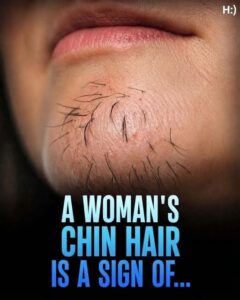
A few chin hairs can be surprising, but facial hair in women is far more common than many people realize. Growth can range from one or two fine strands to darker, thicker hairs that become more noticeable over time. Although many women feel self-conscious about this change, chin hair is a natural part of human hair growth and does not automatically indicate a health problem.
Hormones, genetics, age, and certain medical conditions can all influence how facial hair develops. Understanding these factors can help women make informed decisions about grooming, recognize when a medical evaluation may be useful, and feel less pressure to hide a normal variation in their bodies.
Why Do Women Grow Chin Hair?
Hair follicles are distributed across the skin, including the chin and upper lip. Some produce fine, light-colored hairs called vellus hairs, while others can produce thicker, darker hairs known as terminal hairs.
Androgens, including testosterone, play an important role in this process. Although these hormones are often associated with men, women naturally produce them too. The amount of androgen activity in the body, along with the sensitivity of individual hair follicles, influences whether facial hairs remain fine or become thicker and more noticeable.
This explains why two women with similar hormone levels may experience different patterns of facial hair. One may notice only a few fine strands, while another may develop several coarse hairs along the chin or jawline.
The Role of Genetics and Family History
Genetics can strongly influence facial hair growth. If your mother, grandmother, or other female relatives have noticeable chin hair, you may be more likely to experience something similar.
Inherited characteristics can affect hair thickness, color, distribution, and follicle sensitivity. Ethnic and family backgrounds may also contribute to differences in normal hair-growth patterns.
For this reason, a few dark chin hairs do not necessarily mean that something is wrong with your hormones. Some women naturally grow more visible facial hair than others, even when they are healthy and their hormone levels fall within expected ranges.
How Age and Hormonal Changes Affect Chin Hair
Facial hair can change throughout a woman’s life. During adolescence and adulthood, hormonal changes may influence hair growth and distribution. Later, changes associated with perimenopause and menopause can make certain facial hairs more noticeable.
As estrogen levels decline during menopause, the balance between estrogen and androgens changes. Some women consequently notice thicker hairs on the chin, upper lip, or jawline, even without a major increase in testosterone.
Individual hair follicles also change over time, and inherited sensitivity can affect how they respond to hormones. A few new hairs may therefore appear gradually with age.
However, a sudden or pronounced increase in facial hair should not automatically be attributed to aging. If the change develops quickly or occurs alongside other unusual symptoms, discussing it with a healthcare professional is sensible.
When Chin Hair May Be Linked to PCOS
One possible cause of excessive facial hair is polycystic ovary syndrome, commonly known as PCOS. This hormonal condition can increase androgen activity and contribute to a pattern of hair growth called hirsutism.
Hirsutism refers to coarse, dark hair growing in areas where androgen-sensitive hair growth is more typical in men, such as the chin, upper lip, chest, or abdomen.
PCOS can also be associated with irregular menstrual periods, acne, scalp hair thinning, and difficulties with ovulation. However, symptoms vary, and not everyone with PCOS experiences the same combination.
Having chin hair alone does not establish that someone has PCOS. Many women with a few facial hairs have no underlying medical condition. A healthcare professional can consider the overall symptom pattern and decide whether examination or hormone testing is appropriate.
Other, less common explanations for increased facial hair include certain medications and hormonal disorders. A sudden onset of coarse facial hair, particularly when accompanied by a deeper voice, rapidly increasing muscle mass, or other signs of significant hormonal change, warrants prompt medical assessment.
Why Chin Hair Can Feel Emotionally Difficult
There is another side to chin hair that deserves more attention: the emotional impact.
Beauty standards often suggest that women’s faces should be completely smooth and free of visible hair. Social media, advertising, and edited photographs can reinforce this expectation, making ordinary body features seem like flaws that must be corrected.
As a result, some women repeatedly inspect their chins in mirrors, carry tweezers everywhere, or worry that other people will notice a few stray hairs. These feelings can become particularly frustrating when hair returns soon after removal.
It is important to remember that facial hair does not determine femininity, attractiveness, cleanliness, or personal worth. Women experience a wide range of natural hair-growth patterns, and there is no single appearance that every woman’s face should have.
Choosing to remove chin hair is a personal preference, not an obligation. Equally, choosing not to remove it is completely valid. Neither decision requires an explanation or apology.
Safe Ways to Manage Unwanted Chin Hair
If chin hair bothers you, several options are available. The most suitable choice depends on your skin sensitivity, hair color, budget, and personal preferences.
Tweezing: Tweezers can remove individual hairs and may be practical when only a few strands are present. Use clean tweezers and avoid repeatedly picking at irritated skin.
Shaving: Facial shaving cuts hair at the skin’s surface. It does not make hair grow back thicker, darker, or faster, although newly cut hairs may temporarily feel blunt.
Depilatory creams: Products designed specifically for facial use can dissolve hair near the skin’s surface. Follow the instructions carefully and perform a patch test because these products may irritate sensitive skin.
Waxing or threading: These methods remove hair from the root and can provide longer-lasting results than shaving. However, they may cause temporary redness, irritation, or ingrown hairs.
Laser hair reduction: Laser treatment can reduce hair growth over multiple sessions. Results depend partly on hair color, skin tone, and the technology used, so consultation with a qualified practitioner is important.
Electrolysis: This method treats individual hair follicles and can provide permanent hair removal when successfully completed. It generally requires multiple sessions.
No method is right for everyone. If you have a skin condition or use medications that increase skin sensitivity, seek professional advice before trying a new hair-removal treatment.
When Should You See a Healthcare Professional?
A few isolated chin hairs usually do not require medical treatment. However, consider seeking an assessment if facial hair becomes noticeably thicker or more widespread over a short period, particularly if you also experience irregular periods, persistent acne, scalp hair thinning, or difficulty becoming pregnant.
A clinician can review your symptoms, menstrual history, medications, and other relevant factors. Depending on the findings, they may recommend blood tests or further evaluation.
Avoid taking hormone supplements or medications intended to change hair growth without appropriate medical guidance. Treatment should address the underlying cause when one exists.
Final Thoughts
Women’s chin hair is a common and often misunderstood feature of normal human biology. Genetics, follicle sensitivity, aging, and hormonal changes can all influence how much facial hair develops.
Although a few stray hairs are usually not a cause for concern, sudden or substantial changes deserve attention, especially when other symptoms appear. Understanding the difference can help women avoid unnecessary worry while recognizing when professional advice may be beneficial.
Most importantly, chin hair is not a personal failure or something every woman must eliminate. Whether you choose to remove it, manage it occasionally, or leave it alone, your decision should be guided by your comfort and preferences rather than unrealistic beauty standards.