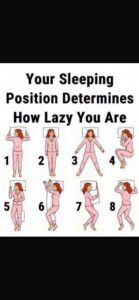
Have you ever wondered whether the way you sleep says something about how you live? From spreading across the bed like a starfish to curling tightly into a ball, different sleeping positions have inspired countless playful personality descriptions. Some people believe that the way we arrange our bodies at night reflects our attitudes toward comfort, independence, productivity, and relaxation.
But can your favorite sleeping position really reveal whether you are lazy? Or is there something completely different happening while you sleep?
Although there is no reliable scientific evidence that sleeping positions determine laziness or personality, exploring these familiar sleeping styles can be a fun way to reflect on everyday habits. Here are eight common sleeping positions and the playful characteristics traditionally associated with them.
1. The Arms-Up Sleeper: The Independent Thinker
<text color=”secondary” size=”sm”>Playful laziness score: 3/10</text>
The arms-up sleeper lies on their back with their arms raised near their head or pillow. Sometimes called the star-gazer variation, this position can look relaxed without appearing completely sprawled across the mattress.
In popular personality descriptions, arms-up sleepers are associated with independence, curiosity, and an active mind. They supposedly enjoy their comfort but don’t necessarily want to spend the entire day doing nothing.
If this is your preferred position, the playful interpretation suggests that you appreciate a balance between relaxation and activity. You may enjoy quiet evenings but still feel motivated to pursue personal goals.
Of course, your arm placement at night cannot establish how hardworking or independent you really are. Comfort, habit, and physical needs are much more plausible explanations for why you sleep this way.
2. The Straight Sleeper: The Organized Planner
<text color=”secondary” size=”sm”>Playful laziness score: 5/10</text>
Straight sleepers lie on their backs with their bodies relatively aligned and their arms resting beside them or close to their sides.
This position is often associated with routine, structure, and reliability in popular sleeping-position personality lists. The playful idea is that people who sleep this way appreciate order and prefer knowing what to expect.
If you identify with this description, you might enjoy planning your week, maintaining a consistent schedule, or completing tasks before relaxing. You may find it satisfying to have everything organized.
However, sleeping straight doesn’t mean someone is naturally disciplined, just as sleeping in a tangled position doesn’t mean they lack organization. The resemblance between a sleeping posture and a personality trait is an entertaining comparison, not a dependable psychological assessment.
3. The Starfish Sleeper: The Comfort Enthusiast
<text color=”secondary” size=”sm”>Playful laziness score: 7/10</text>
Starfish sleepers spread out across the bed, usually lying on their backs with their arms and legs extended.
According to playful personality interpretations, these sleepers love having space and appreciate opportunities to relax. Their sprawling posture has become a humorous symbol of someone who wants to be comfortable without unnecessary restrictions.
The traditional laziness score for this position is 7/10, suggesting a preference for relaxation over constant activity.
But enjoying comfort isn’t the same as being lazy. Someone who spreads out while sleeping may have an active lifestyle, work long hours, or simply find that position comfortable.
If you are a starfish sleeper, the only safe conclusion is that you tend to occupy plenty of mattress space!
4. The Curled-Up Sleeper: The Thoughtful Energy Saver
<text color=”secondary” size=”sm”>Playful laziness score: 4/10</text>
Curled-up sleepers draw their knees toward their chest and tuck their arms close to their bodies. This resembles the fetal position and is one of the familiar ways people arrange themselves in bed.
In popular interpretations, curled-up sleepers are described as thoughtful, cautious, and selective about where they invest their energy.
Their relatively low laziness score suggests that they supposedly conserve their energy rather than avoid work altogether.
The description may sound familiar to someone who prefers a quiet evening after a busy day. Still, people curl up for many reasons, including personal comfort, temperature, habit, and the way their mattress feels.
Your sleeping posture cannot tell another person whether you are introverted, anxious, productive, or particularly thoughtful.
5. The Casual Side Sleeper: The Easygoing Achiever
<text color=”secondary” size=”sm”>Playful laziness score: 6/10</text>
Side sleeping is one of the most common sleeping styles. Casual side sleepers rest on one side with their arms and legs positioned naturally, without a tightly curled posture or a dramatic stretch.
Popular personality descriptions associate this position with practicality and an easygoing approach to everyday life. These sleepers are sometimes portrayed as people who prefer efficient solutions rather than making simple tasks unnecessarily complicated.
A score of 6/10 places them somewhere in the middle of the playful laziness scale.
In reality, side sleeping is a physical preference, not evidence of someone’s work ethic. Some people find it comfortable, while others choose it because of snoring, pregnancy-related comfort needs, or medical advice.
6. The Face-Down Pillow Hugger: The Comfort Lover
<text color=”secondary” size=”sm”>Playful laziness score: 8/10</text>
This sleeper lies face-down or partly on their stomach while hugging a pillow tightly. The position can look particularly cozy, as though the person has created a personal comfort zone around themselves.
In humorous personality lists, this style receives one of the highest laziness scores. Its supposed meaning is that the sleeper values comfort, enjoys taking things slowly, and would rather avoid unnecessary effort.
But loving a comfortable bed is not a character flaw. Rest is an essential part of everyday life, and everyone needs time away from responsibilities.
There is also a practical consideration: stomach sleeping can place additional strain on the neck because the head usually has to turn to one side. If you wake up with discomfort, adjusting your position or pillow may help.
The goal isn’t to prove that you are hardworking by choosing an uncomfortable sleeping position. It’s to find a posture that allows you to rest well.
7. The Side Pillow Hugger: The Security Seeker
<text color=”secondary” size=”sm”>Playful laziness score: 6/10</text>
Side pillow huggers sleep on their sides while holding a pillow close to their chest or stomach.
In popular interpretations, this position is associated with emotional comfort, warmth, and a desire for security. Hugging a pillow may simply feel soothing and help someone settle into a comfortable posture.
The playful laziness score of 6/10 suggests a moderate preference for relaxation.
However, holding a pillow while sleeping does not reveal whether someone is emotionally dependent, sensitive, lonely, or especially affectionate. Those characteristics cannot be reliably inferred from a sleeping position.
If hugging a pillow helps you feel comfortable, there is no need to change the habit simply because a personality list assigns it a particular meaning.
8. The Half-Turn Sleeper: The Flexible Adapter
<text color=”secondary” size=”sm”>Playful laziness score: 5/10</text>
Half-turn sleepers occupy an in-between position, often lying partly on their side with their upper body or legs turned slightly forward or backward.
Popular descriptions associate this posture with adaptability and balance. These sleepers are sometimes portrayed as people who can adjust to changing circumstances without becoming overly concerned about every detail.
Their score of 5/10 places them directly in the middle of the playful scale.
But sleeping positions often change throughout the night. You might begin on your back, turn onto your side, and wake up in a completely different position. This movement is normal and doesn’t reveal whether you are adaptable in your everyday life.
Can Your Sleeping Position Really Reveal How Lazy You Are?
Here is the most important point: there is no scientifically established laziness score for sleeping positions.
The numbers in personality-style lists are entertainment, not validated measurements. Researchers have not established that sleeping with your arms raised makes you less lazy than hugging a pillow or stretching out like a starfish.
Your energy levels and daily behavior are influenced by many factors, including sleep quality, physical health, stress, mood, work demands, and personal circumstances.
If you regularly feel exhausted or struggle to stay motivated, your sleeping posture is unlikely to provide the answer. Consider whether you are getting enough restful sleep and whether other factors might be affecting your energy. Persistent or unexplained fatigue may be worth discussing with a healthcare professional.
Final Thoughts
Whether you sleep like a starfish, curl into a ball, hug your pillow, or stretch your arms above your head, your favorite position can be an amusing conversation starter.
You might recognize yourself in the playful descriptions, or you might discover that none of them fits.
Either way, don’t let a number on a personality chart define your work ethic. Being productive doesn’t mean staying busy every moment, and enjoying rest doesn’t make you lazy.
The next time someone asks what your sleeping position says about you, feel free to share your favorite interpretation. Just remember that the most important thing your sleeping position should provide is a comfortable night’s rest—not a verdict on your personality.