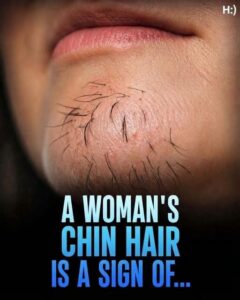
Finding a dark hair on your chin can be surprising, especially when you don’t remember seeing it before. You might pluck it immediately, check the mirror for others, or wonder whether something has changed in your body. For many women, chin hair is a completely normal part of life. Yet despite how common it is, facial hair remains a subject surrounded by embarrassment, misconceptions, and unnecessary pressure to look a certain way.
The truth is that women naturally grow facial hair, and the amount, color, and thickness vary considerably from person to person. A few coarse hairs on the chin do not automatically indicate a hormonal problem, poor health, or anything unusual. Understanding why they appear can help women feel more comfortable with their bodies and recognize when a change might deserve medical attention.
Why Do Women Grow Chin Hair?
Hair growth is influenced by several factors, including genetics, hormones, age, and the sensitivity of individual hair follicles.
Androgens, sometimes described as male hormones, are present in everyone, including women. Testosterone is one example. These hormones contribute to various normal bodily functions, and their effects on hair follicles differ from person to person.
Some follicles are more sensitive to androgens than others. When stimulated, they can produce thicker, darker hairs rather than the fine, lightly colored hairs commonly found on the face.
This explains why two women with similar hormone levels may experience very different amounts of facial hair. One might notice only an occasional strand, while another may develop several coarse hairs along her chin, upper lip, or jawline.
Genetics also plays an important role. If your mother, grandmother, or other relatives have noticeable facial hair, you may be more likely to experience something similar.
In many cases, a few chin hairs are simply part of your natural biology.
The Role of Age and Hormonal Changes
Chin hair can become more noticeable as women grow older.
During the years leading up to menopause and afterward, estrogen levels change substantially. The balance between estrogen and androgens also shifts, which can make existing facial hairs more noticeable or encourage some follicles to produce coarser hairs.
That is why a woman who rarely needed to think about facial hair in her twenties might notice several darker strands in her forties, fifties, or beyond.
These changes do not necessarily mean that her body is producing abnormally high levels of testosterone. Sometimes, the change reflects the normal aging process and the way individual hair follicles respond to hormones.
However, age alone does not explain every case. A sudden increase in coarse facial hair, especially when accompanied by other symptoms, should not automatically be dismissed as a normal part of getting older.
What Is Hirsutism?
The medical term hirsutism describes excessive growth of coarse, dark hair in women in areas where androgen-sensitive hair growth is more typical in men. These areas can include the chin, upper lip, chest, abdomen, and back.
Hirsutism is different from having one or two isolated chin hairs. It generally refers to a more noticeable pattern of terminal hair growth.
One possible cause is polycystic ovary syndrome (PCOS), a hormonal condition that can affect ovulation, menstrual cycles, and androgen levels. Some women with PCOS experience facial hair growth alongside acne, irregular periods, or scalp hair thinning.
Other possible causes include certain medications and, less commonly, other hormonal conditions.
Not every woman with facial hair has PCOS, and not everyone with PCOS develops noticeable chin hair. A clinician considers the overall pattern of symptoms, medical history, and, when appropriate, laboratory results before determining whether further investigation is needed.
Why a Single Hair Can Feel Like Such a Big Deal
The physical presence of a chin hair is often less troubling than what it seems to represent.
Many women grow up seeing smooth, hairless faces in advertisements, beauty videos, and edited photographs. These images can create the impression that visible facial hair is unusual or something that must always be removed.
When a coarse hair appears, a woman may feel embarrassed, worry that someone else will notice, or become anxious about whether her appearance has changed.
Some women carry tweezers everywhere. Others check their faces repeatedly under bright bathroom lighting. A small, ordinary feature can become a source of disproportionate stress when someone believes it makes them less feminine or attractive.
But facial hair does not determine femininity, health, or personal worth.
Bodies are not identical, and beauty images rarely show the full range of normal human variation. Many people remove facial hair, use makeup, or adjust photographs, so what appears to be a universal beauty standard often reflects grooming choices rather than biological reality.
There is no requirement to have a completely hairless chin.
You can remove facial hair if you prefer a smooth appearance, or leave it alone if it does not bother you. Neither choice makes you more or less feminine.
Is It Safe to Pluck Chin Hair?
For most people, carefully removing a few chin hairs with clean tweezers is generally safe.
If you choose to pluck, wash your hands and clean the tweezers before use. Remove the hair gently in the direction of growth, and avoid repeatedly digging into the skin to retrieve an ingrown hair.
Plucking may cause temporary redness, irritation, or ingrown hairs. Repeated irritation can occasionally contribute to inflammation or dark marks, particularly in skin prone to pigmentation changes.
Other options include trimming, shaving, threading, waxing, and professional hair-removal treatments.
Shaving does not make hair grow back thicker or darker. The cut end can feel blunt as it grows out, which may make the hair seem coarser, but shaving does not change the follicle itself.
Laser hair removal can provide longer-lasting reduction in suitable hair types, while electrolysis can permanently remove individual hairs when performed appropriately. A qualified professional can help determine which method is suitable for your skin and hair.
The best option is the one that fits your comfort, budget, and preferences. You do not need to spend money on treatments simply because a few hairs have appeared.
When Should You Speak With a Doctor?
Occasional chin hairs without other symptoms are usually not a reason for alarm.
However, consider arranging a medical appointment if you notice a significant or rapid increase in coarse facial hair, especially if it occurs alongside other changes, such as:
- Irregular or absent menstrual periods.
- New or worsening acne.
- Thinning hair on the scalp.
- Difficulty becoming pregnant.
- Other noticeable changes that suggest a hormonal imbalance.
Seek prompt medical assessment if new coarse facial hair develops rapidly over a few months, particularly if accompanied by a deeper voice, increased muscularity, or other signs of significant androgen excess. These symptoms are uncommon, but they warrant investigation.
A healthcare professional can review your symptoms, medications, menstrual history, and family background. Depending on the situation, they may recommend hormone testing or other investigations.
Avoid diagnosing yourself based on facial hair alone. A single symptom rarely tells the whole story, and unnecessary testing or treatment can create additional worry.
If a hormonal condition is identified, treatment depends on the cause and may include medication, management of an underlying condition, or methods to reduce unwanted hair growth.
A More Comfortable Relationship With Your Body
Perhaps the most important thing to understand about chin hair is that you are allowed to decide how much attention it deserves in your life.
If a few hairs bother you, removing them is a perfectly reasonable personal choice. If you would rather leave them alone, that is equally valid.
What matters is that the decision comes from your own preferences rather than the fear that your body must meet an unrealistic standard.
You do not need to inspect your face every morning searching for imperfections. You do not need to apologize for having normal body hair. And you do not need to assume that every change signals a health problem.
At the same time, accepting your body does not mean ignoring symptoms that concern you. Paying attention to significant changes and seeking medical advice when appropriate are sensible forms of self-care.
The Truth Worth Remembering
Women’s chin hair is influenced by genetics, hormones, age, and the behavior of individual hair follicles. For many women, a few darker strands are simply a normal variation of human biology.
Sometimes facial hair can be associated with a condition such as PCOS or another hormonal imbalance, particularly when growth is excessive, develops quickly, or appears alongside other symptoms. Recognizing those patterns is useful, but assuming that every chin hair signals a problem is unnecessary.
Most importantly, a strand of hair does not define your beauty, your femininity, or your health.
Your body does not have to resemble a filtered photograph to be normal. You can care for your appearance, investigate health concerns, and make personal grooming choices without treating ordinary features as flaws.
Sometimes, the most valuable thing to understand about a small physical change is not how to eliminate it, but how to see it clearly, without shame or unnecessary fear.