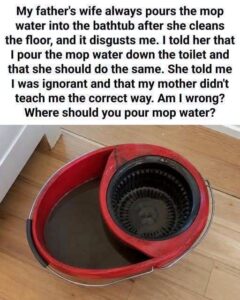
You’ve finished mopping the floors, removed the dust, and finally made your home feel fresh again. But there’s one last task before you can put everything away: emptying the bucket of dirty mop water.
It sounds simple enough, yet many people pause at this point and ask the same question: Should you pour the water into the toilet or the bathtub?
Both may seem like convenient options, but neither is always ideal. The best choice depends on the type of cleaning solution you used, the amount of dirt in the water, and which drains are suitable for disposing of it.
In most homes, a deep utility sink or laundry sink is the most practical option. If you don’t have one, a suitable bathtub or toilet may work for ordinary mop water, provided you take the necessary precautions.
Here’s how to choose the right place, protect your plumbing, and avoid creating another cleaning problem.
Why You Shouldn’t Pour Dirty Water Just Anywhere
After mopping, the water in your bucket may contain much more than ordinary water.
It can include dust, hair, crumbs, pet fur, muddy residue, grease, and small particles collected from the floor. Depending on the cleaning product, it may also contain detergent, disinfectant, or other chemicals.
Pouring this mixture into an unsuitable drain can create several problems.
Solid debris may accumulate in plumbing, dirty water can splash onto surfaces you’ve just cleaned, and certain cleaning chemicals may be inappropriate for particular drainage systems or wastewater arrangements.
The goal is to dispose of the water in a way that keeps your bathroom clean while protecting your plumbing and following the product’s disposal instructions.
Before emptying the bucket, allow heavier dirt to settle if practical, then remove visible debris with a suitable strainer or by carefully separating the solids. Dispose of the collected material in household waste when appropriate, rather than washing it into the drain.
Option 1: A Utility Sink Is Usually the Best Choice
If your home has a utility sink, laundry sink, or deep cleaning sink, start there.
These sinks are often designed for messy household tasks that would be inconvenient in a kitchen or bathroom sink. Their depth can help reduce splashing, and their shape may make it easier to empty a bucket without spilling water onto the surrounding floor.
A utility sink is particularly convenient when you’re cleaning large areas or using a relatively heavy bucket.
However, even a deep sink isn’t immune to blockages.
Before emptying the bucket, remove visible hair, dust, and other solid debris. Then pour the water slowly, following the cleaning product’s instructions.
If your sink has a strainer, make sure it is properly positioned and clean it afterward.
This simple step can help prevent unnecessary plumbing problems and make the final stage of cleaning much easier.
Option 2: Is the Bathtub a Good Alternative?
If you don’t have a utility sink, the bathtub may be a practical alternative for ordinary household mop water.
Its larger basin provides more room than a bathroom sink, making it easier to empty a bucket without spilling water onto the floor. The bathtub can also be easier to rinse afterward.
But there are a few things to consider.
First, remove as much solid debris as possible before pouring. Hair and other material can collect around the drain and contribute to clogs.
Second, pour slowly. Dumping an entire bucket at once can cause splashing, especially if the water contains dirt or foam.
Finally, rinse the tub thoroughly afterward, following any precautions required by the cleaning product.
The bathtub may be suitable for ordinary mop water, but it should not be used to dispose of chemicals that the product label says must not enter household drains.
Protect the Bathtub Drain
One of the biggest concerns when pouring mop water into a bathtub is the debris it contains.
Hair, pet fur, and clumps of dirt can collect near the drain opening. A mesh hair catcher or suitable drain strainer may help capture larger particles, although it won’t remove dissolved chemicals or every fine particle.
For that reason, it’s best to remove visible debris from the bucket before pouring.
If the mop water contains substantial amounts of mud, plaster, paint, or other material that could settle inside the plumbing, don’t assume the bathtub drain is an appropriate disposal route.
Follow the product instructions and local disposal guidance instead.
Option 3: Should You Pour Dirty Mop Water Into the Toilet?
The toilet is another option many people consider.
After all, it is designed to carry wastewater away, and the bowl is relatively large. For ordinary mop water, a toilet may be a reasonable fallback when a utility sink isn’t available and the cleaning product’s instructions permit drain disposal.
However, it has disadvantages.
A bucket can be heavy and awkward to lift over the bowl. Pouring too quickly can cause water to splash onto the toilet seat, floor, or surrounding surfaces. The bucket may also be difficult to position if the bathroom is small.
If you choose the toilet, empty the bucket slowly and carefully to reduce splashing. Avoid pouring in large amounts of solid debris, and never flush materials that could obstruct the plumbing.
Why the Toilet Isn’t Always the Easiest Option
The main disadvantage of using a toilet is often the mess rather than the water itself.
A heavy bucket can be difficult to control. If you misjudge the angle, dirty water may splash back onto the bowl or nearby surfaces.
That means you could end up cleaning the bathroom again after finishing the floors.
The toilet can also be unsuitable for certain chemical mixtures or solid waste. Never assume that something can be flushed simply because it is liquid.
If you have a septic system, check whether the cleaning product is suitable for it and use the product only as directed. Avoid pouring large quantities of concentrated cleaning chemicals into any drain.
What About the Kitchen Sink?
Although it may be tempting to use the kitchen sink, it generally isn’t the best place to empty dirty mop water.
Kitchen sinks are used for washing dishes, preparing food, and handling items that come into contact with food. Pouring visibly dirty water into the basin can leave unpleasant residue and introduce unnecessary contamination to the area.
Food particles, grease, hair, and cleaning chemicals may also create additional problems.
A utility sink or another appropriate disposal point is usually a better choice.
If the kitchen sink is your only option, first verify that the cleaning product can be disposed of through the household drain, remove solid debris, and clean the sink thoroughly afterward.
Whenever possible, keep dirty mop water away from food-preparation areas.
What If the Water Contains Bleach?
This is where you need to be particularly careful.
Some floor-cleaning products contain bleach or other disinfecting chemicals. Follow the product label regarding use, ventilation, and disposal.
Most importantly, never mix bleach with vinegar, ammonia, acids, or other cleaning products unless the manufacturer explicitly confirms that the combination is safe.
Mixing incompatible products can release dangerous gases or cause other hazardous reactions. For example, bleach mixed with acids such as vinegar can release chlorine gas, while mixing bleach with ammonia can produce hazardous chloramine gases.
If you’ve used a bleach-based cleaner, don’t add another product to the bucket to neutralize it.
Instead, follow the label’s disposal instructions. If the label permits disposal through a household drain, use an appropriate drain and rinse only as directed.
What If You Used a Strong Disinfectant?
Not all cleaning products are the same.
Some are intended for routine floor cleaning, while others contain concentrated disinfectants or specialized chemicals. The appropriate disposal method may depend on the ingredients and concentration.
Read the product label before emptying the bucket.
If it says not to pour the solution into household drains, follow that instruction. For concentrated products, solvents, pesticides, or other hazardous substances, contact your local waste-disposal service for guidance.
Don’t assume that dilution makes every chemical safe to pour down a drain.
The safest approach is to use cleaning products according to their directions from the beginning, including the instructions for disposing of leftover solution.
The Simple Rule to Remember
For ordinary mop water from routine household cleaning, a deep utility sink is generally the most convenient choice. A bathtub can be a reasonable alternative, while a toilet may work as a fallback if the product’s instructions permit it and you can pour without splashing.
Before emptying any bucket, remove solid debris, pour slowly, and rinse the receiving surface when appropriate.
If the water contains a concentrated chemical or a product with special disposal requirements, follow the label rather than choosing a drain simply because it is convenient.
The bottom line: Choose the utility sink whenever possible, use the bathtub or toilet carefully when appropriate, and never treat every cleaning solution as ordinary wastewater.
That small amount of extra care can protect your plumbing, keep your bathroom cleaner, and make the final step of mopping much easier.