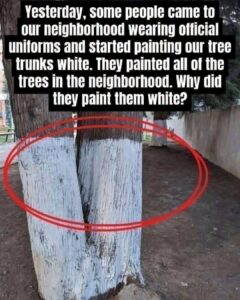
The white paint often seen on tree trunks is not used for decoration. It serves a practical purpose: protecting trees from damage caused by sudden temperature changes, especially during winter. This condition, known as sunscald, can injure the bark and leave trees vulnerable to further problems. Although painted tree trunks may look unusual, the technique is widely used in orchards, gardens, and other places where trees are exposed to harsh weather.
Why Are Tree Trunks Painted White?
During winter, sunlight can warm the bark on the sun-facing side of a tree, even when the surrounding air remains very cold. When the sun disappears or temperatures suddenly drop, the warmed tissue cools rapidly. These repeated temperature changes can damage the bark and the living tissues beneath it.
White paint helps prevent this problem by reflecting sunlight away from the trunk. As a result, the bark heats up less during sunny winter days, reducing the temperature differences that can contribute to sunscald and cracking.
The damage is particularly common on the south- and southwest-facing sides of trees in the Northern Hemisphere, where sunlight can be strongest during the afternoon. Young trees and those with thin bark are especially susceptible because their trunks have less natural protection against sudden temperature fluctuations.
How White Paint Protects Trees
The science behind this technique is relatively simple. White surfaces reflect more sunlight than dark surfaces, which tend to absorb more solar energy. When an appropriate white coating is applied to a tree trunk, it helps keep the bark cooler and reduces extreme temperature changes.
This protection can be especially valuable during late winter and early spring, when sunny afternoons may be followed by freezing nights. Under these conditions, the bark may expand and contract repeatedly, increasing the risk of injury.
Cracks caused by sunscald can become entry points for insects, fungi, and disease-causing organisms. Severe damage may affect the tissues responsible for transporting water and nutrients throughout the tree. In some cases, the injury can weaken the tree for years.
By reducing the likelihood of temperature-related bark damage, white trunk coatings can help preserve the tree’s health and support its continued growth.
Which Trees Benefit Most From Whitewashing?
Not every tree needs its trunk painted. The technique is most useful for species with relatively thin bark, particularly when they are young or recently planted.
Fruit trees such as apple, pear, peach, and cherry may benefit from trunk protection in regions where winter sunlight and freezing temperatures frequently alternate. Newly planted ornamental trees can also be vulnerable, especially if their trunks are exposed to direct sunlight.
Trees growing in open areas may face a greater risk because they lack the shade provided by nearby vegetation or buildings. Similarly, trees with their lower trunks exposed after pruning or landscaping may experience more direct sunlight than they did previously.
Mature trees with thick, established bark generally have better natural protection, although certain species and growing conditions can still make them vulnerable.
What Kind of Paint Is Used?
Whitewashing tree trunks requires a suitable coating rather than ordinary paint chosen solely for its appearance. A commonly used option is white, water-based latex paint diluted according to reliable horticultural guidance.
The precise dilution depends on the product and the intended use. Some gardeners use a mixture of one part white latex paint and one part water, but recommendations can vary. It is important to follow local agricultural guidance and ensure that the product is suitable for use on living trees.
Oil-based paints, solvent-heavy coatings, and products containing potentially harmful additives should be avoided unless specifically approved for the intended horticultural application. These products may interfere with the bark or damage living tissues.
Specialized commercial tree coatings are another option. They are designed for horticultural use and may provide a convenient alternative for gardeners who prefer not to prepare their own mixture.
Before applying any coating, check local recommendations for the tree species and climate. Not all trees require whitewashing, and an unsuitable product can cause more harm than good.
When Should Tree Trunks Be Painted?
Timing depends on local weather conditions, but whitewashing is often carried out in autumn or before the period when winter sunscald is most likely.
Applying the coating before repeated freeze-thaw cycles begin allows the trunk to receive protection throughout the colder season. In areas where late-winter sunlight is particularly intense, the treatment may remain useful into early spring.
Choose a dry day with suitable temperatures for the coating to adhere properly. The bark should be relatively clean, and the product should be applied according to its instructions.
Gardeners should avoid damaging the bark while preparing the trunk. Scraping, cutting, or aggressively brushing healthy bark can create unnecessary wounds and increase the risk of infection.
Does White Paint Prevent Every Type of Tree Damage?
No. Although whitewashing can help reduce sunscald, it does not protect trees against every environmental threat.
It cannot prevent all frost damage, storm injuries, insect infestations, fungal infections, or diseases. Its main purpose is to reduce excessive warming of the trunk by sunlight and the rapid temperature changes that may follow.
Other protective measures can also help. Proper watering, suitable planting locations, appropriate pruning, and maintaining healthy soil conditions all contribute to tree health. In some situations, tree guards or temporary shading may be useful alternatives, provided they are installed correctly and do not trap moisture or damage the bark.
It is also important to avoid piling mulch directly against the trunk. Excessive moisture around the base can encourage decay and create favorable conditions for pests.
Why Are Trees Along Roads Sometimes Painted White?
White-painted trunks are frequently seen along roads, in public parks, and in agricultural areas. In orchards, the treatment can help protect fruit trees exposed to direct winter sunlight. In landscaped areas, it may also be used where newly planted trees are particularly vulnerable.
However, white paint does not automatically indicate that a tree has been treated for sunscald. Depending on the location, trunk coatings may serve other horticultural or maintenance purposes. Local practices differ, so the reason for painting should not always be assumed.
When the purpose is winter protection, the white coating provides a relatively inexpensive method of reducing one specific source of stress.
A Simple Technique With a Practical Purpose
Painted tree trunks may initially look unusual, but the technique is based on a straightforward principle: reflecting sunlight helps prevent the bark from becoming excessively warm during cold weather.
For susceptible trees, particularly young fruit trees, this protection can reduce the risk of sunscald and help prevent injuries that may affect long-term health. When the correct product is used and the treatment is appropriate for local conditions, whitewashing can be a useful addition to routine tree care.
Ultimately, healthy trees depend on several factors, including suitable growing conditions, careful maintenance, and protection from environmental stress. White paint is not a universal solution, but in the right circumstances, it can make a meaningful difference in helping vulnerable trees withstand winter weather.