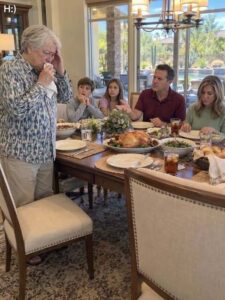
My name is Margaret Briggs, and I was seventy-one years old when my only son asked me when I was finally going to move out.
For eighteen months, I had lived in Daniel’s beautiful Scottsdale home after selling the Tucson house where my late husband, Harold, and I had spent thirty-eight wonderful years.
I thought moving in with my son would bring us closer.
Instead, I became the woman who cooked breakfast, cleaned the kitchen, drove the grandchildren to school, folded laundry, and helped whenever Daniel and his wife, Renee, needed something.
I never complained. I loved my family, and I believed helping them was what mothers did.
But one afternoon, I overheard Renee talking in the kitchen.
“How long is your mother going to stay here? She’s been living with us for eighteen months without paying rent.”
Daniel sighed.
“I know.”
Those two words hurt more than I expected.
What they didn’t know was that I had secretly won $89 million in the Powerball lottery.
After taxes and financial arrangements, I had more than $41 million protected through a trust I called Second Cup.
I had deliberately kept the news private. I wanted to understand whether my family loved me for who I was or for what I could give them.
The following morning, I received my answer.
I was preparing coffee when Renee walked into the kitchen.
“Margaret, we need to discuss your living arrangements.”
I turned around.
“Is something wrong?”
She folded her arms.
“Daniel and I think it’s time you found somewhere else to live. The children need more space, and we want our privacy back.”
I looked toward the hallway, where my grandchildren’s schoolbags were scattered across the floor.
“I understand,” I said quietly.
Daniel entered a few minutes later.
“Mom, don’t take this personally. It’s just time for everyone to have their own space.”
I nodded.
“Of course, sweetheart.”
He seemed relieved that I wasn’t arguing.
I went upstairs and began packing.
I didn’t cry. I didn’t shout. I simply folded my clothes and placed Harold’s photograph carefully inside my handbag.
That afternoon, I called my financial adviser.
“Thomas, I think I’m ready to make a purchase.”
“What kind of purchase, Margaret?”
“A house. Actually, something a little bigger.”
Three days later, I visited a beautiful property overlooking a quiet stretch of desert outside Scottsdale. It had large windows, a spacious kitchen, a peaceful garden, and several guest rooms.
The asking price was substantial, but it was comfortably within my financial means.
I purchased it through my trust.
But that wasn’t the only thing I planned.
I also contacted an attorney and began establishing a small foundation dedicated to helping older people who had been abandoned, mistreated, or financially exploited by relatives.
I wanted to create something meaningful from the unexpected fortune Harold and I would have appreciated having together.
A week later, I moved into my new home.
The first morning, I woke up without anyone asking me to prepare breakfast. I made coffee, sat beside the window, and watched the sunrise.
For the first time in eighteen months, I felt completely at peace.
Then Daniel called.
“Mom, where are you?”
“I’m in my new house.”
There was a pause.
“Your new house?”
“Yes, Daniel.”
“How did you afford that?”
I smiled.
“I managed my finances carefully.”
He laughed nervously.
“Mom, are you serious? What did you buy?”
I gave him the address.
There was another silence.
“That’s the property near the desert golf course?”
“Yes.”
“Mom, that house costs millions!”
“I know.”
He suddenly became interested in visiting.
Renee called shortly afterward.
“Margaret, why didn’t you tell us you were buying a house?”
I answered calmly.
“You didn’t ask me where I wanted to live. You simply told me to leave.”
She became quiet.
A few days later, Daniel and Renee arrived at my front door.
They looked around the living room, admired the kitchen, and complimented the garden.
Daniel finally asked the question I had been expecting.
“Mom, where did all this money come from?”
I invited them to sit down.
Then I placed a folder on the table.
Inside were documents explaining the lottery winnings, the financial arrangements, and the trust that protected my assets.
Daniel stared at the papers.
“Forty-one million dollars?”
“Yes.”
Renee covered her mouth.
“You won the lottery?”
“Several months ago.”
Daniel looked stunned.
“Why didn’t you tell us?”
I took a slow breath.
“Because I wanted to know whether you wanted me in your home because I was your mother or because you expected something from me.”
His expression changed.
“Mom, that’s not fair. We never knew.”
“Exactly,” I replied. “You didn’t know about the money, and you still decided I was a burden.”
Daniel lowered his eyes.
“We were stressed. We didn’t mean to hurt you.”
“I understand that life can be difficult. But being busy doesn’t give anyone the right to make another person feel unwanted.”
Renee began crying.
“We’re family, Margaret. We should be helping each other.”
I looked at her.
“Family should be about love, respect, and kindness. Not expectations about money.”
Daniel asked whether I would help them financially.
I didn’t answer immediately.
Instead, I explained that I had already arranged my finances, established my foundation, and made plans for my future. I would continue loving my grandchildren, but I would no longer make financial decisions simply because someone expected me to.
The visit ended quietly.
Over the following months, I began building the life I had always imagined.
I hired a small team to help establish Second Cup Foundation. We created programs that connected isolated seniors with volunteers, provided emergency assistance, and helped older people access independent legal and financial advice.
I also started hosting Sunday lunches.
My grandchildren visited regularly, and I made sure they understood that they were always welcome. They didn’t need to ask for expensive presents or money. I wanted them to remember our time together, not my bank account.
Daniel gradually began visiting more often.
Our relationship wasn’t repaired overnight. Trust takes time, and I wasn’t willing to pretend that nothing had happened.
One afternoon, he sat beside me on the garden terrace.
“Mom, I’m sorry,” he said. “I should never have made you feel unwanted.”
I looked at my son and remembered the little boy who used to hold my hand when crossing the street.
“I forgive you, Daniel. But I hope you understand that I deserve respect whether I have forty million dollars or forty dollars.”
He nodded.
That evening, I poured myself another cup of coffee and watched the sunset.
Harold’s photograph stood on the table beside me.
I smiled because I finally understood something he had always tried to teach me.
Money can buy a beautiful house, security, and opportunities. But it cannot purchase genuine affection.
At seventy-one, I had gained an unexpected fortune.
More importantly, I had gained the courage to choose where I belonged.
And this time, nobody would decide my worth for me.