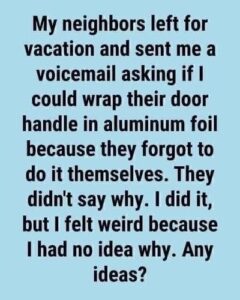
Home security is an important concern for every homeowner. While modern security systems, smart cameras, and sophisticated alarms can provide valuable protection, not every safety measure needs to be expensive or complicated. Sometimes, an ordinary household item can inspire a simple way to become more aware of what happens around your home. One surprising example is aluminum foil, a common kitchen material that has gained attention through online household tips and home safety discussions.
The aluminum foil door handle trick is often presented as an inexpensive way to notice possible disturbances around an entrance. Although it cannot prevent break-ins or reliably identify intruders, it demonstrates how everyday materials can encourage people to pay closer attention to their surroundings and develop better security habits.
1. Why Aluminum Foil Has Attracted Attention
Aluminum foil is lightweight, reflective, flexible, and easy to find in almost every household. These characteristics make it useful for numerous everyday purposes, from food storage to protecting surfaces during cooking.
Its ability to develop wrinkles and creases when touched has also inspired people to experiment with it as a simple visual indicator. When foil becomes crumpled or damaged, it may suggest that something has disturbed it.
However, this should not be confused with a dependable security alarm. Foil can move because of ordinary contact, environmental conditions, or accidental handling. It cannot establish who touched a door handle or whether someone attempted to enter the property.
2. Understanding the Door Handle Hack
The idea behind this popular household trick is relatively straightforward: aluminum foil can make physical disturbances more noticeable.
Some homeowners use a small piece of foil around a door handle as a temporary visual reminder to check whether the handle has been disturbed. If the foil appears different later, it may encourage them to inspect the entrance more carefully.
Nevertheless, this method has important limitations. It does not detect every attempt to open a door, produce a dependable warning, or communicate an alert to someone inside another room.
It is therefore best understood as a household awareness experiment rather than an actual security device. Anyone concerned about unauthorized entry should prioritize properly installed locks, reinforced doors, and reliable alarm systems.
3. The Importance of Visual and Audible Awareness
One reason aluminum foil attracts attention is its distinctive appearance and sound. Its reflective surface can be noticeable, while its familiar crinkling noise occurs when the material is handled.
These characteristics may make a disturbance easier to notice during ordinary household activities. However, the sound is not guaranteed to be loud enough to wake someone or alert occupants elsewhere in the property.
For dependable protection, homeowners should consider security equipment specifically designed to detect movement, opening doors, or unauthorized access.
Door sensors, smart alarms, and security cameras can provide more consistent information than improvised household materials.
4. Hygiene and Germ Prevention Around Door Handles
Door handles are among the most frequently touched surfaces in many homes. Family members, visitors, delivery workers, and other individuals may come into contact with them throughout the day.
Maintaining clean handles is therefore an important part of everyday household hygiene.
Although aluminum foil is sometimes discussed as a way to cover frequently touched surfaces, ordinary kitchen foil should not be considered a proven antimicrobial barrier. It can become contaminated just like other frequently handled materials.
A better approach is to clean door handles regularly using a suitable household disinfectant and follow the product instructions. Washing hands after returning home and avoiding unnecessary face touching can also help reduce the spread of germs.
These straightforward habits are more reliable than depending on foil to provide protection against bacteria or viruses.
5. Combining Simple Habits With Reliable Security Measures
The greatest benefit of discussing inexpensive household tricks is that they can encourage people to think more carefully about home safety.
Instead of depending on one unusual method, homeowners should develop several complementary security habits.
For example:
- Use quality locks: Make sure exterior doors have properly installed, reliable locks.
- Improve outdoor lighting: Motion-activated lights can make entrances more visible.
- Secure windows: Check that accessible windows have appropriate locking mechanisms.
- Consider security cameras: Cameras and smart doorbells can provide useful information about activity near entrances.
- Maintain awareness: Pay attention to unusual activity around your property and communicate concerns with trusted neighbors.
These measures provide practical benefits that aluminum foil alone cannot offer.
6. The Psychological Value of Being Prepared
Home security is not exclusively about technology. It also involves awareness, preparation, and consistent routines.
Simple habits, such as checking doors before bedtime, making sure windows are closed, and keeping outdoor areas illuminated, can help homeowners feel more confident.
Small household experiments may also encourage conversations about safety among family members. Children can learn the importance of locking doors, while adults can establish routines for checking entrances before leaving home.
However, it is important not to allow an improvised trick to create a false sense of protection. A piece of aluminum foil cannot guarantee that a home is secure.
7. An Affordable Reminder of Everyday Resourcefulness
One appealing aspect of the aluminum foil idea is its accessibility. Most households already have a roll in their kitchen, making it an inexpensive material for everyday experiments.
This reflects a broader principle of resourcefulness: ordinary objects can sometimes inspire practical ideas that encourage observation and problem-solving.
Nevertheless, not every viral household hack is scientifically proven or suitable for serious safety applications. Before relying on an online trick, homeowners should consider whether it actually performs the function being advertised.
Understanding the difference between a useful reminder and a dependable security device is essential.
Conclusion: Simple Ideas, Smarter Home Safety
The aluminum foil door handle trick is an interesting example of how an ordinary kitchen material can inspire conversations about home security, awareness, and household creativity.
Its reflective appearance and tendency to wrinkle when disturbed may make it useful as a simple visual reminder, but it cannot reliably detect intruders, prevent break-ins, or replace professional security equipment.
For better protection, homeowners should concentrate on strong locks, secure doors and windows, adequate lighting, reliable alarms, and good hygiene practices.
Ultimately, real peace of mind comes from combining practical everyday habits with dependable protective measures. Sometimes, the most valuable lesson from a simple household hack is not the trick itself, but the reminder to remain attentive, prepared, and proactive about keeping our homes safe.