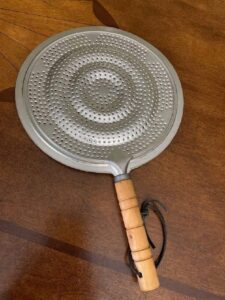
Almost every kitchen has a drawer filled with utensils that rarely get used. Among the familiar spoons, peelers, measuring cups, and spatulas, there are sometimes unusual gadgets that leave us wondering what they were originally designed to do. They may have been purchased years ago, received as gifts, or inherited from relatives. Yet, despite their strange appearance, they remain hidden away for years without anyone questioning their purpose.
Recently, while organizing my kitchen, I discovered one such object. It was unfamiliar, oddly shaped, and unlike anything I regularly used. I could not remember buying it or receiving it from someone. Naturally, I became curious. What was this mysterious gadget supposed to do, and why had it been sitting unnoticed in my drawer for so long?
Why Kitchen Drawers Become Collections of Forgotten Tools
Kitchen drawers have a habit of collecting things over time. A new cooking trend, an unfamiliar recipe, or an attractive kitchenware set can introduce utensils that initially seem incredibly useful.
Some tools are designed for very specific tasks, such as removing fruit stones, separating eggs, shaping pastries, cutting vegetables, or preparing particular ingredients. Once the recipe that required them disappears from our regular cooking routine, those utensils often disappear from our memory too.
Other gadgets arrive as gifts or are included with appliances. Because they are not immediately recognizable, people sometimes put them away instead of learning how to use them.
Eventually, the kitchen drawer becomes a small collection of forgotten inventions.
Start by Examining the Shape
The first step in identifying an unfamiliar kitchen gadget is to examine its physical design carefully.
Look at its overall shape, length, width, material, and construction. Even small details can provide important clues about its intended purpose.
A curved metal surface, for example, might indicate that the tool was designed to scoop, shape, or remove something. A circular blade could suggest slicing or cutting, while a narrow pointed end might have been created for reaching into small spaces.
Pay particular attention to unusual openings, grooves, teeth, and edges. These features are usually functional rather than decorative.
The handle can also provide useful information. A long handle might be designed to reach into deep containers, while a short handle could indicate that the utensil requires more precise control.
Look for Hinges, Springs, and Moving Parts
One of the most useful ways to identify an unfamiliar kitchen tool is to examine whether it contains moving components.
Does it have a rotating wheel, a spring, a hinge, or an adjustable section? These features can reveal how the gadget was intended to work.
For instance, hinged designs are commonly found in pressing, squeezing, and gripping utensils. Rotating parts may indicate a cutting or mixing function, while spring-loaded mechanisms can help control pressure or release ingredients.
If the gadget consists of several connected pieces, carefully examine how they fit together.
Sometimes, understanding how an object moves provides a much better clue than simply looking at its appearance.
Avoid forcing any parts that appear stuck, particularly when dealing with older utensils that may have weakened or damaged components.
Search for Brand Names and Product Numbers
Another useful identification method is checking for manufacturer information.
Turn the object over and inspect the underside, handle, and metal surfaces. Some manufacturers stamp their names, model numbers, or product information directly onto kitchen utensils.
Plastic accessories may also contain small molded numbers or letters.
These details can make the search considerably easier. A manufacturer name or product number may lead you to an original instruction manual, archived product catalog, or photograph showing exactly how the utensil was intended to be used.
Even if the gadget has no visible markings, distinctive design features may help you identify similar products.
Take Clear Photographs From Different Angles
If you cannot identify the object through physical inspection, photography can help.
Take several clear pictures showing the front, back, sides, and underside. If the gadget has moving parts, photograph those separately.
It is also useful to place a ruler beside the object. Its dimensions can help distinguish between utensils that look similar but serve completely different purposes.
Once you have the photographs, compare them with online kitchenware catalogs, vintage household collections, and product identification communities.
Image-search tools can sometimes recognize older or unusual utensils by matching their shape with existing product photographs.
The more visual information you provide, the easier it becomes to narrow down the possibilities.
Ask Experienced Cooks and Collectors
Not every kitchen mystery can be solved through online searching.
Experienced cooks, bakers, restaurant workers, and collectors of vintage kitchenware may recognize an unfamiliar gadget immediately.
Older relatives can also be surprisingly helpful. They may remember utensils that were commonly used decades ago but have gradually disappeared from modern kitchens.
A mysterious object might turn out to be a traditional baking accessory, a specialized fruit preparation tool, or something designed for a recipe that was once popular in your family.
Sharing photographs in cooking communities or vintage collectible groups can also generate useful suggestions.
Remember to include the object’s measurements, material, and any visible markings when asking for help.
Do Not Use an Unidentified Gadget Too Quickly
Although discovering the purpose of an unusual kitchen tool can be exciting, safety should always come first.
Some older utensils have sharp edges, loose handles, rust, or damaged moving parts. Others may contain materials that are not suitable for direct contact with food.
Before using anything unfamiliar, inspect it carefully and determine what it is made from.
If the object appears to be part of an electrical appliance, avoid connecting it to electricity until you have identified it and confirmed that it is safe.
Understanding a gadget’s purpose is important, but knowing whether it is safe to use is equally essential.
Sometimes the Biggest Mysteries Are Hiding at Home
An unfamiliar kitchen gadget might seem like an insignificant discovery, but identifying it can reveal interesting details about cooking traditions, household history, and the inventions people once considered essential.
Perhaps it was designed for a recipe that nobody prepares anymore. Maybe it was part of an older kitchen appliance, or perhaps it was a clever utensil that never became widely popular.
Whatever its history, that forgotten object may have a surprisingly practical purpose.
The next time you organize your kitchen drawers, take a moment to examine the unusual utensils hiding among your everyday tools.
You might discover that something you have considered useless for years is actually a remarkably clever invention.