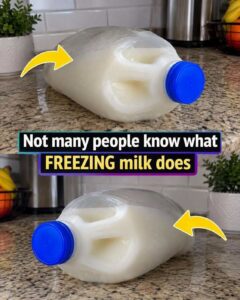
Milk is one of the most commonly purchased groceries in households around the world. Whether you use it for breakfast cereal, coffee, smoothies, baking, or everyday cooking, it is an essential ingredient that many families buy every week. However, there is one familiar problem: sometimes you purchase more milk than you can finish before its expiration date. Instead of pouring the unused milk down the drain, there is a surprisingly simple solution. You can freeze milk and save it for another day. With the right preparation and storage techniques, freezing milk can help reduce food waste, stretch your grocery budget, and make everyday meal preparation easier.
Can You Really Freeze Milk?
The short answer is yes! Most types of ordinary milk can be frozen safely, including whole milk, reduced-fat milk, and skim milk.
Freezing slows the activity of microorganisms and helps preserve milk for an extended period when it is handled correctly.
However, there is something important to understand: freezing can change milk’s texture.
After thawing, some milk may appear separated, with small particles of fat collecting near the surface. This happens because freezing can affect the distribution of fat and other components within the liquid.
Fortunately, this does not necessarily mean the milk has spoiled.
A good shake or thorough stirring after thawing can often improve its consistency.
Although frozen and thawed milk may not taste exactly like fresh milk, it generally remains useful for cooking, baking, sauces, pancakes, and other recipes.
Prepare the Container Before Freezing
One of the most important steps when freezing milk is leaving enough room for expansion.
Like most liquids, milk expands as it freezes. If you place a completely full container in the freezer, the expanding contents can create pressure that damages the packaging.
If you are freezing milk in its original plastic container, remove a little milk first to create additional space. Approximately one cup may be appropriate for a large gallon container, although the amount depends on the container’s size and how full it is.
Another option is transferring milk into a freezer-safe plastic container.
Make sure the container is clean, suitable for freezing, and properly sealed.
Avoid ordinary glass bottles and jars unless they are specifically designed for freezer use. Glass can crack when liquids expand during freezing.
It is also helpful to label each container with the freezing date so you know how long it has been stored.
Freeze Milk in Smaller Portions
Freezing an entire gallon of milk may be convenient, but smaller portions can make everyday use much easier.
For example, if you regularly add milk to coffee or use small quantities for cooking, freezing individual portions can prevent unnecessary waste.
Ice cube trays offer one convenient method.
Simply pour milk into clean ice cube trays, leaving a little space for expansion. Once the milk has frozen completely, transfer the cubes into a sealed freezer-safe bag or container.
Remember to label the bag and include the freezing date.
You can then remove only the amount you need without thawing an entire container.
Smaller portions are particularly useful for:
- Adding milk to coffee and tea.
- Preparing smoothies and milkshakes.
- Making sauces and soups.
- Baking cakes, muffins, and pancakes.
- Measuring milk for individual recipes.
This simple approach makes frozen milk much more practical for everyday household use.
How Long Can Milk Stay in the Freezer?
For the best flavor and quality, frozen milk is generally best used within approximately three months.
Milk may remain safe for longer if it has been continuously stored at 0°F (-18°C) or below, but its taste and texture can gradually deteriorate.
The three-month guideline is primarily about maintaining quality rather than an absolute food safety deadline.
Always check that the container remains properly sealed and has not been damaged.
Keeping milk toward the back of the freezer rather than near the door can also help maintain a more consistent temperature.
Avoid repeatedly removing milk from the freezer and allowing it to partially thaw.
The Safest Way to Thaw Frozen Milk
Thawing milk correctly is just as important as freezing it properly.
The safest method is to transfer the frozen container from the freezer to the refrigerator.
Allow it to thaw gradually while remaining refrigerated.
Depending on the quantity and container size, thawing may take several hours or even overnight.
Never leave milk sitting on the kitchen counter for extended periods to speed up the process. Milk is a perishable food, and warm temperatures can encourage bacterial growth.
Once the milk has thawed, shake or stir it thoroughly to redistribute any separated components.
If it has developed an unusual smell, visible spoilage, or an abnormal appearance that does not improve with mixing, discard it.
Do not refreeze milk that has been completely thawed.
Does Freezing Affect Milk’s Taste and Texture?
One of the biggest concerns people have about freezing milk is whether it will taste different afterward.
The answer depends partly on the type of milk and how it is used.
Whole milk contains more fat, which can separate during freezing and thawing. Reduced-fat and skim milk may also experience texture changes, although the results can vary.
Some people notice a slightly grainy consistency after thawing.
This is generally related to changes in the physical structure of the milk rather than automatic spoilage.
Shaking the container vigorously can help restore a more uniform appearance.
However, if you plan to drink milk directly from a glass, you may notice a difference compared with freshly purchased milk.
For this reason, frozen milk is particularly useful in recipes where small texture changes are less noticeable.
Can You Freeze Milk in Its Original Carton?
Yes, but it depends on the packaging.
Plastic milk containers can often be frozen after allowing sufficient expansion space.
Some paperboard cartons are less suitable because their packaging may become damaged or lose its shape during freezing.
Always check the manufacturer’s storage recommendations and use a freezer-safe container when necessary.
If you are unsure whether the original packaging can withstand freezing, transferring the milk into a suitable container is a better option.
Make sure the container is not filled completely to the top.
Smart Tips for Reducing Food Waste
Freezing milk is only one way to make household groceries last longer.
A few simple habits can help you save money and avoid unnecessary waste.
1. Check your refrigerator temperature. Keep your refrigerator at or below 40°F (4°C) to slow bacterial growth and preserve perishable foods.
2. Store milk properly. Keep milk on an interior refrigerator shelf rather than in the door, where temperatures fluctuate more frequently.
3. Freeze milk before it spoils. Freezing does not make spoiled milk safe again. Freeze it while it is still fresh and properly refrigerated.
4. Buy according to your needs. Larger containers may offer better value, but only when you can use or safely freeze the contents.
5. Label everything. Adding dates to freezer containers makes it easier to organize your food and use older portions first.
Final Thoughts
Freezing milk is a simple household trick that can save money, reduce food waste, and make grocery shopping more convenient.
With a little preparation, you can preserve extra milk, divide it into useful portions, and have it ready whenever a recipe calls for it.
Although freezing may slightly change milk’s texture and taste, properly frozen and thawed milk remains useful for many everyday purposes.
The most important things to remember are to leave room for expansion, use appropriate containers, freeze milk while it is fresh, and thaw it safely in the refrigerator.