The long-running appeal of Wheel of Fortune has never been rooted solely in its format. At its surface, it is a word puzzle game built around spinning a wheel and guessing letters. Yet beneath that simplicity lies a layered psychological experience that blends anticipation, risk, intuition, and human emotion in real time. Every episode carries the potential for routine gameplay—but occasionally, a contestant elevates the entire broadcast into something far more compelling.
That is what unfolded in this particular episode, where one contestant’s steady dominance and near-final triumph transformed a familiar structure into a gripping narrative of momentum, pressure, and narrow margins.
The Familiar Rhythm of the Game
Most episodes of Wheel of Fortune follow a predictable rhythm. A puzzle is presented, contestants take turns spinning the wheel, calling out letters, and gradually revealing a hidden phrase. There is comfort in this structure. It is repetitive in the best possible way—easy to follow, yet constantly open to surprise.
But what makes the format compelling over decades is not the repetition itself. It is the unpredictability that emerges within it. A single spin can shift momentum. A single letter can unlock an entire puzzle. And a single mistake can erase a strong lead.
The game is simple to understand but difficult to master. That balance is precisely what keeps audiences engaged.
A Contestant Who Found Early Momentum
In this episode, attention quickly centered on contestant Adam Wredberg, whose performance stood out from the beginning. Early rounds in Wheel of Fortune are often about establishing rhythm—finding confidence, avoiding costly mistakes, and reading the board efficiently.
Wredberg did exactly that.
He solved the opening puzzle with clarity and precision, immediately positioning himself as a strong competitor. Early success in the game is more than just financial advantage—it sets the psychological tone. It signals control, builds confidence, and often influences how other contestants approach the board.
From that moment forward, he appeared comfortable in the flow of the game.
The Importance of Strategy in a Game of Chance
While the wheel introduces randomness, success in Wheel of Fortune is far from purely luck-based. Strategic thinking plays a major role in determining outcomes.
Contestants must constantly balance risk and reward:
- Should they spin again or solve early?
- Should they attempt a high-risk wedge?
- Should they choose common consonants or gamble on less obvious letters?
Wredberg’s approach reflected a measured understanding of these dynamics. Rather than chasing unnecessary risks, he consistently chose stability. This allowed him to build momentum without exposing himself to avoidable setbacks.
His performance in the Mystery Round further demonstrated this balance. By successfully navigating high-stakes choices, he not only increased his winnings but also secured a valuable prize, reinforcing his lead and strengthening his position going into later rounds.
The Psychology of Staying Composed
One of the most overlooked aspects of Wheel of Fortune is the psychological pressure contestants face. Although the game appears lighthearted, the environment is intense. Bright studio lights, a live audience, cameras, and the awareness of national broadcast all contribute to a heightened state of focus.
Under these conditions, maintaining composure becomes a skill in itself.
Wredberg’s consistency suggested a strong ability to manage this pressure. He avoided visible frustration, did not rush decisions, and maintained steady pacing throughout the game. This emotional regulation is often what separates strong contestants from average ones.
In a game where seconds matter, calm thinking is an advantage.
Building a Commanding Lead
As the episode progressed, Wredberg’s steady performance translated into a significant lead. By avoiding unnecessary risks and capitalizing on opportunities, he accumulated a strong total heading into the final round.
In many cases, leads in Wheel of Fortune are not built through dramatic single moments but through accumulation—small advantages gained repeatedly over time. Each correct puzzle, each safe spin, each avoided mistake contributes to an overall position of strength.
By the end of the main game, Wredberg had established himself as the clear frontrunner, securing his place in the Bonus Round.
The Shift Into the Bonus Round
The Bonus Round represents a dramatic shift in both structure and tone. While the main game allows time for gradual reasoning, the final puzzle compresses everything into a short, high-pressure moment.
Contestants must quickly interpret partial information, choose strategic letters, and attempt to solve the puzzle within seconds.
It is here that the game transforms from methodical competition into pure psychological intensity.
Family members often stand nearby, adding emotional weight to the moment. The audience becomes silent. The studio energy shifts. Every second feels amplified.
Even contestants who performed flawlessly earlier can find themselves overwhelmed by the sudden urgency.
The Final Puzzle Challenge
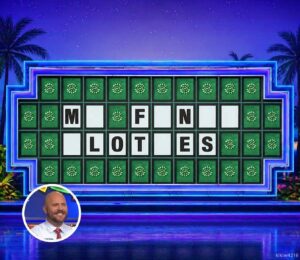
In Wredberg’s case, the Bonus Round puzzle introduced a level of ambiguity that immediately sparked viewer debate. With only a few letters revealed, multiple interpretations of the phrase appeared possible.
This is one of the defining features of Wheel of Fortune puzzles: language itself becomes a challenge. English phrases often share similar structures, and without full visibility, the brain naturally fills in gaps with assumptions.
Under time pressure, those assumptions become even more influential.
Contestants must rely on a combination of vocabulary knowledge, pattern recognition, and instinct. There is rarely enough time for systematic analysis. Instead, decisions are made in seconds.
The Role of Perception and Pressure
What makes the Bonus Round especially intense is the way pressure affects perception. A puzzle that might seem straightforward from home can feel entirely different under studio conditions.
Stress narrows focus. Time constraints reduce cognitive flexibility. Even familiar phrases can become difficult to recognize when partially obscured and under pressure.
This creates the illusion of simplicity from the outside, while internally presenting a complex mental challenge.
In Wredberg’s case, the puzzle appeared to offer possible solutions—but none that could be confidently locked in under the ticking clock.
The Moment of Decision
As the timer wound down, the tension reached its peak. Contestants in this position must make a critical choice: commit to an answer or risk losing the opportunity entirely.
Wredberg ultimately was unable to arrive at the correct solution in time. The result meant missing out on the Bonus Round prize, a moment that shifted the tone of the episode from anticipation to reflection.
Yet this outcome, while disappointing, is also a defining feature of the game. The Bonus Round is intentionally structured to create high stakes. Even strong performances in earlier rounds do not guarantee success here.
Viewer Reaction and Debate
One of the reasons Wheel of Fortune remains culturally relevant is its ability to generate post-episode discussion. Viewers often analyze Bonus Round puzzles, debating whether the solution was fair, obvious, or deceptively difficult.
In this case, reactions were split. Some viewers felt the answer was within reach, arguing that the revealed letters provided enough structure to infer the phrase. Others believed the puzzle was inherently tricky, especially given the time constraints.
This divergence of opinion highlights an important aspect of the show: puzzles exist in a space between logic and intuition. What feels obvious in hindsight may not be obvious in real time.
The Nature of Near Wins
Despite the final outcome, Wredberg’s performance was widely recognized as strong. His ability to dominate the main game, maintain composure, and reach the Bonus Round reflected a high level of skill.
Near wins are a powerful part of competitive storytelling. They emphasize how thin the line is between success and disappointment. In many ways, they are more emotionally resonant than straightforward victories.
They remind audiences that outcomes are often determined not by large differences in ability, but by small moments of timing, interpretation, or chance.
Why These Moments Matter
Episodes like this one illustrate why Wheel of Fortune continues to thrive after decades on air. It is not just about word puzzles or spinning wheels. It is about human performance under pressure.
The show captures real emotional stakes in a controlled environment. Contestants experience excitement, tension, hope, and disappointment—all within a structured game format.
For viewers, this creates a sense of shared experience. They are not just watching puzzles being solved; they are watching decisions being made in real time.
Conclusion
In the end, this episode of Wheel of Fortune was defined not by the final outcome, but by the journey toward it.
Adam Wredberg’s performance demonstrated consistency, strategy, and composure. His near victory in the Bonus Round highlighted the unpredictable nature of high-pressure decision-making.
What began as a routine episode evolved into a compelling demonstration of skill, psychology, and chance intersecting on a brightly lit stage.
And that is why the show continues to endure.
Because beyond the wheel, the letters, and the puzzles, it is fundamentally about people—thinking, guessing, risking, and sometimes falling just short.
And in those moments, the game becomes something more than entertainment.
It becomes a reflection of how close success and failure can truly be.