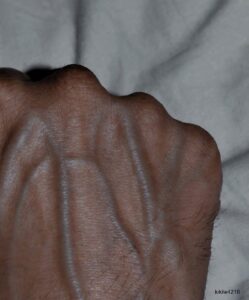
Visible veins are one of those physical traits that people often notice before they understand. For some, they appear after a workout, tracing across the arms like blue lines under the skin. For others, they are always present, even without exercise. And for many, they seem to appear or disappear depending on heat, hydration, or body composition changes. Because of this variability, visible veins are often misinterpreted as a simple “fitness indicator,” when in reality they reflect a complex interaction between physiology, genetics, and environmental conditions.
At a basic biological level, veins become visible when they are closer to the surface of the skin and when there is less tissue obscuring them. This means the thickness of subcutaneous fat plays a major role. Subcutaneous fat is the layer of fat stored directly under the skin. It acts like a visual cushion, masking structures beneath it, including blood vessels. When this layer is thinner, veins naturally become more noticeable.
However, fat alone does not explain everything. Two people with identical body fat percentages can have very different levels of vascularity. This is where genetics becomes important. Some individuals are born with naturally more superficial veins, meaning their vascular system lies closer to the skin’s surface. Others have thicker dermal layers or deeper vein placement, making their veins less visible even at low body fat levels.
Skin thickness and texture also contribute significantly. Skin is not uniform across all individuals or even across the same body. Areas like the forearms and hands tend to show veins more easily because the skin is thinner there. With age, skin naturally becomes thinner and loses collagen and elasticity, which can increase vein visibility even without changes in fitness or fat levels. This is one reason older adults often notice more prominent veins.
Muscle development adds another layer to the explanation. When muscles grow through resistance training, they increase in both size and metabolic demand. Larger muscles require greater blood flow, especially during exercise. This increased blood flow causes temporary expansion of veins, a phenomenon commonly called the “pump.” During this state, veins become more visible because they are carrying more blood closer to the skin surface. Over time, consistent training can also improve vascular efficiency, slightly enhancing baseline visibility in some individuals.
Yet even muscular individuals may not always display prominent veins at rest. This is because vascular visibility is highly dynamic. It changes throughout the day depending on hydration levels, temperature, activity, and even stress. For example, during physical exertion, blood vessels dilate to deliver oxygen more efficiently, making veins more pronounced. In contrast, cold temperatures cause vasoconstriction, narrowing blood vessels and reducing visibility.
Hydration is another crucial factor often misunderstood. When the body is dehydrated, blood volume decreases slightly. This can make veins appear more prominent because there is less fluid in the surrounding tissues. However, this does not mean dehydration is healthy or desirable. In fact, chronic dehydration can impair performance, reduce cognitive function, and strain cardiovascular systems. The temporary appearance of increased vascularity is simply a physiological side effect, not a sign of improved condition.
Temperature effects are equally noticeable. Heat causes vasodilation, where blood vessels expand to help regulate body temperature. This is why veins often become more visible during hot weather or after a warm shower. Cold environments do the opposite, causing the body to conserve heat by narrowing blood vessels. These rapid changes demonstrate that vascular visibility is not fixed—it is reactive.
Hormones also play a subtle but important role. Testosterone, for example, is associated with increased muscle mass and lower body fat distribution in males, which indirectly contributes to more visible veins. However, hormones do not directly control vascular visibility. Instead, they influence body composition and circulation, which then affect how veins appear.
Estrogen can also influence vascular changes, particularly in women, where fluctuations during menstrual cycles or pregnancy may temporarily alter blood volume and vessel dilation. These changes are normal and reversible, but they highlight how dynamic vascular visibility can be.
Another often overlooked factor is cardiovascular fitness. Individuals with well-trained cardiovascular systems tend to have more efficient blood flow and better capillary networks. This can make veins respond more quickly during activity, increasing temporary vascular visibility. However, this does not necessarily translate into permanently visible veins at rest.
There is also an aesthetic and cultural dimension to visible veins, particularly in fitness communities. Prominent vascularity is often associated with low body fat and disciplined training, which can make it a desirable trait for bodybuilders and athletes. In competitive environments, vascularity is sometimes exaggerated through temporary methods such as carbohydrate depletion, water manipulation, or increased sodium control before events. These methods are not reflective of normal health conditions but rather short-term aesthetic strategies.
Because of this, many people mistakenly assume that highly visible veins always indicate peak fitness. In reality, extremely pronounced vascularity can sometimes reflect temporary physiological manipulation rather than long-term health. A naturally lean, well-trained individual may have moderate vascularity without extreme visibility.
It is also important to distinguish between healthy vascular visibility and potential medical concerns. In most cases, visible veins are completely harmless. However, sudden changes in vein appearance, especially if accompanied by pain, swelling, warmth, or skin discoloration, may require medical evaluation.
Conditions such as varicose veins occur when vein valves weaken, causing blood to pool and veins to enlarge. These are more common in the legs and can result in discomfort or heaviness. Chronic venous insufficiency is another condition where blood flow back to the heart is impaired, leading to persistent swelling and visible surface veins.
In rare cases, deep vein thrombosis (DVT) can present with swelling and abnormal vascular patterns. This condition involves blood clots in deeper veins and requires urgent medical attention. While these conditions are not the same as normal visible veins, they are often confused by individuals who notice sudden changes in vascular appearance.
Lifestyle factors also influence vascular health over time. Prolonged sitting or standing can affect circulation, especially in the lower limbs. Regular movement, walking, and exercise help maintain healthy blood flow and reduce the risk of vascular issues. Smoking, on the other hand, damages blood vessels and can contribute to long-term circulatory problems.
Nutrition plays a supporting role as well. Diets rich in antioxidants, healthy fats, and adequate hydration support vascular health by maintaining blood vessel elasticity. Excess sodium or poor dietary habits can contribute to fluid retention, temporarily affecting how veins appear.
From a developmental perspective, visible veins are not a static trait but a changing one. They evolve with age, fitness, lifestyle, and environmental exposure. A person may notice increased vascularity during periods of intense training and reduced visibility during rest phases or weight gain. This fluctuation is normal and reflects the body’s adaptive nature.
Psychologically, visible veins can also influence self-perception. In fitness culture, they are often seen as proof of progress or discipline. This can be motivating, encouraging individuals to maintain exercise routines and healthy habits. However, it can also create pressure, leading some to chase vascularity as an aesthetic goal rather than focusing on overall health.
This is where perspective becomes important. Visible veins are not inherently good or bad—they are simply a visual expression of internal conditions. Treating them as a sole indicator of health can lead to misunderstanding. A person with minimal visible veins may still be extremely fit and healthy, while someone with pronounced vascularity may not necessarily be in optimal condition.
Understanding vascularity requires a shift away from appearance-based judgment toward a more holistic view of the body. Health is better measured through strength, endurance, metabolic function, cardiovascular performance, and overall well-being rather than isolated visual traits.
In practical terms, visible veins are influenced by five main factors: body fat percentage, muscle mass, hydration status, temperature, and genetics. These factors interact continuously, meaning vascular appearance is never fixed. It changes from moment to moment, day to day, and year to year.
This dynamic nature is what makes vascularity both interesting and misunderstood. It is a visible reminder of how responsive the human body is to internal and external conditions. Blood vessels expand and contract, skin thickens or thins, and fluid levels shift constantly in response to environment and activity.
In conclusion, visible veins are a normal and common physiological phenomenon shaped by multiple overlapping systems. They are influenced by fat levels, muscle development, genetic structure, hydration, temperature, and aging. While often associated with fitness and low body fat, they do not serve as a definitive measure of health.
Instead, they should be viewed as one of many visible expressions of how the body functions beneath the surface. In most cases, they are harmless, natural, and even temporary. Only when accompanied by unusual symptoms do they warrant medical attention.
Ultimately, vascularity reflects adaptability. It shows how the body responds to movement, environment, and internal balance. Rather than being a goal in itself, it is better understood as a side effect of a functioning, responsive human system—one that constantly adjusts to maintain stability, performance, and survival.