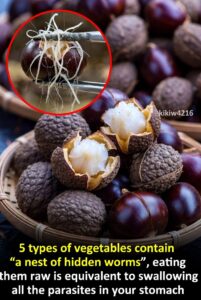
A viral image circulating online—showing cracked-open water chestnuts alongside thin, worm-like strands being pulled out—has sparked widespread concern. Paired with warnings that certain vegetables may contain “hidden parasites,” the post has led many people to question whether eating raw produce is as safe as it seems.
While some of the claims online are exaggerated, the topic itself is real: under certain conditions, vegetables—especially those grown in contaminated water or soil—can carry parasites or other harmful organisms. The key is understanding the actual risks and how to reduce them, rather than avoiding healthy foods altogether.
The Truth About Water Chestnuts
Water chestnuts (Eleocharis dulcis) are aquatic plants commonly used in many cuisines for their crisp texture. Because they grow in flooded environments, they can be exposed to parasites if the water is contaminated.
One parasite sometimes associated with aquatic plants is Fasciolopsiasis, caused by the intestinal fluke Fasciolopsis buski. In regions with poor sanitation, parasite larvae can attach to plants and survive until consumed.
However, this risk is largely limited to areas where untreated wastewater or unsafe farming practices are used. Proper cooking—such as boiling or stir-frying—kills these parasites effectively. Eating raw, unpeeled water chestnuts from unreliable sources is where the risk increases.
Leafy Greens: Nutritious but Needs Care
Vegetables like cabbage, spinach, and lettuce are staples in raw diets, but they grow close to the ground, making them more likely to come into contact with contaminated soil or water.
Parasites such as Ascariasis or protozoa like Giardiasis can be transmitted if produce is not properly washed. That said, in most regulated food systems, the risk is relatively low.
The real issue isn’t the vegetable itself—it’s how it’s grown, handled, and cleaned.
Safer habits include:
- Washing leaves thoroughly under running water
- Removing outer layers (especially for cabbage)
- Soaking in salt or vinegar solutions
- Avoiding raw consumption if the source is uncertain
Broccoli, Cauliflower, and Hidden Contaminants
Cruciferous vegetables like broccoli and cauliflower have dense, textured surfaces that can trap dirt, insects, or microorganisms. Viral posts often exaggerate this by claiming they contain “nests of worms,” but in reality, visible pests are usually harmless insects—not parasites that infect humans.
Still, proper cleaning matters. Soaking these vegetables in salted water can help remove debris. Light cooking, such as steaming or blanching, adds an extra layer of safety without significantly reducing nutritional value.
Where the Real Risk Comes From
The presence of parasites on vegetables is not about a specific “dangerous list” of foods—it’s about environmental conditions.
Contamination typically occurs when:
- Crops are irrigated with unsafe water
- Soil contains untreated human or animal waste
- Hygiene practices during handling are poor
Common foodborne parasites linked to produce include:
- Ascariasis
- Giardiasis
- Cryptosporidiosis
In countries with strong food safety regulations, these risks are relatively uncommon—but not impossible, especially with imported produce.
Raw vs Cooked: What’s Safer?
Cooking is the most reliable way to eliminate parasites, bacteria, and other pathogens. Heat effectively destroys most harmful organisms.
That doesn’t mean raw vegetables are unsafe—it just means they require more careful handling.
If you prefer eating raw:
- Choose trusted sources
- Wash thoroughly
- Peel when possible
- Refrigerate properly
If you’re unsure about the origin or cleanliness, cooking is the safer option.
Don’t Let Viral Posts Mislead You
Social media often amplifies fear by presenting extreme or misleading examples. Images of worms in vegetables may be real in rare cases, but they are not representative of everyday food.
Avoiding vegetables altogether would create far greater health risks than the small chance of contamination. Fresh produce remains essential for a balanced diet, providing fiber, vitamins, and antioxidants.
The goal is not fear—but awareness.
The Bottom Line
Yes, vegetables can carry parasites under certain conditions—but the risk depends heavily on how they are grown, handled, and prepared.
Instead of eliminating raw vegetables from your diet, focus on:
- Proper washing and preparation
- Choosing reliable food sources
- Cooking when in doubt
A little caution goes a long way. With the right habits, you can continue enjoying fresh, healthy foods without unnecessary worry.