Remembering Lauren Chapin: The Beloved Child Star Who Became a Symbol of Resilience, Faith, and Timeless Television Legacy
Introduction: A Life Remembered Beyond the Screen
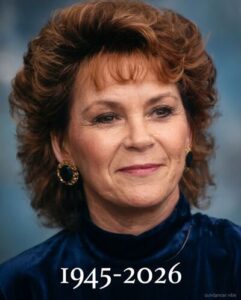
Lauren Chapin’s passing at the age of 80 marks the end of a life that stretched far beyond the boundaries of television fame. To millions, she will always be remembered as Kathy “Kitten” Anderson from Father Knows Best, one of the most iconic family television series of the 1950s. Yet behind that familiar image of innocence and charm was a far more complex human story—one shaped by early stardom, personal hardship, and ultimately, profound resilience.
When she died peacefully on February 24, 2026, after battling cancer, tributes emerged from fans across generations. For many, it felt like the closing of a cultural chapter—one tied not only to a television show, but to an era of storytelling that defined mid-century family life.
1. A Star Is Born in Television’s Golden Age
Born on May 23, 1945, Lauren Ann Chapin entered the entertainment world during a transformative period in American media. Television was still new, and audiences were just beginning to form emotional connections with characters who appeared weekly in their homes.
It was in this environment that Father Knows Best became a defining series. The show presented an idealized vision of American family life—structured, moral, and reassuring in tone.
Within this world, Chapin’s portrayal of Kathy “Kitten” Anderson stood out immediately. She brought a natural warmth and authenticity to the role, capturing the curiosity, innocence, and emotional honesty of childhood in a way that felt effortless and real.
Her performance helped ground the series emotionally, giving audiences a character they could genuinely relate to and care about.
2. The Character That Defined a Generation
While the series starred Robert Young and Jane Wyatt as the Anderson parents, it was the children who gave the show its emotional texture. Among them, Chapin’s “Kitten” became especially memorable.
She was more than a supporting role. She represented the emotional heartbeat of the family dynamic—expressing wonder, frustration, affection, and vulnerability in ways that reflected real childhood experiences.
In many episodes, her reactions helped highlight the moral lessons at the center of the story. Whether she was asking questions, learning lessons, or reacting emotionally to family situations, she brought depth to what might otherwise have been simple narratives.
For viewers, she became a symbol of innocence in an idealized world.
3. Life Beyond the Scripted World
While Father Knows Best portrayed a world of stability and resolution, Chapin’s real life unfolded with far less predictability.
Like many child actors of her era, she faced the challenge of growing up in the shadow of a defining role. Audiences often struggle to separate actors from the characters they play, and Chapin was no exception.
As she transitioned into adulthood, she encountered emotional and personal difficulties that contrasted sharply with her on-screen image. The shift from fame to normal life brought identity challenges, instability, and periods of struggle that she later acknowledged openly.
Her experience reflected a broader pattern seen among child performers: early visibility followed by a difficult search for personal identity outside of fame.
4. Struggles, Setbacks, and the Human Side of Fame
Chapin’s adult life included periods of hardship that she did not hide in later years. She spoke candidly about the challenges she faced, including emotional struggles and difficult personal circumstances.
These experiences shaped her understanding of fame, identity, and resilience. While her childhood role represented perfection and simplicity, her real life reflected complexity and imperfection.
What made her story notable, however, was not the presence of struggle—but her willingness to confront it openly later in life. Rather than allowing her past to define her, she chose transparency and reflection.
5. A Turn Toward Faith and Healing
Over time, Chapin began a journey of personal rebuilding. She turned toward faith, self-reflection, and accountability as guiding principles in her life.
This shift marked a significant turning point. Instead of distancing herself from her past, she integrated it into her story. She spoke about her experiences publicly, often using them to encourage others facing similar difficulties.
Her message centered on resilience:
that hardship is not the end of a story, but part of its development.
Through this perspective, she transformed her life narrative from one of struggle into one of recovery and meaning.
6. A Voice for Others Facing Hardship
In her later years, Chapin became a speaker and advocate, sharing her life experiences with audiences in churches, community events, and support gatherings.
Her openness gave her a new kind of influence. She was no longer speaking as a television character or former celebrity, but as someone who had lived through adversity and found a path forward.
This authenticity resonated deeply with those who heard her speak. Her story was not theoretical—it was lived experience.
She often emphasized that people are not defined by their lowest moments, but by how they respond to them.
7. Returning to a Beloved Legacy
Although her life moved far beyond Father Knows Best, Chapin maintained a connection to the show and its legacy.
She occasionally attended fan events and retrospectives, where she was warmly received by audiences who had grown up watching her. These gatherings were not about reliving fame, but about acknowledging a shared cultural memory.
For Chapin, they also represented reconciliation—a way of honoring the role that shaped her early life while embracing who she had become.
8. The Enduring Impact of Father Knows Best
Even decades after its original broadcast, Father Knows Best remains one of the most recognizable family television series in American history. Airing from 1954 to 1960, it captured an idealized version of postwar family life that continues to evoke nostalgia.
Within that framework, Chapin’s role as Kathy “Kitten” Anderson remains one of its most emotionally significant elements.
Her performance contributed to the show’s lasting appeal, helping it transcend its era and remain relevant in discussions of classic television.
For many viewers, she is inseparable from the memory of that time.
9. A Legacy of Duality: Fame and Humanity
Lauren Chapin’s legacy is defined by contrast.
On one hand, she represents the innocence of early television—a symbol of family-centered storytelling and cultural optimism.
On the other, she represents the human complexity behind fame: the challenges of identity, the weight of expectation, and the long journey toward personal understanding.
These two aspects do not conflict—they coexist.
Together, they form a complete picture of a life lived in both light and shadow.
10. The Public Response and Collective Memory
Following news of her passing, tributes emerged from fans across generations. Social media posts, archival clips, and personal memories reflected how deeply Father Knows Best had embedded itself in cultural memory.
Many expressed gratitude not only for her performance, but for her openness later in life. Her willingness to speak about her struggles added depth to how audiences understood her—not just as a character, but as a person.
For those who grew up watching the show, her passing felt deeply personal, as though a part of their own history had come to rest.