The enduring appeal of Wheel of Fortune has never been just about spinning a colorful wheel or guessing letters on a board. Its real power lies in something far more human: the tension that builds when ordinary people are placed in extraordinary situations. Every episode becomes a small psychological drama, shaped by decisions made in seconds and outcomes determined by a mix of skill, luck, and composure.
In one particularly memorable episode, that tension reached a peak through the performance of contestant Adam Wredberg. What began as a strong and steady showing evolved into a near-win that sparked discussion among viewers—not just about the result, but about the nature of the game itself.
A Strong Start That Set the Tone
From the opening rounds, Adam demonstrated a clear understanding of how to play the game effectively. Early success on Wheel of Fortune is more than just a financial advantage—it’s psychological.
By solving the first puzzle, he established momentum. That momentum matters. It creates pressure for other contestants, forcing them into a reactive position. In a game where opportunities are limited and can disappear with a single unlucky spin, starting strong can shape the entire trajectory of the episode.
Adam didn’t rely on flashy risks or aggressive guessing. Instead, he played with consistency—arguably one of the most underrated strategies in the game.
The Balance Between Risk and Control
One of the defining elements of Wheel of Fortune is its balance between chance and control. Contestants must constantly decide:
- Should I spin again or solve now?
- Is the risk worth the potential reward?
- Am I confident enough in the puzzle to act?
Adam’s approach leaned toward measured decision-making. He avoided unnecessary risks while still taking advantage of opportunities when they appeared. This balance is difficult to maintain, especially under pressure.
The Mystery Round highlighted this skill particularly well. This segment tempts contestants with hidden rewards but also carries the risk of sudden loss. Choosing whether to flip a Mystery wedge is not just a game mechanic—it’s a psychological test.
Adam navigated it with composure, increasing his total without falling into common traps. It was a moment that showed his awareness wasn’t just about letters—it was about timing and judgment.
Building a Lead the Smart Way
As the game progressed, Adam’s performance became defined by steady accumulation rather than dramatic swings.
This kind of gameplay often goes unnoticed compared to big, risky wins. But in reality, it’s one of the most effective ways to succeed on Wheel of Fortune.
By building his lead gradually:
- He reduced pressure on himself
- He forced competitors to take bigger risks
- He created a buffer against bad luck
Even when uncertainty appeared, he remained composed. That calmness is not accidental—it’s a skill, especially under studio lights and a live audience.
The Unpredictability That Defines the Game
Despite strong strategy, no contestant is ever fully in control.
The structure of Wheel of Fortune ensures unpredictability. A single spin can:
- Wipe out earnings
- Shift momentum instantly
- Give another player an unexpected advantage
This unpredictability is what keeps the show engaging. It ensures that even dominant performances must be sustained until the very end.
Adam managed this uncertainty well, maintaining his lead and ultimately securing a place in the Bonus Round—the stage where everything changes.
The Bonus Round: Where Pressure Peaks
Reaching the Bonus Round is an achievement. Winning it is something else entirely.
This final stage compresses the entire experience into a few intense seconds. Unlike earlier rounds, there’s no time to recover from hesitation. Every choice matters immediately:
- The category selection
- The additional letters
- The interpretation of partial information
Standing center stage, often with family watching, contestants face a unique kind of pressure. It’s not just about solving a puzzle—it’s about doing it while being watched by millions.
A Puzzle That Sparked Debate
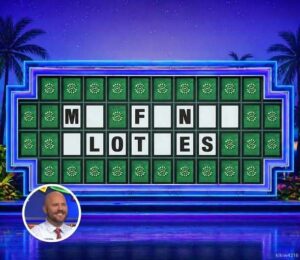
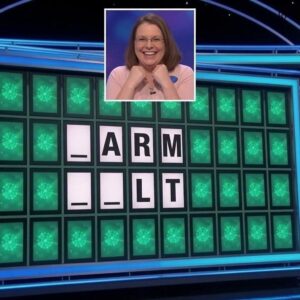
In this episode, the Bonus Round puzzle became the focal point of discussion.
At first glance, it seemed solvable. The revealed letters suggested a clear direction. But as time ticked down, the complexity became more apparent.
This is where Wheel of Fortune reveals its depth. Language allows for multiple interpretations. A phrase that looks obvious from the couch can feel entirely different under pressure.
Adam worked through the puzzle logically, attempting to connect the fragments into a complete phrase. For a moment, it felt like he might get there.
But he didn’t.
And that’s what made the moment powerful.
The Thin Line Between Winning and Missing
The difference between success and failure in the Bonus Round is often incredibly small.
A single letter.
A slight hesitation.
A different guess.
Adam’s near win highlighted just how narrow that margin can be. It wasn’t a failure of knowledge—it was a reflection of the game’s difficulty under pressure.
For viewers, this creates a shared experience. Watching Wheel of Fortune isn’t passive. Audiences actively try to solve the puzzle themselves, often believing they would have succeeded.
Moments like this challenge that assumption.
Audience Reactions and Ongoing Debate
Episodes like this rarely end when the credits roll.
They continue through conversation.
Viewers debated:
- Was the puzzle too difficult?
- Should Adam have chosen different letters?
- Was there a better strategy in those final seconds?
Some believed the answer was obvious. Others argued it was deceptively complex.
This kind of debate is part of what keeps Wheel of Fortune relevant. It invites audiences to engage, reflect, and even disagree.
The Psychological Challenge Behind the Game
One of the most overlooked aspects of the show is the mental pressure contestants face.
It’s easy to underestimate how different thinking becomes under:
- Bright studio lights
- Time constraints
- Audience presence
- National television exposure
Even confident individuals can second-guess themselves in that environment.
Adam’s performance demonstrated strong composure overall—but the Bonus Round is designed to push contestants beyond their comfort zone.
More Than Just Winning
It’s important to recognize that success on Wheel of Fortune isn’t defined solely by the final result.
Adam’s journey throughout the episode showcased:
- Strategic awareness
- Emotional control
- Consistent performance
The near win didn’t erase those qualities—it highlighted them.
In many ways, episodes like this are more memorable than straightforward victories. They create a narrative arc that viewers connect with: effort, progress, tension, and an outcome that feels just within reach.
Why the Show Still Works
After decades on air, Wheel of Fortune continues to succeed because of its balance.
It combines:
- Simple rules
- Complex decision-making
- Luck and skill
- Personal stories and universal emotions
Each episode is familiar, yet unpredictable. Each contestant brings something different.
And occasionally, an episode like this reminds viewers why the format still resonates.
Final Reflection
Adam’s near win wasn’t just a moment—it was a demonstration of what makes the show compelling.
It showed that:
- Strategy matters, but isn’t everything
- Confidence helps, but doesn’t guarantee success
- The smallest details can determine the outcome
Most importantly, it reinforced a simple truth:
The power of Wheel of Fortune isn’t just in the puzzles or prizes.
It’s in the human experience—
the tension, the decisions, and the moments where everything comes down to a few seconds.