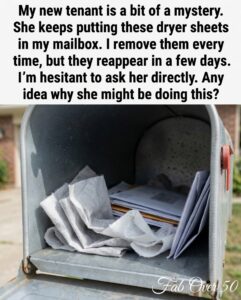
Finding a dryer sheet inside your mailbox can feel unexpected or confusing at first. It doesn’t look like mail, it isn’t a notice, and it isn’t something most people associate with postal delivery. Yet this small item often carries a very practical and thoughtful purpose rooted in safety, experience, and quiet cooperation between postal workers and the communities they serve.
What may seem like a random household object is actually part of an informal but widely used practice aimed at reducing insect-related risks in mailboxes—especially during warmer months.
Why Dryer Sheets End Up in Mailboxes
Mailboxes provide sheltered, enclosed spaces that protect mail from weather, but they also unintentionally create ideal environments for insects. Wasps, bees, hornets, and other stinging insects often seek out small, dry cavities for nesting.
For postal carriers, this can create a real hazard. Opening a mailbox that contains an active nest can lead to sudden swarming behavior, stings, and in some cases, severe allergic reactions.
To reduce this risk, some postal workers place a dryer sheet inside mailboxes they suspect may attract insects or already show early signs of activity.
How Dryer Sheets Help Deter Insects
Dryer sheets contain fragrance compounds such as linalool and benzyl acetate, which produce strong scents that many insects find unpleasant or disorienting.
While not a guaranteed insect repellent, these odors can:
- Interfere with insect navigation signals
- Disrupt nesting behavior
- Make enclosed spaces less appealing
Because of this, dryer sheets are sometimes used as a low-risk, non-toxic deterrent in small enclosed areas like mailboxes.
Unlike chemical sprays or pesticides, they do not pose risks to mail handling, pets, or people, making them a practical choice for informal use.
A Practice Born From Experience, Not Policy
The use of dryer sheets in mailboxes was not created by postal agencies or written into official guidelines. Instead, it developed organically through experience shared among postal carriers.
Workers who handle hundreds of mailboxes daily began noticing patterns: certain boxes were more likely to contain insects, especially during warm or late summer months.
Over time, simple preventive habits emerged and spread between routes. The dryer sheet became one of those habits—quiet, inexpensive, and easy to apply without disrupting delivery.
What It Might Mean When You Find One
Discovering a dryer sheet in your mailbox can carry a few possible meanings:
1. Preventive Placement
The carrier may have placed it proactively after noticing environmental conditions that often lead to insect activity.
2. Early Warning Signal
It may indicate that insects have been seen entering or hovering around the mailbox.
3. Safety Measure for Future Deliveries
It can serve as a precaution to protect both the carrier and the homeowner from potential stings or nests.
Importantly, it is not a sign of neglect, damage, or an error. It is typically a subtle, thoughtful safety measure.
How Homeowners Should Respond
If you find a dryer sheet in your mailbox, the best response is simple:
- Leave it in place for a few days
- Check the mailbox carefully for signs of nesting
- Observe for insect activity during warmer parts of the day
If you notice signs of a nest, it is safer to avoid handling it yourself. Instead, contact a pest control professional or notify your local postal service so the situation can be handled safely.
What Not to Do
There are also a few actions best avoided:
- Do not spray harsh chemicals inside the mailbox
- Do not block or seal the mailbox
- Do not assume it is trash or discard it immediately without checking
These actions can create safety risks, damage mail, or interfere with delivery.
The effectiveness of the dryer sheet lies in its simplicity. It works best as a gentle deterrent, not an aggressive solution.
Seasonal Awareness Matters
Insect activity around mailboxes tends to increase during:
- Late spring
- Summer
- Early fall
Warm weather, dry conditions, and reduced disturbance make these periods ideal for nesting insects.
Being aware of seasonal patterns helps homeowners understand why carriers may be more proactive during certain times of year.
A Quiet Example of Shared Responsibility
At its core, the dryer sheet in a mailbox represents something larger than insect prevention.
It reflects a quiet system of cooperation between people who rarely interact directly but rely on each other every day.
Postal carriers face environmental hazards that most people never see. Homeowners, in turn, trust them to deliver mail safely and consistently. This small gesture bridges that gap.
It is not formal communication, and it is not widely discussed, but it is a practical example of how everyday safety can be maintained through small, thoughtful actions.
Conclusion
A dryer sheet in your mailbox is not random—it is usually a sign of practical care.
It may indicate insect prevention, a subtle warning, or simply a precaution based on seasonal conditions. While simple in appearance, it reflects real experience from postal workers who prioritize safety while continuing their daily routes.
Understanding this small gesture transforms confusion into awareness. It shows how even the most ordinary objects can carry meaning when viewed through the lens of shared responsibility, quiet communication, and everyday community care.
In the end, it is a reminder that safety often isn’t loud or official—it is built through small, thoughtful actions that protect everyone involved.