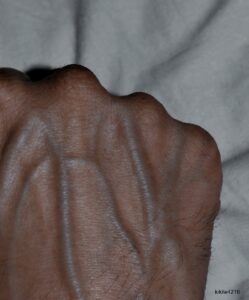
Visible Veins: What They Reveal About Your Body Composition, Fitness Level, Genetics, and Overall Health
Introduction
Visible veins are one of the most commonly noticed physical traits in fitness culture, often admired as a symbol of leanness, strength, and athletic conditioning. Many people associate prominent veins with being “in shape” or having low body fat, and while that is sometimes true, the reality is far more complex. Vein visibility is influenced by a combination of body composition, genetics, skin thickness, hydration levels, temperature, cardiovascular health, and even temporary physiological states such as exercise or stress.
Understanding why veins become visible requires looking beyond surface appearance. The human vascular system is constantly working to transport oxygenated and deoxygenated blood throughout the body, and the visibility of that system is simply a reflection of how close those vessels are to the skin, how much tissue surrounds them, and how efficiently blood is flowing at a given moment.
This article explores the science behind visible veins in depth, explaining what they may indicate about fitness, health, and lifestyle, while also addressing when vascular prominence is completely normal and when it might signal an underlying issue.
Body Composition and Low Body Fat
One of the most significant factors influencing visible veins is body fat percentage. Subcutaneous fat, which sits directly beneath the skin, acts as a natural layer that partially conceals blood vessels. When this fat layer decreases, veins naturally become more visible.
In individuals with lower body fat levels, particularly those who engage in regular resistance training or endurance sports, veins in the arms, legs, and sometimes even the abdomen become more pronounced. This is commonly referred to as vascularity.
For men, vascularity often becomes noticeable at lower single-digit to low-double-digit body fat percentages. For women, it typically becomes more apparent at slightly higher ranges due to natural differences in fat distribution and hormonal influences.
However, it is important to note that low body fat alone does not guarantee visible veins. Some lean individuals still have minimal vascularity due to genetics or thicker skin structure, while others may show prominent veins even at moderate body fat levels.
Muscle Mass and Training Adaptations
Muscle development plays an equally important role in vascular appearance. As muscles grow through resistance training, they push veins closer to the surface of the skin, making them more noticeable.
This is especially visible in bodybuilders and strength athletes, where hypertrophy (muscle growth) leads to increased vascular pressure and reduced space between muscle tissue and skin. Over time, training also improves capillary density, meaning more small blood vessels develop within muscle tissue to support increased oxygen demand.
During exercise, veins often become temporarily more visible due to increased blood flow, commonly referred to as a “pump.” This is a normal physiological response and does not necessarily reflect long-term body composition.
Genetics and Natural Variation
Genetics plays a major role in determining how visible veins are, regardless of fitness level.
Some individuals naturally have:
- Thinner skin layers
- More superficial vein placement
- Naturally lower subcutaneous fat distribution in certain areas
- Higher baseline blood flow visibility
This means that two people with identical training routines and diets can have very different levels of vascularity.
Ethnicity, skin tone, and inherited vascular structure all contribute to these differences. In many cases, visible veins are simply a natural anatomical trait rather than a reflection of lifestyle.
Hydration and Temporary Vascular Changes
Hydration status significantly affects how visible veins appear.
- Dehydration can make veins appear more prominent because there is less fluid volume in surrounding tissues.
- Overhydration may reduce vascular visibility by increasing tissue fullness.
Electrolyte balance, especially sodium and potassium levels, also plays a role in fluid distribution and vascular appearance.
It is important to understand that dehydration-related vascularity is temporary and does not indicate improved fitness. In fact, chronic dehydration can negatively impact performance, cognition, and cardiovascular function.
Temperature and Environmental Effects
Environmental conditions can rapidly change how visible veins appear.
- Heat causes vasodilation (blood vessels expand), increasing visibility
- Cold causes vasoconstriction (vessels shrink), reducing visibility
This is why veins often appear more prominent during workouts, hot weather, or after warm showers, and less visible in cold conditions.
These changes are entirely normal and reflect short-term regulation of blood flow rather than long-term health changes.
Age and Skin Changes
As the body ages, the skin naturally becomes thinner and loses elasticity due to reduced collagen production. This can make veins appear more visible even in individuals who are not particularly lean or muscular.
Additionally, fat distribution tends to change with age, sometimes reducing cushioning in certain areas like the hands and forearms, further enhancing vascular visibility.
While this is a normal part of aging, sudden or uneven vein prominence should always be evaluated in context with other symptoms.
Circulation and Cardiovascular Fitness
Good cardiovascular health can contribute to healthy vascular function, which may influence how veins appear.
Regular exercise improves:
- Blood flow efficiency
- Vessel elasticity
- Capillary density
- Oxygen delivery to muscles
These adaptations can make veins more responsive during physical activity. However, visible veins alone are not a direct measure of cardiovascular fitness.
Potential Medical Considerations
While visible veins are usually harmless, there are situations where they may be linked to medical conditions.
1. Varicose veins
Varicose Veins
These occur when vein valves weaken, causing blood to pool and veins to become enlarged or twisted. They may cause discomfort, swelling, or aching sensations.
2. Deep vein issues
Deep Vein Thrombosis
A serious condition where a blood clot forms in deeper veins, often accompanied by swelling, pain, and changes in surface vein visibility.
3. Circulatory or metabolic conditions
Conditions affecting blood pressure, thyroid function, or blood viscosity can sometimes influence vascular appearance.
If vein changes are sudden, painful, or localized, medical evaluation is important.
Exercise, Supplements, and Temporary Vascularity
Certain lifestyle factors can temporarily enhance vein visibility:
- Strength training (“muscle pump”)
- Cardiovascular exercise
- Nitric oxide–boosting foods (like beetroot)
- Caffeine or stimulants
- High carbohydrate intake pre-workout
These effects are usually short-lived and reflect changes in blood flow rather than structural body changes.
Psychological and Cultural Perception
In modern fitness culture, visible veins are often seen as a symbol of discipline, dedication, and low body fat. Social media and gym environments frequently amplify this perception, associating vascularity with aesthetic success.
However, this can create unrealistic expectations. Many healthy and fit individuals do not have highly visible veins, and conversely, visible veins do not guarantee peak health.
Body image concerns can arise when vascularity becomes an obsessive goal rather than a natural byproduct of training.
Conclusion
Visible veins are the result of a complex interaction between body fat levels, muscle development, genetics, hydration, temperature, and overall physiology. In many cases, they reflect a lean, active lifestyle and efficient circulation, especially in individuals who train regularly.
However, they are not a definitive marker of health, fitness, or athletic ability. They should be interpreted as one of many physical traits rather than a primary measure of well-being.
Understanding the reasons behind vascular appearance helps shift focus away from purely aesthetic judgment and toward a more balanced appreciation of how the human body functions. Ultimately, true health is better reflected in strength, endurance, energy levels, and long-term physical resilience—not just how visible the veins are beneath the skin.