For decades, Wheel of Fortune has remained a staple of television, not because of flashy reinvention, but because it understands something fundamental about human nature: people are drawn to tension, uncertainty, and the thrill of possibility. Beneath the bright lights, spinning wheel, and familiar format lies a deceptively complex game—one where knowledge, timing, and emotional control collide in ways that can turn even a routine episode into something unforgettable.
In this particular episode, that transformation centered around one contestant: Adam Wredberg.
From the outset, Adam demonstrated something that seasoned viewers recognize immediately—control. Not dominance in the loud, attention-grabbing sense, but a quieter, more deliberate command of the game’s rhythm. His early solve in the opening round wasn’t just a win; it was a signal. In a game where momentum can shape everything that follows, establishing an early lead creates both opportunity and pressure—opportunity for the leader, pressure for everyone else.
The Power of Composure
What made Adam’s performance stand out wasn’t dramatic risk-taking, but restraint. In an environment designed to provoke impulsive decisions, he stayed measured. Every spin, every consonant call, every vowel purchase seemed intentional.
That kind of discipline is harder than it looks.
Under studio lights, with cameras capturing every hesitation and an audience reacting in real time, even simple choices can feel amplified. Contestants often swing too far in one direction—either becoming overly cautious or recklessly aggressive. Adam managed to stay in the narrow space between those extremes.
And that balance paid off.
Strategy in Motion
As the rounds progressed, Adam built his lead steadily rather than relying on a single lucky break. This incremental approach is one of the most reliable paths to success on Wheel of Fortune, though it rarely gets the spotlight it deserves.
The Mystery Round, often a turning point, tested that approach.
Faced with the choice of flipping a Mystery wedge—risking everything for a potential reward—Adam made a calculated decision. These moments define contestants. They require not just game knowledge, but an understanding of probability, timing, and personal tolerance for risk.
He chose wisely.
The result: a stronger lead and continued control of the board.
The Illusion of Security
But if there’s one rule that defines Wheel of Fortune, it’s this: no lead is safe.
The game is engineered to disrupt certainty. A single spin can erase thousands of dollars. A missed letter can hand control to a competitor. The wheel itself is a reminder that chance is always lurking, ready to intervene.
Adam’s lead, while impressive, existed within that fragile balance.
And everyone—contestants and viewers alike—knew it.
Entering the Bonus Round
By the time Adam reached the Bonus Round, he had already achieved what many contestants hope for: a strong, consistent performance and a clear path to a potential big win.
But the Bonus Round is a different world.
Gone is the gradual pacing of earlier rounds. In its place is a compressed, high-stakes challenge where everything hinges on seconds. Contestants must interpret partial information, make rapid decisions, and trust their instincts—all while the clock counts down relentlessly.
It’s not just a test of knowledge.
It’s a test of composure under extreme pressure.
The Puzzle That Sparked Debate
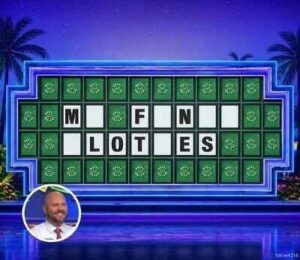
The puzzle Adam faced seemed, at first glance, manageable. With standard letters revealed and his chosen additions in place, the board offered enough clues to suggest a solution.
But language is tricky.
Phrases can mislead. Letter patterns can point in multiple directions. And under time pressure, even familiar expressions can feel suddenly out of reach.
As Adam worked through the puzzle, viewers could feel the tension building. There was a moment—a brief, electric moment—where it seemed he might solve it.
Then the clock ran out.
The correct answer, once revealed, triggered immediate reactions. Some viewers believed it was obvious in hindsight. Others argued it was deceptively difficult, especially given the constraints of the format.
And just like that, the episode extended beyond the screen.
Why Near Wins Matter More Than Easy Victories
Interestingly, it’s not always the big wins that people remember.
It’s the near wins.
Moments where success feels just within reach, only to slip away at the last second, create a stronger emotional imprint. They invite viewers to participate mentally—I would have gotten that, or that was tougher than it looked.
Adam’s performance landed squarely in that space.
He didn’t just play well—he brought viewers into the experience, prompting discussion, disagreement, and engagement.
The Psychology Behind the Pressure
What makes these moments so compelling is the psychological layer often overlooked by casual viewers.
Contestants aren’t just solving puzzles. They’re doing it while being watched by millions, under intense lighting, with limited time and no margin for error. The brain processes pressure differently in those conditions. Familiar patterns become harder to recognize. Doubt creeps in faster.
Even highly capable individuals can falter.
That’s not failure—it’s human.
And it’s exactly what makes Wheel of Fortune so enduring.
More Than a Game
Adam’s episode is a perfect example of how the show transcends its simple format. On paper, it’s a word puzzle game. In practice, it becomes a study in decision-making, emotional control, and the interplay between skill and chance.
Every spin carries risk.
Every guess carries consequence.
And every episode carries the potential for a moment that sticks with viewers long after the credits roll.
The Bigger Picture
What this episode ultimately highlights is why Wheel of Fortune continues to resonate after so many years.
It doesn’t rely on spectacle.
It relies on people.
On their instincts, their reactions, their successes, and their near misses.
Adam Wredberg’s performance didn’t just showcase strong gameplay—it captured the essence of what makes the show compelling: the tension of possibility, the unpredictability of outcomes, and the emotional connection that forms when viewers see themselves in the person at the wheel.
The Bottom Line
In the end, this wasn’t just an episode about winning or losing.
It was about the thin line between the two.