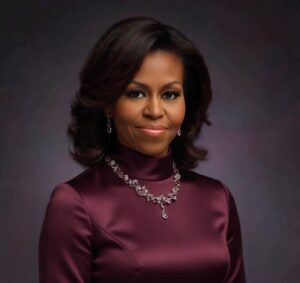
In recent interviews and podcast conversations throughout 2025 and 2026, Michelle Obama has offered some of her most personal and reflective insights yet, speaking openly about aging, emotional growth, marriage, therapy, public pressure, and the rediscovery of identity after decades spent serving others.
Her reflections have resonated widely not because they come from a former First Lady alone, but because they touch on deeply universal experiences: the struggle to balance responsibility with selfhood, the pressure to meet expectations, the challenge of maintaining relationships over time, and the quiet realization that personal growth never truly ends.
At 61, Michelle Obama describes herself as entering a phase of life defined not by reinvention in the dramatic sense, but by clarity. After years spent raising children, supporting a political partnership, and living under intense public scrutiny, she now speaks about something she calls “complete ownership” of her time and choices.
That freedom, she explains, did not arrive suddenly.
It emerged gradually after decades of prioritizing everyone else first.
For much of her adult life, her decisions were connected to larger responsibilities. As a mother, wife, lawyer, advocate, and eventually First Lady, nearly every aspect of her daily existence involved obligation, structure, or public expectation. Raising daughters while navigating life inside the White House required constant discipline, emotional restraint, and attention to how every action might be interpreted publicly.
Now, with her daughters grown and independent, she describes experiencing a new emotional spaciousness—one that allows her to make decisions based not solely on responsibility, but on curiosity, joy, and personal fulfillment.
This shift may sound simple on the surface, yet it reflects something profoundly important, especially for women who spend decades balancing caregiving, ambition, and societal expectations. Many people reach middle age realizing they have become experts at supporting others while remaining disconnected from themselves.
Michelle Obama speaks openly about confronting that reality.
She describes freedom not as escape from the past, but as permission to finally integrate all parts of herself without guilt. Whether through travel, new creative projects, quieter routines, or simply declining obligations that no longer align with her priorities, she frames this stage of life as an intentional reclaiming of energy and attention.
Her reflections challenge the cultural assumption that self-discovery belongs only to youth.
Instead, she suggests that maturity may actually deepen self-awareness because experience strips away illusion. By the sixth decade of life, many people understand more clearly what truly matters to them—and equally important, what no longer does.
One of the most widely discussed aspects of her recent interviews has been her openness about returning to therapy.
Importantly, she does not describe therapy as a reaction to crisis or instability. Instead, she calls it a “tune-up”—a proactive investment in emotional health during a major life transition.
That distinction matters.
For years, mental health conversations were often framed only around severe struggle or emergency intervention. Michelle Obama presents a different perspective entirely: therapy as maintenance, reflection, and continued growth rather than simply repair.
She compares the process to caring for something valuable that has carried significant weight over time.
According to her, therapy offers a structured space to examine patterns formed throughout different stages of life—childhood expectations, family dynamics, professional ambition, political years, and the pressures that come with being constantly visible.
Success, she explains, does not automatically eliminate emotional conditioning.
In fact, the habits that help people succeed early in life may later become sources of imbalance if left unexamined. Constant productivity, perfectionism, over-responsibility, and the inability to rest are often praised socially, especially among high achievers. Yet over time, those same patterns can quietly erode emotional well-being.
Michelle Obama speaks candidly about learning to question these habits rather than automatically glorifying them.
Therapy has helped her examine where her sense of worth became tied to performance, usefulness, or external validation. It has also encouraged her to create healthier boundaries around rest, emotional energy, and self-expectation.
Alongside therapy, she mentions practices like journaling, mindfulness, reflection, and intentional pauses from constant activity. Together, these habits form a broader approach to emotional wellness centered not on perfection, but awareness.
Her willingness to discuss therapy publicly carries broader cultural significance as well.
Mental health stigma remains deeply rooted in many communities, particularly among older generations and communities where emotional vulnerability has historically been misunderstood or discouraged. By speaking openly about therapy without shame or defensiveness, Michelle Obama helps normalize emotional care as part of a healthy and evolving life.
She presents growth as ongoing rather than finished.
No amount of success, visibility, or accomplishment exempts someone from needing reflection, healing, or emotional recalibration.
Her comments about marriage have also drawn widespread attention, particularly because of the honesty and realism she brings to conversations about long-term relationships.
Michelle Obama has never portrayed marriage as effortless, and in recent discussions she continues emphasizing that enduring partnerships require constant adaptation. She speaks openly about the strain political life placed on her relationship with Barack Obama, especially during the White House years when privacy became nearly impossible and schedules left little room for ordinary connection.
Now removed from daily political pressure and active parenting responsibilities, she describes rediscovering their relationship in quieter, more intentional ways.
Small routines matter more now.
Long conversations.
Shared downtime.
Mutual appreciation.
Emotional presence.
She rejects the idea that successful marriages remain static over time. Instead, she describes partnership as something evolving continuously alongside the individuals within it. People change. Priorities shift. Life stages alter emotional needs and dynamics.
Strong marriages survive not because conflict disappears, but because both people continue adjusting, listening, and growing together.
Michelle Obama also addresses public speculation surrounding her marriage with noticeable calm and humor. Living under decades of scrutiny has taught her that outside narratives rarely reflect the private reality of relationships.
What matters, she suggests, is not maintaining an illusion of perfection but maintaining honesty, communication, and mutual respect privately.
Her perspective resonates because it feels deeply human rather than performative.
She acknowledges frustration, difference, and strain without presenting them as signs of failure. Instead, they become normal parts of a long relationship sustained through effort and commitment.
Another important theme running through her reflections involves breaking generational patterns.
Michelle Obama often speaks with profound respect for the values instilled by her parents: discipline, resilience, responsibility, and hard work. Those qualities shaped her success and grounded her identity.
At the same time, she recognizes that inherited beliefs are not automatically healthy in every context.
Certain generational expectations—particularly around self-sacrifice, emotional suppression, relentless productivity, or tying worth entirely to achievement—can become limiting if never questioned.
Therapy and self-reflection have encouraged her to examine which patterns still serve her and which need reshaping.
This process reflects a larger cultural shift happening across generations. Increasingly, people are reevaluating inherited ideas about work, emotional expression, relationships, rest, and identity. Rather than rejecting previous generations entirely, many seek balance: honoring resilience while also prioritizing emotional well-being.
Michelle Obama describes this work not as rebellion against her upbringing, but as evolution.
Importantly, she also connects this process to motherhood.
The way she examines her own patterns influences how she supports her daughters, Malia Obama and Sasha Obama. She hopes they pursue ambition while also maintaining emotional awareness and healthy boundaries.
This reflects a broader understanding that generational progress often begins through small internal changes before becoming visible externally.
Personal healing influences family dynamics.
Family dynamics influence future generations.
And over time, those shifts contribute to larger cultural transformation.
Of course, none of this happens outside the reality of public scrutiny.
Even years after leaving the White House, Michelle Obama remains one of the most recognized women in the world. Every appearance, comment, outfit, decision, or absence becomes subject to interpretation online.
She admits openly that despite experience and resilience, public narratives can still affect her emotionally—especially when they involve her family or personal intentions being distorted.
Yet she has developed clearer strategies for protecting her mental space.
One of the most important lessons she describes is learning not to respond to everything.
Constant reaction, she suggests, drains emotional energy and places too much power in external opinions. Instead, she focuses increasingly on intentional engagement: choosing where her attention goes rather than allowing public discourse to dictate her emotional state.
This approach reflects emotional maturity more than detachment.
She remains engaged with issues she cares deeply about while also recognizing that preserving inner stability requires boundaries. In the digital age especially, endless visibility can become psychologically exhausting.
Her comments resonate far beyond celebrity culture because many people experience smaller-scale versions of the same pressure. Social media has created environments where ordinary individuals also navigate constant comparison, judgment, and expectation.
Michelle Obama’s approach offers a reminder that emotional resilience often depends less on controlling outside opinions and more on managing personal response to them.
Ultimately, all these reflections—freedom, therapy, marriage, boundaries, emotional growth—connect back to one central theme: self-worth.
Michelle Obama speaks about self-worth not as confidence rooted in achievement, but as something deeper and more stable. Titles, public admiration, professional success, and external validation are temporary. They shift constantly.
Real self-worth, she suggests, must exist independently from applause.
That understanding does not arrive automatically.
It requires ongoing practice.
She emphasizes gratitude, meaningful relationships, emotional honesty, and activities that bring genuine fulfillment rather than public recognition. Self-worth grows through alignment between inner values and outward life, not through endless accomplishment alone.
This message feels particularly powerful because it comes from someone who has already achieved extraordinary visibility and success. Rather than glorifying status, she speaks increasingly about peace, balance, authenticity, and emotional sustainability.
There is something deeply refreshing in that perspective.
Especially in cultures obsessed with constant achievement, Michelle Obama’s reflections offer an alternative definition of fulfillment—one grounded not in proving worth endlessly, but in understanding worth already exists.
Her honesty also reminds people that growth does not end at any specific age.
People continue changing.
Continue healing.
Continue reevaluating old assumptions.
Continue discovering new parts of themselves.
At 61, Michelle Obama presents herself not as someone who has everything perfectly figured out, but as someone willing to remain curious about her own evolution.
That openness may be what makes her reflections resonate so strongly.
Beneath the public figure, the bestselling author, the former First Lady, and the global icon is a woman navigating the same emotional questions many people eventually face:
Who am I beyond responsibility?
What patterns no longer serve me?
How do I maintain meaningful relationships while continuing to grow individually?
What does emotional freedom actually look like?
And perhaps most importantly:
How do I build a life rooted not in expectation, but in authenticity?
Her recent interviews do not offer simplistic answers.
Instead, they offer something more valuable: honesty.
Honesty about change.
Honesty about effort.
Honesty about vulnerability.
And honesty about the lifelong process of becoming more fully oneself.