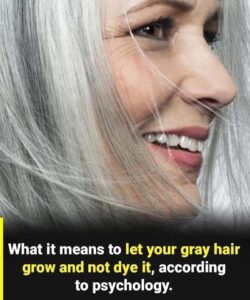
In a culture deeply influenced by appearance, aging has long been treated as something to resist rather than accept. Entire industries are built around preserving youth, concealing visible changes, and convincing people that growing older should remain hidden for as long as possible. Wrinkles are softened, skin is tightened, and gray hair is routinely covered through dyes, treatments, and cosmetic routines designed to maintain the illusion of timelessness. Within this environment, allowing gray hair to grow naturally can seem like a small personal decision on the surface, yet psychologically it often represents something much deeper.
For many individuals, especially in societies where youth is closely tied to beauty, relevance, and social value, embracing gray hair becomes more than a cosmetic choice. It reflects a shift in identity, emotional maturity, self-perception, and the relationship one has with aging itself. Choosing to stop coloring gray hair can symbolize a quiet but powerful movement away from external approval and toward internal alignment. Rather than signaling neglect or loss of self-care, it often reveals increased self-awareness and a growing desire to live more authentically.
The psychological meaning behind going gray naturally is layered and deeply personal. It touches on themes of acceptance, confidence, emotional freedom, resistance to unrealistic standards, and the evolving understanding of what it means to age with dignity in a world that frequently rewards youth above all else.
Hair as a Symbol of Identity and Social Perception
Hair has always carried social and psychological significance far beyond its biological function. Across cultures and throughout history, hairstyles, colors, and grooming practices have communicated status, personality, age, identity, and even emotional state. Hair often becomes part of how people define themselves and how they wish to be perceived by others.
Because of this, changing one’s hair can feel deeply emotional. A haircut after heartbreak, a dramatic color transformation during periods of reinvention, or the decision to grow gray naturally are rarely only about appearance. These choices often reflect inner transitions already taking place psychologically.
For decades, gray hair was framed almost exclusively as a problem to correct. Advertising campaigns consistently reinforced the idea that visible aging reduced attractiveness, especially for women. Gray roots became associated with decline, neglect, or loss of vitality, creating pressure to maintain a youthful image indefinitely.
This cultural conditioning influenced how many people viewed themselves. Coloring gray hair became normalized not simply as a beauty routine but as an expected form of self-maintenance tied to social acceptance and professional relevance.
When someone decides to stop dyeing their hair and allow gray strands to emerge naturally, they are often challenging years of inherited messaging about worth, beauty, and identity. The process becomes psychological as much as physical because it involves redefining how one wishes to exist in the world.
The Shift From External Validation to Internal Acceptance
One of the most important psychological changes associated with embracing gray hair is the movement from externally driven validation toward internally grounded self-worth.
In earlier stages of life, many people rely heavily on external feedback to shape self-esteem. Compliments, attractiveness, social approval, and fitting cultural expectations can strongly influence confidence and identity. Maintaining a youthful appearance may become tied to feelings of security, relevance, or acceptance.
Over time, however, many individuals begin reevaluating these priorities. Life experiences, emotional growth, changing relationships, career transitions, or personal reflection can shift the focus inward. People begin asking deeper questions about authenticity, emotional peace, and the exhausting effort required to constantly maintain appearances for others.
Letting gray hair grow naturally often emerges during this stage of reassessment. The decision may symbolize a desire to reduce the gap between outward presentation and internal reality. Instead of continuously correcting signs of aging, individuals begin allowing themselves to appear as they truly are.
This transition can feel deeply liberating because it reduces the emotional tension created by constant self-monitoring. The need to hide, adjust, or maintain a carefully controlled image begins to soften. Self-worth becomes less dependent on appearing younger and more connected to lived experience, character, and emotional authenticity.
Emotional Relief and Freedom From Constant Maintenance
Many people who stop coloring their hair describe experiencing an unexpected emotional release. While hair dye routines may appear simple on the surface, they often involve ongoing mental attention and maintenance.
Touch-up appointments, root monitoring, color correction, and the pressure to avoid visible gray can create a subtle but persistent psychological burden. Over time, these routines may reinforce the belief that natural aging must be continuously managed or concealed.
Letting go of this cycle can produce feelings of relief and emotional lightness. Individuals no longer feel trapped in constant resistance against natural physical change. Instead, they begin experiencing greater ease and acceptance in everyday life.
Psychologically, this reflects a broader principle known as self-acceptance. Acceptance does not mean giving up on self-care or abandoning personal expression. Rather, it means reducing unnecessary conflict with realities that cannot ultimately be controlled.
Gray hair becomes symbolic of allowing rather than resisting. It represents trust in one’s evolving identity instead of fear surrounding visible change.
This emotional freedom can extend beyond appearance. Once people become more comfortable embracing authenticity physically, they often become more confident expressing themselves honestly in other areas of life as well.
Gray Hair and Emotional Maturity
The choice to embrace gray hair naturally often coincides with emotional maturity and increased psychological resilience.
Emotional maturity involves developing the ability to tolerate change, uncertainty, and imperfection without becoming overwhelmed by them. It includes understanding that identity is not fixed solely to appearance, achievement, or external approval.
Gray hair can become a visible reflection of this maturity because it acknowledges the passage of time openly rather than attempting to erase it. Individuals who embrace their natural aging process are often demonstrating a healthier relationship with impermanence.
Rather than viewing aging as failure or loss, they begin seeing it as evidence of experience, survival, wisdom, and growth. Every gray strand becomes part of a larger life narrative rather than something shameful to conceal.
This shift in perspective can strengthen emotional stability. People become less reactive to superficial judgments and more focused on qualities that provide lasting meaning, such as relationships, values, creativity, purpose, and personal peace.
In this sense, gray hair is not simply about aging. It becomes connected to psychological integration—the process of accepting all parts of oneself, including change.
Challenging Beauty Standards and Gender Expectations
The social meaning of gray hair is heavily influenced by gender expectations. Historically, men with gray hair have often been described using positive language such as distinguished, experienced, or authoritative. Women, by contrast, have faced far greater pressure to maintain youthful appearances in order to remain socially valued.
This double standard has shaped beauty industries and social expectations for decades. Women are frequently encouraged to fight visible aging aggressively, while men are more often allowed to age naturally without the same level of scrutiny.
As a result, women who choose to embrace gray hair naturally may experience their decision as an act of resistance against restrictive beauty standards. It can require significant confidence to step outside expectations that equate attractiveness with youthfulness.
Psychologically, resisting social pressure strengthens self-trust. Individuals learn to tolerate judgment, disagreement, or misunderstanding without abandoning their personal values. This process often increases autonomy and emotional independence.
What begins as a decision about hair can evolve into a broader transformation in self-perception. People may become more assertive about boundaries, less dependent on approval, and more willing to prioritize authenticity over conformity.
In this way, embracing gray hair becomes connected to empowerment rather than surrender.
Redefining Beauty Through Authenticity
Modern beauty standards often emphasize perfection, uniformity, and the appearance of effortless youth. Yet many individuals eventually begin questioning whether these standards truly reflect emotional well-being or meaningful self-expression.
Natural gray hair challenges conventional definitions of beauty by introducing authenticity, individuality, and visible life experience into appearance. Instead of attempting to erase age entirely, individuals embracing gray hair often redefine beauty as honesty, confidence, and presence.
This shift reflects changing cultural attitudes as well. Increasing numbers of public figures, professionals, and everyday individuals are choosing to go gray naturally and share their experiences openly. Social media movements celebrating silver hair and natural aging have created communities that encourage self-acceptance and challenge outdated expectations.
The growing visibility of natural gray hair helps normalize the idea that aging does not diminish beauty or value. Instead, it suggests that beauty can evolve and deepen over time rather than disappear.
The Psychological Relationship With Time and Aging
At a deeper level, the decision to let gray hair grow naturally reflects a transformed relationship with time itself.
Modern society often treats aging as a problem to solve. Anti-aging products, cosmetic procedures, and youth-focused messaging create the illusion that aging can be delayed indefinitely through enough effort, discipline, or consumption.
This mindset can produce chronic anxiety because the body inevitably changes despite attempts to control it completely. Fighting visible aging continuously may create emotional exhaustion and ongoing dissatisfaction.
Accepting gray hair often represents a psychological shift away from battling time toward coexisting peacefully with it. Individuals begin recognizing that aging is not evidence of failure but evidence of living.
This perspective fosters resilience and emotional balance. Instead of measuring worth through youthfulness, people focus more on wisdom, relationships, emotional depth, and accumulated experience.
Gray hair becomes symbolic not of decline, but of continuity. It reflects everything a person has endured, learned, survived, and carried forward throughout life.
Authenticity and Living Without Constant Correction
One of the strongest psychological themes associated with natural gray hair is authenticity.
Authenticity involves aligning external expression with internal reality rather than performing an identity solely to satisfy social expectations. Many individuals who embrace gray hair describe feeling more “themselves” afterward, even if the physical change initially feels uncomfortable.
This comfort often develops gradually. The transition period can involve vulnerability because visible aging may trigger fears about judgment, attractiveness, or relevance. However, many people eventually experience increased confidence precisely because they are no longer hiding natural changes.
Living without constant correction creates emotional spaciousness. Energy previously spent managing appearance can be redirected toward relationships, creativity, health, or personal fulfillment.
Importantly, embracing gray hair does not invalidate the choice to dye hair. Hair coloring can remain a meaningful form of creativity, self-expression, or enjoyment for many people. The psychological significance lies not in whether someone colors their hair, but in whether their choices feel internally authentic rather than driven entirely by fear or obligation.
The Quiet Strength Behind the Decision
Allowing gray hair to grow naturally is often a quieter act than society realizes. It may not involve dramatic announcements or public statements, yet psychologically it can represent enormous internal growth.
It reflects the courage to be visible without excessive filtering. It demonstrates willingness to exist honestly in a culture that constantly encourages self-modification. It suggests confidence rooted less in appearance and more in self-understanding.
This quiet strength becomes especially powerful because it challenges deeply ingrained assumptions about aging and worth without needing confrontation or rebellion. The statement exists simply through presence and authenticity.
For many individuals, gray hair eventually stops feeling like something being “accepted” and instead becomes simply part of who they are—natural, integrated, and emotionally neutral.
That shift itself reflects profound psychological freedom.
Conclusion
The decision to let gray hair grow naturally carries meaning far beyond aesthetics. Psychologically, it often reflects self-acceptance, emotional maturity, authenticity, and a changing relationship with identity, aging, and societal expectations.
In a culture heavily focused on preserving youth, embracing gray hair can become a powerful act of internal alignment. It represents moving away from constant self-correction and toward greater peace with one’s evolving self.
Rather than symbolizing neglect or decline, gray hair frequently reflects resilience, experience, wisdom, and emotional confidence. It challenges the belief that value diminishes with age and instead suggests that identity deepens through lived experience.
Ultimately, the true psychological meaning of going gray naturally lies not in the hair itself, but in what the decision often represents: the freedom to exist honestly, the courage to accept change, and the quiet confidence to define beauty on one’s own terms rather than according to the expectations of others.