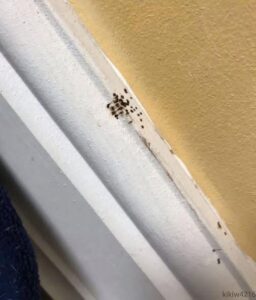
Discovering tiny black dots scattered around a kitchen can be unsettling, especially when they seem to appear repeatedly despite cleaning. Many people initially assume the specks are harmless crumbs, coffee grounds, pepper flakes, dirt, or debris tracked in from outside. But in some situations, these tiny dark particles may actually be insect droppings, also known as frass, which can signal the presence of hidden household pests living nearby.
The realization often comes unexpectedly.
Someone wipes down a counter only to notice the dots return the next morning. A few black specks appear along a windowsill, near a cabinet hinge, or around a door frame. Then perhaps a small striped insect, beetle, or roach-like bug is spotted nearby, raising concerns that something more serious may be happening behind walls, beneath appliances, or inside pantry storage areas.
Although not every black speck indicates a dangerous infestation, repeated clusters of small dark droppings in kitchens should never be ignored completely. Understanding what these signs may represent can help homeowners respond early before a manageable issue develops into a widespread pest problem.
One of the most important things to understand is that different insects leave behind different types of droppings. The appearance, location, and quantity of the specks often provide clues about what kind of pest may be present.
Cockroach droppings, for example, are commonly described as looking like black pepper, coffee grounds, or tiny dark grains. In larger roach species, the droppings may resemble small cylindrical pellets with ridges. These droppings are often found along baseboards, behind appliances, inside cabinets, under sinks, or near food storage areas where cockroaches travel frequently.
Certain pantry beetles, such as cigarette beetles or drugstore beetles, may also leave behind fine granular debris or frass near dry food products. These insects commonly infest flour, cereal, rice, spices, pet food, pasta, or packaged baking ingredients.
Other insects, including termites and carpenter ants, produce different forms of frass entirely. Termite droppings often appear as tiny uniform pellets near wood structures, while carpenter ant debris may include wood shavings mixed with insect parts.
The location of the black dots matters significantly.
Kitchens naturally attract pests because they provide three essential survival resources:
- Food
- Moisture
- Shelter
Even tiny amounts of food residue, grease, crumbs, or standing water can sustain certain insects surprisingly well. Warm spaces behind refrigerators, dishwashers, ovens, or under sinks create ideal hiding and breeding environments.
If black specks repeatedly appear near food storage areas, appliance edges, cabinet corners, or cracks in walls, it may indicate active insect movement through those areas.
The insect itself can also provide valuable clues.
Small striped beetles are often pantry pests rather than dangerous biting insects. Cigarette beetles and drugstore beetles, for example, are tiny brownish insects commonly associated with dry stored foods. Their larvae feed on pantry products and leave behind contamination in packaging and shelves.
Young cockroach nymphs, however, may also appear striped or banded depending on the species and stage of development. German cockroach nymphs in particular are small, dark, and fast-moving, often hiding during daylight hours and becoming active at night.
Because many household insects are nocturnal, people may see only the droppings long before seeing large numbers of live bugs.
This is why frass and debris are considered important early warning signs in pest management.
One reason these situations feel alarming is because insect infestations can grow quietly for weeks or months before becoming obvious. A few insects hidden behind cabinets may eventually become dozens or hundreds if conditions remain favorable.
Warm indoor temperatures accelerate reproduction cycles dramatically. Kitchens with excess humidity, leaky plumbing, poorly sealed food containers, or infrequent deep cleaning become especially attractive environments.
Pantry pests often enter homes through packaged foods purchased from stores. Cockroaches may enter through pipes, cracks, cardboard boxes, drains, shared apartment walls, or grocery deliveries.
Once inside, they seek dark protected spaces where humans rarely look closely.
Health concerns associated with insect droppings are one reason pest problems deserve attention beyond simple annoyance.
Cockroach droppings, shed skins, saliva, and body fragments contain allergens known to trigger asthma and allergic reactions in sensitive individuals. Children are especially vulnerable because their respiratory systems are still developing.
Research has linked cockroach allergens to worsening asthma symptoms, particularly in urban environments where infestations may become severe.
Insect contamination can also introduce bacteria into food preparation areas. Cockroaches are known to travel through drains, garbage, damp spaces, and decaying materials before crossing kitchen surfaces and food storage zones.
Although seeing a few specks does not automatically mean a major health emergency exists, repeated contamination should be addressed promptly to reduce long-term exposure risks.
Psychologically, infestations can also create significant stress. Many homeowners describe feeling anxious, embarrassed, or constantly uncomfortable after discovering hidden pests in kitchens where food is prepared daily.
Fortunately, early intervention often prevents much larger problems later.
The first step is careful inspection.
Using a flashlight, examine:
- Cabinet corners
- Pantry shelves
- Under sinks
- Around plumbing pipes
- Behind appliances
- Along baseboards
- Around windows and door frames
- Inside food storage areas
Look for:
- Additional droppings
- Live insects
- Shed skins
- Egg cases
- Damaged food packaging
- Musty odors
- Grease marks or trails
Pantry items should be checked carefully for tiny holes, webbing, larvae, or unusual debris.
If contamination appears widespread, disposing of heavily infested dry goods may be necessary. Flour, cereal, pasta, rice, spices, and pet food are common targets for pantry pests.
Cleaning is essential but should be done thoroughly rather than superficially.
Vacuuming droppings with a HEPA-filter vacuum helps reduce airborne particles. Afterward, surfaces should be cleaned with soap and water or household disinfectants appropriate for kitchen use.
Vacuum bags or debris should be sealed and discarded promptly outside.
Food should then be transferred into airtight containers made of glass, thick plastic, or metal whenever possible. Thin cardboard and paper packaging are easily penetrated by many pantry insects.
Reducing moisture is equally important.
Repair leaking pipes, dry damp areas, improve ventilation, and avoid leaving standing water overnight near sinks or pet bowls. Even small moisture sources can sustain certain pests.
Cracks and crevices around cabinets, plumbing, walls, and baseboards should be sealed to reduce hiding places and entry points.
Sticky traps and monitoring traps can help determine whether insect activity continues after cleaning. These tools are particularly useful because many pests remain hidden during the day.
For larger infestations, professional pest control may become necessary. Licensed pest management professionals can identify species accurately, locate hidden breeding sites, and apply targeted treatments safely.
This is especially important if:
- Droppings continue appearing daily
- Live insects are frequently seen
- Infestations spread beyond the kitchen
- Children or vulnerable individuals are affected
- DIY treatments fail repeatedly
Modern pest control often combines sanitation, exclusion, monitoring, bait systems, and targeted treatments rather than relying solely on heavy pesticide spraying.
Preventing future infestations requires ongoing habits rather than one-time cleaning alone.
Helpful prevention strategies include:
- Wiping counters daily
- Sweeping floors regularly
- Storing food in sealed containers
- Taking out trash consistently
- Cleaning appliance areas monthly
- Avoiding cluttered storage spaces
- Fixing leaks quickly
- Inspecting groceries before storage
- Reducing cardboard accumulation indoors
Seasonal deep cleaning can also help identify early warning signs before infestations expand.
Importantly, not every tiny black speck automatically means a dangerous infestation exists. Kitchens naturally accumulate debris, crumbs, spice particles, and dust. However, repeated patterns of uniform dark specks appearing consistently in the same locations—especially alongside insects or damaged food packaging—deserve closer attention.
The key is observation rather than panic.
Early awareness allows homeowners to act while problems remain manageable.
What initially appears to be harmless dirt may sometimes reveal hidden insect activity, but discovering the issue early provides a major advantage. Most household pest problems become significantly easier and less expensive to control when identified before populations grow large.
In many cases, a combination of careful cleaning, proper food storage, moisture control, and targeted intervention resolves the situation effectively.
Ultimately, those tiny black dots serve as a reminder that small signs inside a home often matter more than people realize. Paying attention to unusual patterns, recurring debris, or subtle changes in the kitchen environment can help protect both the cleanliness of the home and the health of the people living there.
What begins as a few unexplained specks may simply require better storage and cleaning habits—or it may be the early signal of pests establishing themselves quietly behind the scenes.
Either way, informed attention is always more effective than ignoring the warning signs completely.