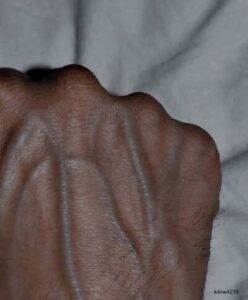
Visible veins, often referred to as vascularity, are one of the most frequently discussed and visually striking features in fitness culture, yet they remain widely misunderstood. To many, prominent veins symbolize peak physical conditioning, discipline, and low body fat. In social media and gym environments, they are often celebrated as a visible marker of success in training and dieting. However, beneath this aesthetic perception lies a complex interplay of physiology, genetics, lifestyle factors, and sometimes medical conditions.
Understanding why veins become visible requires a deeper look at how the human circulatory system interacts with skin, muscle, fat, and environmental conditions. Veins are responsible for returning deoxygenated blood back to the heart, and their visibility depends on how close they lie to the skin’s surface, how much fat covers them, and how much blood is flowing through them at any given time. What appears as a simple visual trait is actually the result of multiple overlapping biological systems working together.
At its most basic level, visible vascularity occurs when subcutaneous fat—the layer of fat beneath the skin—is reduced enough for veins to become more apparent. This is why individuals with lower body fat percentages often display more visible veins, particularly in areas such as the arms, shoulders, hands, legs, and abdomen. In men, vascularity tends to become more noticeable when body fat drops into the approximate range of 8–12 percent. In women, due to naturally higher essential fat levels, visible vascularity may appear at slightly higher ranges, often between 15–20 percent, depending on genetics and muscle development.
However, body fat alone does not determine vascularity. One of the most significant contributing factors is genetics. Some individuals naturally have thinner skin or less connective tissue between veins and the skin’s surface, making veins more visible even at moderate body fat levels. Others may store fat differently, with more distribution around the veins, or possess deeper vascular structures that remain less visible regardless of leanness. This genetic variability explains why two individuals with identical physiques can display dramatically different vascularity.
Muscle mass also plays a crucial role. As muscles grow through resistance training, they push veins closer to the surface of the skin. Larger muscles also require greater blood supply, leading to increased vascular development over time. This combination of mechanical pressure and increased blood flow contributes to the “roadmap” appearance often seen in bodybuilders and advanced athletes. Strength training not only increases muscle size but also enhances capillary density, improving the efficiency of blood delivery to working tissues.
Another major factor influencing visible veins is blood flow itself. During exercise, the body increases circulation to working muscles through a process known as vasodilation, where blood vessels expand to accommodate greater flow. This temporary increase in blood volume within the muscles makes veins appear more pronounced, a phenomenon commonly referred to as “the pump.” This is why veins often become significantly more visible during and immediately after intense workouts.
Cardiovascular fitness further influences vascular appearance over time. Individuals who engage in regular aerobic exercise such as running, swimming, cycling, or rowing tend to develop more efficient circulatory systems. Improved endothelial function—the health of blood vessel linings—allows vessels to expand and contract more effectively, contributing to better blood flow regulation. While this does not guarantee visible veins at rest, it can enhance vascular responsiveness during activity.
Hydration status plays a surprisingly important role in how veins appear on a daily basis. When the body is dehydrated, there is less fluid within the tissues beneath the skin, which can make veins appear more prominent. Conversely, excessive water retention can blur vascular definition by increasing fluid volume in the interstitial spaces around muscles and skin. This fluctuation is why athletes sometimes manipulate hydration levels before competitions to enhance visual definition, though such practices are not sustainable or recommended for general health.
Temperature is another immediate environmental factor affecting vascularity. In warm conditions, blood vessels dilate to help regulate body temperature and release heat, making veins more visible. This is commonly observed after hot showers, sauna sessions, or outdoor exercise in warm climates. In contrast, cold temperatures cause vasoconstriction, where blood vessels narrow to conserve heat, reducing vein visibility. These rapid changes are normal physiological responses and do not reflect long-term changes in fitness or health.
Hormonal influences also play a meaningful role in vascular appearance. Testosterone, for example, supports muscle growth and lower body fat levels, which indirectly contribute to greater vascularity in men. Hormonal fluctuations in women throughout the menstrual cycle can affect fluid retention, temporarily altering vein visibility. During pregnancy, increased blood volume and hormonal changes often make veins more prominent, particularly in the legs and abdomen.
Age introduces another important dimension. As people grow older, skin gradually becomes thinner and loses collagen and elasticity. At the same time, subcutaneous fat distribution often changes. These factors combine to make veins more visible, particularly on the hands and forearms. In many cases, this is a normal part of aging rather than an indicator of disease. However, sudden or extreme changes in vascular appearance in older adults may warrant medical evaluation depending on accompanying symptoms.
While visible veins are often associated with fitness and aesthetics, they can also provide insights into cardiovascular and circulatory health. In healthy individuals, vascularity is generally a neutral or positive sign of efficient blood flow and lean body composition. However, in some cases, unusually prominent veins may signal underlying issues.
One of the most common medical conditions associated with visible veins is varicose veins. These occur when vein valves weaken, allowing blood to pool rather than flow efficiently back toward the heart. This leads to enlarged, twisted veins, most often in the legs. Symptoms may include heaviness, aching, swelling, or discomfort. Risk factors include aging, prolonged standing, obesity, pregnancy, and genetic predisposition.
Another related condition is spider veins, which appear as small, web-like clusters of visible blood vessels near the skin’s surface. These are typically harmless but may indicate mild circulatory changes. More serious conditions, such as chronic venous insufficiency, involve impaired blood return from the limbs and can lead to swelling, skin changes, and in severe cases, ulcer formation.
In rare but serious situations, sudden changes in vascular appearance can indicate deep vein thrombosis (DVT), a condition where blood clots form in deep veins, usually in the legs. DVT can become life-threatening if a clot travels to the lungs. While visible surface veins alone are not diagnostic, symptoms such as swelling, pain, redness, or warmth require immediate medical attention.
Metabolic and endocrine conditions can also influence vascular appearance. Hyperthyroidism, for example, increases metabolic rate and blood flow, sometimes leading to more visible veins. Rapid weight loss due to illness may expose veins by reducing both fat and muscle mass. Smoking, on the other hand, damages blood vessels and impairs circulation, potentially leading to abnormal vascular patterns over time.
Despite the medical relevance in certain contexts, visible veins are not a reliable indicator of overall health. A person with prominent vascularity may still have poor cardiovascular fitness, high blood pressure, or underlying metabolic issues. Conversely, someone with minimal visible veins may have excellent cardiovascular health and strong physical performance. Appearance alone cannot fully reflect internal physiological condition.
Within fitness culture, however, vascularity has taken on symbolic meaning. It is often viewed as evidence of discipline, dedication, and peak conditioning. Social media amplifies this perception through carefully staged lighting, dehydration strategies, and “pump” states that exaggerate muscle definition. While visually impressive, these conditions are often temporary and do not represent everyday physiological reality.
The psychological impact of visible veins should not be overlooked. For many individuals, developing vascularity becomes a visible marker of progress in their fitness journey, reinforcing motivation and consistency. However, it can also contribute to unrealistic expectations and body dissatisfaction, particularly when comparisons are made with genetically advantaged athletes or digitally enhanced images.
In extreme cases, the pursuit of vascularity can lead to harmful behaviors. Severe caloric restriction, chronic dehydration, misuse of diuretics, or anabolic steroid use can artificially enhance vein visibility while posing serious health risks. Steroids, for instance, can increase red blood cell production and muscle size, contributing to vascular appearance, but also significantly increase the risk of cardiovascular disease, hormonal imbalance, and organ damage.
A healthier approach to enhancing natural vascularity focuses on sustainable lifestyle habits. Gradual fat loss through a balanced caloric deficit, combined with resistance training, remains the most effective and safe method. Strength training not only builds muscle but also improves vascular efficiency and overall metabolic health. Compound movements such as squats, deadlifts, presses, and rows engage large muscle groups and support full-body development.
Cardiovascular exercise complements resistance training by improving heart health, circulation, and endurance. Activities such as walking, running, cycling, or swimming enhance vascular responsiveness and support long-term wellness. Equally important are recovery practices such as sleep, stress management, and rest days, which help regulate hormones and prevent chronic inflammation that can negatively affect both performance and appearance.
Nutrition also plays a critical role in vascular health. Diets rich in whole foods, lean proteins, healthy fats, and micronutrients support skin quality, circulation, and muscle recovery. Certain foods, such as beets and leafy greens, contain nitrates that support nitric oxide production, promoting healthy blood vessel dilation. Supplements like citrulline or L-arginine may temporarily enhance blood flow during exercise, but they are not substitutes for proper training and nutrition.
Hydration should be consistent and balanced rather than manipulated for aesthetic effect. Proper water intake supports circulation, temperature regulation, and cellular function. Electrolytes such as sodium, potassium, and magnesium are also essential for maintaining vascular and muscular performance, especially during intense physical activity.
Ultimately, visible veins represent only one small aspect of human physiology. They are influenced by genetics, body composition, environment, training status, and sometimes medical conditions. While they can be associated with fitness and leanness, they are not definitive indicators of health, strength, or athletic ability.
A balanced understanding recognizes vascularity as a neutral trait rather than a goal in itself. For some, it reflects training progress. For others, it is simply a natural anatomical characteristic. And in medical contexts, it may occasionally serve as a helpful visual clue for underlying conditions.
True health extends far beyond what is visible on the surface. Strength, endurance, mobility, cardiovascular efficiency, metabolic stability, recovery capacity, and overall well-being provide a far more complete picture of physical condition than vascular appearance alone.