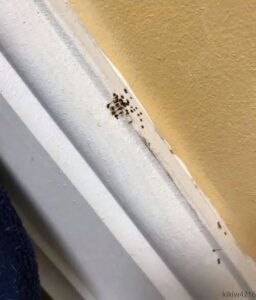
What Are These Black Dots Made Of?
The tiny black specks are usually insect waste. Depending on the species involved, frass can vary in shape, size, and texture, but it often appears as:
- Small black or dark brown pellets
- Powder-like dust near cracks or corners
- Clusters of grainy residue along walls or cabinets
In many household infestations, the most common culprits include pantry beetles, cockroach nymphs, and stored-product insects. These pests feed on organic materials such as flour, grains, cereals, pet food, spices, and even glue or paper found in packaging.
As they digest food, they excrete waste that accumulates in the areas where they travel or hide. Over time, these deposits become visible to the human eye, especially on light-colored surfaces like door frames, countertops, or cabinet edges.
Why Kitchens Are the Primary Target
Kitchens provide everything pests need to survive:
- Food sources – Even small crumbs are enough for insects to feed and reproduce.
- Moisture – Sinks, dishwashers, and leaks provide hydration.
- Warmth – Appliances generate consistent heat.
- Hiding places – Cabinets, cracks, and appliances offer shelter.
Because of this combination, kitchens act like long-term feeding stations for pests. Once insects find a reliable food source, they tend to stay close and reproduce rapidly.
Even a single unnoticed spill of flour or sugar can sustain a small population for weeks.
Common Insects That Produce Black Dots
Several pests may be responsible for the black specks you see in your kitchen. The most common include:
1. Cockroach Nymphs
Young cockroaches produce small, dark droppings that resemble coffee grounds or pepper. They tend to leave trails along walls and baseboards.
2. Pantry Beetles
Beetles such as cigarette beetles or drugstore beetles infest dry food storage areas. Their frass often looks like fine grains of black powder.
3. Flour Mites and Stored-Product Pests
These microscopic insects can contaminate flour, cereals, and spices, leaving behind dust-like waste.
4. Moth Larvae
While less common, pantry moth larvae can also leave behind small pellets near infested food items.
Identifying the exact insect is important because each species requires a slightly different control method.
Why These Dots Appear Suddenly
Many homeowners report that the black dots seem to appear overnight. In reality, the infestation has usually been developing slowly and out of sight.
Insects often begin in hidden areas such as:
- Behind refrigerators
- Inside unopened food packages
- Under sinks
- In wall cracks or floor gaps
As populations grow, they begin expanding outward in search of more food. This is when frass becomes noticeable in visible areas like counters, doors, or shelves.
By the time dots are seen in open spaces, the infestation is usually already established.
Health Risks You Should Not Ignore
Although tiny black dots may seem harmless, they can signal risks that go beyond cleanliness issues.
1. Allergic Reactions
Insect droppings and shed skins can become airborne dust that triggers allergies or asthma, especially in sensitive individuals.
2. Bacterial Contamination
Pests often travel through unsanitary environments before entering kitchens. They can carry bacteria such as Salmonella or E. coli.
3. Food Contamination
Pantry insects can directly infest stored food, making it unsafe to consume.
4. Respiratory Irritation
Continuous exposure to insect debris may cause coughing, sneezing, or irritation in the eyes and throat.
While not every infestation leads to severe illness, prolonged exposure increases health risks significantly.
How to Confirm an Infestation
If you suspect the black dots are insect-related, there are a few ways to confirm:
- Check for repeated appearance after cleaning
- Look for live insects at night using a flashlight
- Inspect dry food packaging for holes or webbing
- Notice any musty or unusual odors near cabinets
- Observe if dots form trails or clusters
If multiple signs are present, it is highly likely that an active infestation exists.
Immediate Steps You Should Take
Once you identify suspicious black dots, quick action is essential.
Step 1: Deep Clean the Area
Vacuum all visible debris and wipe surfaces with disinfectant.
Step 2: Inspect Pantry Items
Throw away any food that shows signs of contamination or damage.
Step 3: Seal Food Properly
Transfer dry goods into airtight glass or plastic containers.
Step 4: Eliminate Moisture Sources
Fix leaks and reduce humidity in the kitchen.
Step 5: Monitor Activity
Use sticky traps or monitoring devices to track insect movement.
Early intervention can prevent the infestation from spreading further.
Natural and Chemical Control Methods
Depending on severity, different approaches may be used.
Natural Methods:
- Diatomaceous earth along baseboards
- Bay leaves in pantry shelves
- Vinegar cleaning solutions
- Essential oils like peppermint or eucalyptus
Chemical Methods:
- Gel baits for cockroaches
- Insect growth regulators
- Professional-grade traps
Natural methods are useful for prevention and mild cases, while chemical solutions are often required for established infestations.
When to Call a Professional
If black dots continue appearing despite cleaning efforts, it may be time to contact pest control professionals.
Experts can:
- Identify the exact insect species
- Locate hidden nests or breeding areas
- Apply targeted treatments safely
- Prevent reinfestation through long-term strategies
Professional intervention is especially important in large or multi-unit buildings where pests can spread between apartments.
Preventing Future Infestations
Prevention is the most effective long-term strategy.
Maintain Cleanliness
Regularly clean counters, floors, and hidden areas under appliances.
Store Food Properly
Use sealed containers instead of leaving packaging open.
Reduce Clutter
Minimize hiding places for pests by organizing storage areas.
Control Moisture
Fix leaks and ensure proper ventilation in kitchens and bathrooms.
Regular Inspections
Check pantry items and cabinets periodically for early signs of pests.
Consistency is key. Even small lapses can allow insects to return.
Why Early Detection Matters
The presence of tiny black dots is not just a cleaning issue—it is an early warning system. Recognizing these signs early can prevent:
- Large-scale infestations
- Food contamination
- Expensive extermination treatments
- Health complications
Most severe pest problems begin with small, overlooked indicators like frass. Paying attention to these details can make the difference between a minor cleanup and a major household problem.
Final Thoughts
Tiny black dots in your kitchen should never be ignored. While they may look insignificant, they often represent the hidden activity of insects feeding and reproducing nearby. Understanding what they mean allows you to take fast, effective action before the situation worsens.
By combining careful inspection, proper hygiene, and preventive habits, you can keep your kitchen safe, clean, and free from hidden infestations.