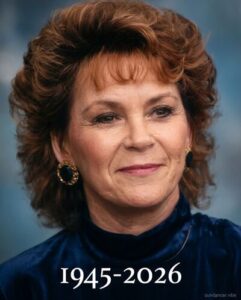
The passing of Lauren Chapin marked the end of a remarkable life story that extended far beyond the bright lights of classic television. For generations of viewers, she remained forever frozen in time as Kathy “Kitten” Anderson, the lovable youngest daughter on Father Knows Best, a program that became one of the defining family sitcoms of the 1950s. Yet behind the warm smile and youthful innocence that audiences adored was a woman whose life journey included hardship, personal battles, emotional recovery, spiritual transformation, and ultimately, redemption.
When news emerged that Chapin had passed away peacefully on February 24, 2026, at the age of 80 following a battle with cancer, tributes immediately began pouring in from fans across multiple generations. For older viewers, her death felt deeply personal because she had represented a comforting piece of childhood and family tradition. For younger audiences who later discovered classic television through reruns and streaming services, she symbolized a bygone era of storytelling rooted in warmth, sincerity, and moral lessons.
But Lauren Chapin’s story was never simply about nostalgia.
Her life became a reflection of something much larger: the complicated reality of child stardom, the emotional cost of fame, the challenge of rebuilding after personal collapse, and the enduring possibility of renewal even after years of struggle.
Born Lauren Ann Chapin on May 23, 1945, she entered the entertainment industry during one of the most transformative periods in American media history. Television was rapidly becoming the centerpiece of American households, replacing radio as the dominant form of family entertainment. Families gathered nightly around black-and-white television sets, watching programs that often reflected idealized visions of American life.
It was within this cultural environment that Father Knows Best emerged.
Premiering in the 1950s, the series starred Robert Young and Jane Wyatt as Jim and Margaret Anderson, parents raising three children in a seemingly perfect suburban household. The show focused on family values, emotional understanding, and moral guidance, becoming one of the defining sitcoms of its era.
Lauren Chapin’s role as Kathy Anderson quickly made her a fan favorite.
Nicknamed “Kitten” by her television family, Kathy was energetic, curious, emotional, mischievous, and often unintentionally hilarious. Chapin’s performance stood out because it felt genuine. Unlike many child actors who appeared overly rehearsed or theatrical, she brought natural charm and emotional honesty to the role.
Audiences connected with her immediately.
She represented the innocence of childhood in a way that felt authentic rather than manufactured. Whether she was asking innocent questions, reacting emotionally to family conflicts, or creating humorous misunderstandings, Chapin gave the character warmth and humanity.
Her chemistry with the rest of the cast also contributed enormously to the success of the series. Robert Young’s calm authority and Jane Wyatt’s compassionate presence formed the emotional foundation of the Anderson family, but Chapin’s youthful energy often provided the emotional heartbeat of the show.
At a time when television sought to create comforting family entertainment, Kathy Anderson became one of the most recognizable children in America.
The success of Father Knows Best transformed Lauren Chapin into a household name before she was old enough to fully understand what fame meant. Like many child stars of the era, she experienced a childhood unlike that of most ordinary children. Studio schedules, public appearances, interviews, scripts, and constant attention became part of daily life.
To the public, her life appeared perfect.
She was famous, admired, successful, and financially secure. Millions of viewers associated her with happiness and innocence. Yet the reality behind the scenes was far more complicated.
While Father Knows Best projected an image of idealized family harmony, Chapin’s personal life involved struggles that contrasted sharply with the world audiences saw onscreen. As she grew older and transitioned out of childhood fame, she encountered emotional and personal difficulties that would shape much of her adult life.
This transition proved especially difficult because child actors often face unique psychological challenges. During their formative years, they become attached to public identities that can overshadow their true selves. Audiences frequently struggle to separate performers from the characters they portray, and the entertainment industry itself often reinforces that limitation.
For Chapin, Kathy Anderson became both a blessing and a burden.
The role brought fame and affection, but it also created expectations she could never entirely escape. As the years passed and Hollywood opportunities diminished, she faced the painful reality that many child actors eventually encounter: the applause fades, careers slow down, and identity becomes uncertain.
The end of Father Knows Best marked not only the conclusion of a successful television series, but also the beginning of a deeply challenging chapter in Chapin’s life.
As adulthood arrived, she struggled to find stability.
The entertainment industry can be unforgiving, particularly toward former child stars whose identities remain tied to youthful roles. Chapin faced emotional difficulties, relationship struggles, financial instability, and periods of personal despair. Over time, she became increasingly open about the hardships she endured, including battles with substance abuse and emotional trauma.
What made her story powerful was not the existence of these struggles, but her eventual willingness to confront them publicly and honestly.
Many celebrities attempt to protect carefully constructed public images, avoiding discussions about pain or failure. Chapin chose a different path. Rather than pretending her life had been perfect, she spoke candidly about the mistakes she made and the emotional battles she fought.
That honesty resonated with people.
Audiences who once admired her as a cheerful child actress now respected her for something entirely different: authenticity.
Her willingness to discuss addiction, emotional suffering, and recovery transformed her public image from nostalgic television star into a deeply human figure whose experiences mirrored the struggles many ordinary people face privately.
During some of the darkest periods of her life, Chapin experienced instability that threatened to consume her entirely. Yet even amid hardship, the possibility of transformation remained.
Over time, she began rebuilding her life through faith, personal reflection, and spiritual growth.
Religion became an important part of her recovery journey, offering her structure, meaning, and hope during periods when she felt lost. Chapin later became involved in ministry work and public speaking, using her life experiences to encourage others facing addiction, trauma, or personal hardship.
This phase of her life revealed a very different kind of strength than the one audiences had once associated with her.
As a child actress, she had embodied innocence.
As an adult survivor, she embodied resilience.
She began appearing at churches, community gatherings, and recovery-focused events, speaking openly about redemption and healing. Her message was never rooted in perfection. Instead, it focused on perseverance, accountability, and the belief that people could rebuild their lives after failure.
Many listeners found her especially compelling because she spoke not from theory, but from lived experience.
She knew what it meant to lose direction.
She understood regret.
She understood loneliness.
And she understood recovery.
That authenticity gave her words emotional weight.
For many former child stars, later life becomes defined by bitterness toward fame or resentment toward the entertainment industry. Chapin’s perspective evolved into something more balanced and reflective. While she acknowledged the difficulties associated with early fame, she also remained grateful for the opportunities and relationships that Father Knows Best had brought into her life.
She continued attending fan conventions and classic television events, where audiences greeted her with warmth and affection decades after the show originally aired.
These appearances became meaningful not simply because of nostalgia, but because viewers recognized the complexity of her life story. She was no longer merely “Kitten” Anderson. She was a woman who had experienced fame, pain, collapse, rebuilding, and spiritual transformation.
And audiences admired that journey.
Part of Lauren Chapin’s enduring relevance stems from the lasting cultural impact of Father Knows Best itself. Even decades after its final episode aired, the series remains one of the defining family sitcoms of early American television.
The show reflected the values and aspirations of postwar America. It portrayed family life as stable, morally grounded, and emotionally supportive. Problems were generally resolved within thirty minutes through communication, compassion, and understanding.
Modern audiences sometimes criticize such portrayals as overly idealized, yet the show’s emotional sincerity continues to resonate.
For many viewers, Father Knows Best represents more than entertainment. It represents memory.
It reminds people of childhood evenings spent with parents and grandparents. It recalls a period when television programming emphasized kindness, responsibility, and emotional connection rather than cynicism or sensationalism.
Within that legacy, Lauren Chapin’s contribution remains central.
Kathy Anderson often served as the emotional lens through which audiences experienced family conflicts and life lessons. Her innocence highlighted the humanity of the stories being told. She could make audiences laugh one moment and feel unexpectedly emotional the next.
That emotional accessibility became one of the reasons her character endured.
Unlike glamorous movie stars who sometimes felt distant from ordinary life, Chapin seemed relatable. She reminded viewers of daughters, sisters, nieces, or childhood friends. Her presence felt comforting and familiar.
Even after the entertainment world changed dramatically, that familiarity remained powerful.
As television evolved through the decades—from black-and-white family sitcoms to modern streaming dramas—the warmth associated with Father Knows Best continued attracting new generations of viewers. Through syndication and reruns, Chapin’s performances remained accessible long after the original broadcast era ended.
This longevity ensured that she never entirely disappeared from public memory.
Yet her legacy ultimately extended beyond television.
What made Lauren Chapin’s life especially meaningful was the contrast between the innocence audiences saw onscreen and the difficult realities she later faced. Her story challenged simplistic narratives about fame and happiness.
To millions of viewers, she had appeared to possess the perfect life.
In reality, she endured profound personal pain.
But rather than allowing hardship to define her permanently, she transformed her experiences into opportunities for growth and connection.
That transformation became the most inspiring aspect of her story.
In later interviews and public appearances, Chapin often spoke with remarkable vulnerability. She did not attempt to erase her past mistakes or rewrite history in flattering ways. Instead, she acknowledged her failures openly while emphasizing the possibility of change.
This honesty became deeply important to many people struggling with their own challenges.
Recovery stories often resonate because they offer hope without denying pain. Chapin’s life illustrated that personal redemption does not require perfection. It requires persistence, humility, and the willingness to continue moving forward despite setbacks.
Her openness also contributed to broader conversations about the pressures faced by child actors.
Long before discussions about mental health became common in Hollywood, Chapin’s experiences highlighted the emotional risks associated with growing up in the public eye. Child performers often lose privacy, stability, and normal developmental experiences. Many struggle later in life with identity confusion, emotional isolation, or substance abuse.
Chapin’s willingness to discuss those realities helped humanize an issue that audiences frequently overlook.
At the same time, she refused to define herself solely as a victim.
That distinction mattered.
She acknowledged hardship without surrendering agency. Her later years reflected a conscious effort to build purpose from suffering rather than simply relive it.
As news of her passing spread in 2026, social media quickly filled with tributes from fans, television historians, fellow performers, and ordinary viewers. Clips from Father Knows Best circulated widely online, accompanied by messages celebrating her warmth, humor, and emotional authenticity.
Many fans reflected not only on her performances, but on the comfort her character had provided during difficult moments in their own lives.
Others focused on her later-life courage and honesty.
People admired the fact that she spoke openly about addiction and emotional struggle at a time when many public figures preferred silence. Her willingness to discuss recovery helped remove stigma surrounding personal hardship and inspired others to seek healing.
Tributes frequently described her as resilient, genuine, compassionate, and brave.
For some, she represented childhood innocence.
For others, she represented survival.
Few public figures embody both identities so powerfully.
The emotional response to her death revealed the unusual depth of connection audiences felt toward her. Unlike celebrities known primarily for glamour or controversy, Chapin occupied a more intimate place in public memory. She felt familiar. She felt personal.
That familiarity came partly from the nature of early television itself. During the 1950s and 1960s, television entered people’s homes in a deeply direct way. Families watched the same programs together week after week, developing emotional attachments to recurring characters.
As Kathy Anderson, Lauren Chapin became part of countless households.
Decades later, viewers still remembered her voice, expressions, and emotional sincerity.
Yet the admiration surrounding her legacy today exists not merely because she was once famous, but because her life ultimately revealed depth beyond celebrity.
Her story reminds us that human beings are always more complicated than the roles they play.
The smiling child audiences saw onscreen eventually became a woman confronting pain, searching for meaning, making mistakes, rebuilding herself, and helping others do the same. That journey gave her legacy emotional richness that extended far beyond television nostalgia.
In many ways, Lauren Chapin’s life reflected universal themes.
The search for identity.
The pain of disappointment.
The longing for acceptance.
The possibility of redemption.
These themes explain why her story continues resonating even among people too young to have watched Father Knows Best during its original run.
Her experiences feel deeply human.
As the entertainment world continues evolving rapidly, figures like Lauren Chapin remind audiences of an earlier era when television prioritized emotional warmth and moral storytelling. But her personal life also serves as a reminder that real people exist behind every public image.
Fame does not eliminate suffering.
Success does not guarantee happiness.
And hardship does not eliminate the possibility of renewal.
Lauren Chapin’s life contained contradictions that made her story meaningful.
She experienced admiration and loneliness.
Public success and private pain.
Fame and obscurity.
Collapse and recovery.
Yet through all those phases, she continued searching for purpose.
By the end of her life, she had become more than a former child star.
She became a symbol of endurance.
Her portrayal of Kathy Anderson will continue introducing future generations to the charm and innocence of classic television. But her deeper legacy lies in the honesty with which she confronted the realities of life beyond the spotlight.
She showed that vulnerability can become strength.
That mistakes do not erase human worth.
And that redemption remains possible even after years of struggle.
In remembering Lauren Chapin, people remember not only the little girl who made audiences smile on one of America’s most beloved television shows, but also the woman who faced hardship with increasing honesty and courage as the years passed.
Her life story was not simple.
It was not perfect.
And that is precisely what made it meaningful.
Long after the final episode of Father Knows Best faded into television history, Lauren Chapin continued leaving an impact through her resilience, authenticity, and willingness to speak openly about the realities of pain and healing.
That legacy now endures beyond the screen.
Not merely as entertainment.
But as something far more lasting.
A reminder that even after life’s darkest chapters, people can still rediscover hope, purpose, faith, and the strength to begin again.