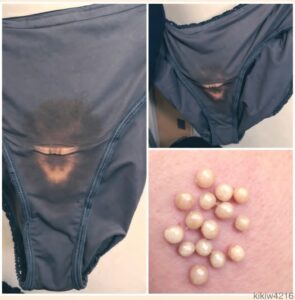
Many women have experienced a curious and often confusing phenomenon while doing laundry: discovering lighter, bleach-like patches in the crotch area of their underwear. These marks frequently appear on darker fabrics and can seem as though a cleaning product accidentally damaged the material. For years, countless women quietly wondered whether these discolorations were signs of poor hygiene, a medical problem, or simply an unavoidable mystery. In reality, healthcare professionals say that in many cases the explanation is surprisingly simple and completely normal.
The discoloration often results from the natural acidity of vaginal discharge interacting with fabric dyes. A healthy vagina typically maintains an acidic environment that helps support a balanced microbiome and protects against harmful microorganisms. Because this acidic environment can affect certain textile dyes over time, some underwear fabrics may gradually develop lighter-colored areas after repeated wear and washing.
For many women, discovering this explanation brings relief. What once appeared to be evidence of a problem is often revealed to be a normal biological process. The conversation surrounding these bleach-like spots has become increasingly common online, where women share experiences and learn more about the science behind their bodies.
The vagina maintains a carefully regulated ecosystem. Beneficial bacteria, particularly Lactobacillus species, help produce substances such as lactic acid that contribute to an acidic pH. This acidity plays an important role in maintaining vaginal health by helping discourage the growth of potentially harmful organisms.
A typical vaginal pH during reproductive years often falls within a mildly acidic range. While this acidity is beneficial for vaginal health, it can gradually alter the appearance of certain fabrics. Dark-colored underwear is especially likely to show visible changes because the contrast between the original dye and the faded area is more noticeable.
Experts emphasize that these marks are usually not a sign of poor cleanliness. In fact, they often occur in women who practice normal hygiene and have no underlying health concerns. The discoloration reflects a chemical interaction between natural bodily secretions and fabric dyes rather than a cleanliness issue.
Understanding this process can help reduce unnecessary worry. Many women spend years assuming something is wrong when they notice repeated bleaching patterns in their underwear. Learning the scientific explanation often replaces embarrassment with confidence and understanding.
The growing public discussion about this topic has also highlighted the importance of accurate reproductive health education. Many aspects of normal female physiology remain poorly understood by the general public, leading to confusion and unnecessary anxiety. Open conversations can help normalize experiences that are common but rarely discussed.
Healthcare providers note that vaginal discharge itself serves several important functions. It helps maintain moisture, supports tissue health, removes dead cells, and contributes to the body’s natural protective mechanisms. The amount and appearance of discharge can vary throughout the menstrual cycle due to hormonal changes.
Many women notice differences in discharge during ovulation, menstruation, pregnancy, or other hormonal transitions. These variations are typically normal and reflect the body’s ongoing biological processes. Because discharge composition changes throughout the cycle, fabric discoloration may also vary from month to month.
While bleach-like spots are often harmless, medical professionals encourage women to pay attention to other symptoms. Unusual odors, significant itching, burning sensations, pain, or dramatic changes in discharge color may warrant consultation with a healthcare provider. These symptoms can sometimes indicate infections or other conditions that require evaluation.
The key distinction is that discoloration alone is generally not considered a warning sign. Instead, it is usually one small consequence of the natural chemistry of the vaginal environment interacting with clothing materials.
Textile experts have also weighed in on the discussion. Different dyes react differently to acidic substances, meaning some underwear brands and colors are more prone to visible fading than others. Cotton, synthetic blends, and specialty fabrics may all respond differently depending on their manufacturing processes and dye composition.
As awareness of the phenomenon has grown, some manufacturers have even begun designing underwear with more color-stable dyes or patterned fabrics that make discoloration less noticeable. Others focus on breathable materials intended to promote comfort while maintaining durability.
The broader conversation has encouraged greater openness about women’s health topics that were once considered embarrassing or taboo. Women increasingly share experiences, ask questions, and seek reliable medical information rather than relying on myths or assumptions.
Medical educators see this trend as positive. Greater awareness helps people distinguish between normal bodily functions and symptoms that genuinely require medical attention. It also promotes healthier attitudes toward natural biological processes.
Researchers continue studying the vaginal microbiome and its role in overall health. Scientists have discovered complex relationships between microbial balance, hormones, immune function, and reproductive wellbeing. Although much remains to be learned, it is clear that the vaginal ecosystem is remarkably sophisticated.
The discussion surrounding underwear discoloration serves as a useful reminder that the human body performs countless processes that often go unnoticed until they produce visible effects. What initially appears unusual may simply reflect normal physiology at work.
For many women, understanding the science behind these bleach-like spots transforms concern into appreciation. Rather than viewing the marks as evidence of a problem, they can recognize them as a common consequence of natural body chemistry interacting with everyday materials.
Ultimately, the phenomenon highlights the value of education, accurate medical information, and open conversations about women’s health. By replacing myths with evidence-based understanding, women can feel more informed, confident, and comfortable with the normal processes that occur within their bodies every day.