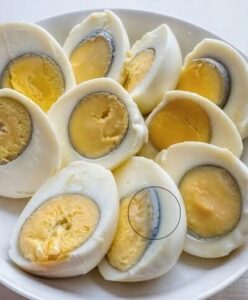
Hard-boiled eggs are among the most versatile and widely enjoyed foods in kitchens around the world. They are simple to prepare, affordable, nutritious, and suitable for countless meals, from quick breakfasts and packed lunches to salads, sandwiches, and protein-rich snacks. Despite their simplicity, however, hard-boiled eggs can sometimes present an unexpected surprise. After carefully cooking and peeling an egg, many people slice it open only to discover a green or grayish-green ring surrounding the yolk.
This discoloration often causes concern, especially for those unfamiliar with the science behind egg cooking. Some assume the egg has spoiled, while others believe it may have been contaminated during preparation. Fortunately, neither of these assumptions is correct. The green ring is a common and harmless occurrence that results from a natural chemical reaction inside the egg during cooking.
Understanding why this discoloration develops can help home cooks avoid it entirely while improving the flavor, texture, and overall quality of their hard-boiled eggs. More importantly, learning the science behind the process demonstrates how small adjustments in technique can dramatically improve cooking results.
The Science Inside a Hard-Boiled Egg
To understand why the green ring appears, it helps to first examine the structure of an egg. Eggs contain two primary components: the egg white, known as the albumen, and the yolk. Although these parts work together to create a nutritious food source, they contain different compounds that react differently when exposed to heat.
The egg white consists primarily of water and proteins. Among these proteins are sulfur-containing amino acids. Under normal conditions, these sulfur compounds remain stable and do not affect the appearance of the egg.
The yolk, on the other hand, contains fats, vitamins, minerals, and iron. Iron is an essential nutrient that contributes to many biological functions, including oxygen transport within the human body.
When an egg is cooked properly, these components remain largely separate. However, excessive heat changes the situation. As cooking temperatures increase and cooking times become longer, chemical reactions begin to occur between the sulfur in the egg white and the iron in the yolk.
The result is the formation of iron sulfide, a compound responsible for the greenish-gray ring that sometimes appears around the yolk.
Why Overcooking Causes Discoloration
The formation of iron sulfide is directly linked to overcooking. When eggs are exposed to high temperatures for extended periods, sulfur compounds within the egg white begin to break down. During this process, hydrogen sulfide gas is released.
This gas naturally moves toward the yolk, where it encounters iron. When hydrogen sulfide reacts with iron, iron sulfide forms along the outer edge of the yolk.
The longer the egg remains exposed to heat, the more likely this reaction becomes. High temperatures accelerate the process, which is why eggs boiled aggressively for extended periods are more prone to developing the green ring.
Although the reaction affects appearance, it does not make the egg unsafe to eat. The egg remains edible and nutritious. However, the chemical changes often influence flavor and texture as well.
Overcooked eggs frequently develop a stronger sulfur aroma and a drier, chalkier yolk. These characteristics can make the eating experience less enjoyable, even though the egg itself remains perfectly safe.
Is the Green Ring Dangerous?
One of the most common questions people ask is whether eggs with a green ring are safe to consume.
The answer is yes.
The green ring is simply iron sulfide, a harmless compound produced during cooking. It is not a sign of spoilage, bacterial contamination, or food safety issues. As long as the eggs have been cooked and stored properly, they can be eaten without concern.
The discoloration is primarily a cosmetic issue. Professional chefs and food stylists often avoid it because it affects presentation, but from a health perspective, it poses no risk.
Understanding this distinction helps eliminate unnecessary worry and allows cooks to focus on improving technique rather than questioning food safety.
The Importance of Temperature Control
One of the most effective ways to prevent the green ring is by controlling cooking temperature.
Many people assume that hard-boiled eggs must be cooked at a vigorous rolling boil from start to finish. While this method does cook the eggs, it also exposes them to excessive heat, increasing the likelihood of overcooking.
A gentler approach produces significantly better results.
Begin by placing eggs in a pot and covering them with cold water. Starting with cold water allows the eggs to heat gradually rather than experiencing sudden temperature shock.
Place the pot over medium heat and slowly bring the water to a boil. Once boiling begins, reduce the heat slightly or remove the pot from direct heat, depending on the method being used.
The objective is to cook the eggs thoroughly without exposing them to unnecessarily high temperatures. Gentle cooking promotes a smoother texture and reduces the chemical reactions responsible for discoloration.
Finding the Ideal Cooking Time
Timing is just as important as temperature.
Many overcooked eggs result simply because they remain in hot water too long. While exact cooking times vary depending on egg size and personal preference, most standard eggs require between 9 and 12 minutes to achieve a fully cooked yolk without developing undesirable characteristics.
For a slightly softer center, cooking times can be reduced. For a fully firm yolk, staying within the recommended range generally produces excellent results.
Several factors influence cooking time, including:
- Egg size
- Starting temperature
- Altitude
- Pot size
- Water volume
Because these variables differ from kitchen to kitchen, some experimentation may be necessary. However, once the ideal timing is identified, consistency becomes much easier to achieve.
Using a timer can help eliminate guesswork and prevent accidental overcooking.
Why Cooling Matters So Much
Many people focus entirely on cooking time while overlooking an equally important step: cooling.
Even after eggs are removed from hot water, cooking does not stop immediately. Residual heat trapped inside the egg continues to cook the yolk for several minutes.
This phenomenon, known as carryover cooking, can push eggs beyond their optimal doneness and contribute to the formation of the green ring.
Rapid cooling solves this problem.
Immediately transferring cooked eggs into an ice bath dramatically lowers their temperature and stops the cooking process. Running cold water over the eggs can also be effective, although an ice bath generally produces the most reliable results.
Rapid cooling offers several advantages:
- Stops carryover cooking
- Reduces discoloration
- Preserves yolk texture
- Maintains bright yellow color
- Improves peeling performance
This simple step requires minimal effort yet has a significant impact on final results.
Achieving the Perfect Yolk Texture
For many cooks, appearance is only part of the goal. Texture is equally important.
An ideal hard-boiled yolk should be firm yet smooth. It should hold its shape without becoming dry or crumbly.
Overcooked yolks often lose moisture, creating a chalky consistency that can make eggs less enjoyable to eat. By controlling heat and cooling promptly, cooks can preserve the creamy texture that many people prefer.
Texture becomes particularly important when eggs are used in recipes such as:
- Egg salad
- Deviled eggs
- Potato salad
- Sandwiches
- Grain bowls
- Protein snack boxes
In these dishes, yolk consistency directly influences the overall quality of the meal.
The Role of Egg Freshness
Freshness affects more than taste. It also influences how easily eggs peel after cooking.
Very fresh eggs can be surprisingly difficult to peel because the egg white adheres tightly to the inner shell membrane. As eggs age, changes in pH cause the membrane to separate more easily from the cooked egg white.
For this reason, eggs that are approximately one to two weeks old are often preferred for hard-boiling.
This does not mean older eggs are always better. Freshness remains important for quality and food safety. However, slightly aged eggs often provide the ideal balance between freshness and peelability.
When preparing large batches of hard-boiled eggs, selecting eggs that are not extremely fresh can make the peeling process considerably easier.
Common Mistakes That Lead to Green Yolks
Several common cooking habits increase the likelihood of discoloration.
One frequent mistake is boiling eggs vigorously throughout the entire cooking process. Constant exposure to intense heat accelerates sulfur production and promotes the formation of iron sulfide.
Another common error is forgetting eggs on the stove. Without careful timing, eggs may remain in hot water far longer than necessary.
Some cooks also leave eggs in the cooking water after turning off the heat. While this may seem harmless, residual heat continues to affect the eggs and can contribute to overcooking.
Skipping the cooling step is another major factor. Without rapid cooling, internal temperatures remain elevated long enough to continue the chemical reaction responsible for the green ring.
Avoiding these mistakes significantly improves consistency and appearance.
Alternative Cooking Methods
Traditional boiling is not the only way to prepare hard-cooked eggs.
Many home cooks and professional chefs prefer steaming because it offers excellent temperature control. Steam surrounds the eggs evenly, reducing the risk of uneven cooking and overexposure to direct heat.
Pressure cooking has also become increasingly popular. Modern pressure cookers often produce highly consistent results while making eggs easier to peel.
Air fryers are another option. Although not traditionally associated with egg preparation, some cooks use them successfully to create hard-cooked eggs with predictable results.
Regardless of the method used, the same principles remain important:
- Avoid excessive heat
- Monitor timing carefully
- Cool eggs immediately after cooking
These fundamentals apply across virtually every cooking technique.
Nutritional Impact of Overcooking
Many people wonder whether overcooking affects nutritional value.
While the changes are generally minor, excessive heat can slightly reduce the quality of certain nutrients. Vitamins are often sensitive to prolonged cooking, although eggs remain highly nutritious even when somewhat overcooked.
The greater impact is usually related to flavor and texture rather than nutrition.
Properly cooked eggs maintain:
- High-quality protein
- Essential amino acids
- Vitamin B12
- Choline
- Selenium
- Iron
- Healthy fats
By preventing overcooking, cooks preserve both nutritional integrity and overall eating quality.
Professional Kitchen Standards
In professional kitchens, consistency is critical. Chefs pay close attention to timing, temperature, and presentation because even small imperfections can influence the perception of a dish.
A bright yellow yolk communicates precision and care. While a green ring does not affect safety, it can make an otherwise well-prepared dish appear less refined.
Restaurants often rely on standardized cooking procedures to ensure every egg meets the same quality expectations. Timers, ice baths, and carefully controlled temperatures are standard tools in achieving this consistency.
Fortunately, these same techniques are easy to replicate at home.
Building Confidence Through Understanding
One of the most valuable benefits of understanding the green ring phenomenon is increased confidence in the kitchen.
Cooking often feels mysterious when results vary unexpectedly. Learning the scientific explanation behind common outcomes helps transform uncertainty into knowledge.
Rather than viewing a green ring as a failure, cooks can recognize it as feedback. It simply indicates that the eggs experienced more heat or cooking time than necessary.
This perspective encourages learning and improvement rather than frustration.
Each batch of eggs becomes an opportunity to refine technique and gain greater control over the cooking process.
Conclusion
The green ring that sometimes appears around hard-boiled egg yolks is a harmless result of a natural chemical reaction between sulfur in the egg white and iron in the yolk. While the discoloration may look concerning, it does not indicate spoilage or make the eggs unsafe to eat.
The reaction occurs primarily when eggs are overcooked or exposed to excessive heat for too long. Fortunately, preventing it is remarkably simple. By using moderate heat, monitoring cooking time carefully, and cooling eggs immediately after cooking, home cooks can consistently achieve bright yellow yolks with excellent texture and flavor.
These small adjustments not only improve appearance but also enhance the overall quality of the eggs. Better texture, milder flavor, easier peeling, and more attractive presentation all result from proper technique.
Ultimately, the green ring serves as a reminder that even the simplest foods are influenced by chemistry. Understanding that chemistry empowers cooks to achieve better results with confidence. With a little attention to timing, temperature, and cooling, perfectly cooked hard-boiled eggs can become a reliable part of any kitchen routine—delivering excellent results every time.