For decades, Wheel of Fortune has occupied a unique place in television history. While countless game shows have come and gone, few have maintained the same level of popularity, consistency, and audience engagement. The formula appears deceptively simple: spin a wheel, guess letters, solve puzzles, and win prizes. Yet beneath that straightforward structure lies a carefully balanced combination of strategy, psychology, timing, probability, and human emotion.
The show’s lasting success stems not merely from its mechanics but from the experiences of the contestants themselves. Every episode introduces ordinary individuals into an extraordinary environment where quick decisions carry significant consequences. Under bright studio lights and the watchful eyes of a national audience, contestants must balance confidence with caution while navigating a game where fortune can shift in an instant.
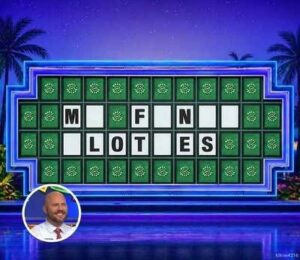
Occasionally, an episode captures all of these elements perfectly, producing a memorable contest that sparks discussion long after the credits roll. One such episode centered on contestant Adam Wredberg, whose impressive performance and dramatic Bonus Round finish created exactly the kind of suspense that has kept viewers returning to the show year after year.
A Strong Start Sets the Tone
Success on Wheel of Fortune often begins with momentum.
Contestants who establish an early lead gain more than just money on the scoreboard. They gain confidence, control, and a psychological advantage that can influence the remainder of the game.
From the opening puzzle, Adam demonstrated a clear understanding of how the game works. Rather than appearing overwhelmed by the stage environment, he seemed focused and composed. His ability to solve early puzzles quickly allowed him to build an initial lead while simultaneously applying pressure to his competitors.
In many game shows, the opening rounds serve primarily as warm-up exercises. On Wheel of Fortune, however, every puzzle matters. Early victories can create opportunities that shape the remainder of the competition.
Adam recognized this reality and capitalized on it.
His success was not built on dramatic risks or lucky breaks. Instead, it came from consistent execution and sound decision-making.
The Hidden Strategy Behind the Game
To casual viewers, Wheel of Fortune may appear largely dependent on luck.
After all, contestants spin a giant wheel that can land on high-value wedges, prizes, or dreaded penalties such as Bankrupt and Lose a Turn.
Yet experienced viewers understand that success depends on far more than chance.
Strong contestants must constantly evaluate probabilities, puzzle patterns, and risk-reward scenarios. Every decision requires balancing information against uncertainty.
Should you guess another consonant?
Should you buy a vowel?
Should you attempt to solve the puzzle now or gather more information first?
Each choice carries consequences.
Adam’s performance highlighted this strategic side of the game. Rather than making impulsive decisions, he consistently demonstrated patience and discipline. He appeared willing to wait for additional letters when necessary while remaining aggressive enough to capitalize on favorable opportunities.
This balanced approach is often what separates strong contestants from average ones.
Managing Pressure Under the Spotlight
One aspect of game shows that viewers often underestimate is the impact of pressure.
Solving a puzzle from a living room couch is very different from solving one while standing on a television stage.
Contestants face multiple sources of stress simultaneously.
There are cameras.
There is a live audience.
There is the awareness that friends, family members, and millions of viewers may be watching.
There is the ticking clock.
And perhaps most importantly, there is the knowledge that every decision could affect thousands of dollars in potential winnings.
These factors can dramatically alter performance.
People who excel in everyday situations sometimes struggle under the intense pressure of television competition. Others discover an ability to remain remarkably calm despite the circumstances.
Throughout the episode, Adam appeared to belong to the latter group.
His body language suggested focus rather than panic, and he rarely seemed rattled by setbacks or unexpected developments.
That composure became one of the defining characteristics of his performance.
The Mystery Round Raises the Stakes
Every episode contains moments designed to increase uncertainty, and the Mystery Round is one of the most effective examples.
Unlike standard gameplay, the Mystery Round introduces additional risk through concealed wedges that may contain valuable rewards or devastating penalties.
Contestants must decide whether to trust their instincts or play conservatively.
These decisions often reveal a player’s personality and risk tolerance.
Some contestants embrace uncertainty, hoping for a major payoff.
Others prefer to protect their existing earnings and avoid unnecessary danger.
Adam navigated this portion of the game with impressive control. His choices reflected calculated confidence rather than reckless optimism.
The result was continued success without exposing himself to unnecessary risk.
Moments like these remind viewers that Wheel of Fortune is not simply about vocabulary. It is also about judgment.
The ability to make sound decisions under pressure frequently determines who advances and who falls behind.
Building a Lead Through Consistency
One of the most notable aspects of Adam’s performance was the way he accumulated his advantage.
Rather than relying on a single spectacular moment, he built his lead gradually.
Puzzle by puzzle.
Round by round.
Spin by spin.
This methodical approach created a sense of stability.
Even when chance introduced uncertainty, he remained in a strong position because his success was distributed across multiple rounds rather than concentrated in a single lucky outcome.
Consistency is often overlooked because dramatic comebacks tend to generate more excitement.
However, many of the most successful contestants in game show history share one common trait: they perform steadily from beginning to end.
Adam’s gameplay reflected that principle.
Why No Lead Ever Feels Safe
Despite his growing advantage, viewers understood that nothing was guaranteed.
This uncertainty is one of the reasons Wheel of Fortune remains so engaging.
Unlike purely skill-based competitions, the show incorporates enough randomness to keep outcomes unpredictable.
A contestant can dominate for most of the episode and still experience a sudden reversal.
A Bankrupt wedge can erase accumulated earnings.
A missed letter can shift control to another player.
An unexpected puzzle solution can dramatically alter the standings.
Because these possibilities always exist, every spin feels meaningful.
The audience knows that momentum can change quickly.
That uncertainty creates suspense, even when one contestant appears firmly in control.
Reaching the Bonus Round
Securing a place in the Bonus Round represents a significant achievement.
For many contestants, simply reaching this stage fulfills a lifelong dream.
Yet the Bonus Round also introduces a unique challenge.
The pace changes completely.
Instead of gradually building information over multiple turns, contestants must work within a compressed timeframe.
The puzzle appears.
Letters are revealed.
A countdown begins.
And suddenly everything depends on a matter of seconds.
The atmosphere becomes noticeably more intense.
Viewers lean forward.
Family members hold their breath.
Contestants attempt to process information as quickly as possible.
It is one of the most dramatic moments in television game shows.
The Puzzle That Sparked Debate
The Bonus Round puzzle in this episode generated immediate discussion among viewers.
At first glance, the partially revealed phrase appeared solvable.
Several letters were already visible.
Possible word patterns began emerging.
Yet as the countdown progressed, the solution remained elusive.
This is where the challenge of language becomes apparent.
Words and phrases often contain multiple possibilities. Even when several letters are known, the brain may generate competing answers.
Under normal circumstances, a person might take a minute or two to evaluate alternatives.
In the Bonus Round, contestants have only seconds.
Every moment spent considering one possibility reduces the time available to explore another.
Adam worked through the puzzle logically, attempting to identify the missing pieces before time expired.
For a brief moment, it seemed possible that everything would come together.
The audience could sense the tension.
The answer felt close.
Perhaps only one insight away.
But the clock is unforgiving.
As the final seconds disappeared, the solution remained just beyond reach.
The Emotional Impact of a Near Miss
In many ways, near misses create stronger emotional reactions than decisive victories or defeats.
A clear loss is disappointing.
A clear win is satisfying.
But coming incredibly close introduces a unique combination of emotions.
There is pride in the effort.
Frustration at the outcome.
Curiosity about what might have happened.
And often a lingering sense of possibility.
Adam’s Bonus Round experience embodied this dynamic perfectly.
Viewers could see how close he came to solving the puzzle.
That proximity made the outcome especially memorable.
The difference between success and disappointment felt incredibly small.
Moments like these resonate because they reflect experiences people encounter in their own lives.
Many goals are not missed by wide margins.
They are missed by inches.
By seconds.
By one final piece of information.
The emotional familiarity of that experience makes it powerful.
Viewer Reactions and Ongoing Debate
Episodes featuring difficult Bonus Round puzzles frequently generate discussion among fans.
Some viewers argued that the puzzle should have been solved.
Others felt the wording was more challenging than it initially appeared.
These debates are part of the show’s enduring appeal.
Viewers do not simply watch the puzzles unfold. They participate mentally.
They attempt solutions.
They evaluate decisions.
They imagine how they would respond under similar circumstances.
When an episode ends, that engagement often continues online through conversations, analyses, and differing opinions.
The discussion becomes an extension of the viewing experience.
The Psychology of Game Show Performance
One reason audiences remain fascinated by episodes like this is that they provide insight into human behavior under pressure.
Contestants must process information rapidly while managing emotional stress.
The ability to think clearly under those conditions is remarkably difficult.
Psychologists often note that pressure can narrow attention and interfere with cognitive flexibility.
Even highly capable individuals may struggle when time constraints and performance expectations collide.
This reality makes game show success particularly impressive.
Winning requires not only knowledge but also emotional control.
Adam’s performance demonstrated many of these qualities, even if the final result did not unfold as hoped.
Why Wheel of Fortune Endures
The episode also serves as a reminder of why Wheel of Fortune continues to thrive after so many years.
Its format combines accessibility with depth.
Anyone can understand the basic rules.
Yet every episode contains layers of strategy, risk management, probability, language recognition, and psychological resilience.
The result is a viewing experience that feels familiar while remaining unpredictable.
No two contestants approach the game exactly the same way.
No two puzzles create identical challenges.
No two episodes unfold in precisely the same manner.
That combination keeps audiences invested.
More Than Letters and Luck
At its core, Wheel of Fortune has never been solely about puzzles.
It is about people.
The letters, wheel spins, and prize amounts provide structure, but the human stories provide meaning.
Contestants bring their personalities, hopes, nerves, and ambitions onto the stage.
Viewers connect with those experiences because they recognize elements of themselves.
The desire to succeed.
The challenge of performing under pressure.
The excitement of opportunity.
The disappointment of falling just short.
These emotions transcend the game itself.
Final Thoughts
Adam Wredberg’s performance showcased many of the qualities that make Wheel of Fortune such enduring entertainment. Through strategic decision-making, composure under pressure, and consistent gameplay, he built an impressive lead and earned his place in the Bonus Round.
Although the final puzzle remained unsolved, the episode delivered exactly what great game show television should: suspense, engagement, debate, and genuine emotional investment.
The narrow margin between victory and disappointment reminded viewers that success is often determined by the smallest details. It also highlighted the unique blend of skill and chance that continues to define the show’s appeal.
Ultimately, the episode demonstrated that memorable television does not always require dramatic twists or record-breaking wins. Sometimes, a contestant coming tantalizingly close to a major victory creates an even more compelling story.
And as long as moments like these continue to unfold beneath the bright lights of the studio, audiences will keep tuning in—eager to watch the next spin, the next puzzle, and the next unforgettable near miss.