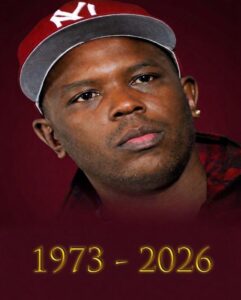
The passing of Oliver “Power” Grant at the age of 52 has led to a profound moment of reflection within the hip-hop community, particularly among those who recognize that cultural revolutions are rarely built by performers alone. Behind every influential movement are individuals who see the bigger picture early—those who understand not only what something is, but what it can become. Grant was one of those individuals. His name may not have always appeared in headlines, but his influence was deeply embedded in one of hip-hop’s most transformative collectives: the Wu-Tang Clan.
To understand Grant’s legacy, it is necessary to revisit the early 1990s, a period when hip-hop was still evolving into a dominant global force. During this time, the formation of Wu-Tang Clan marked a significant departure from traditional group structures. Rather than presenting as a conventional ensemble, the collective functioned as a network of distinct voices unified by a shared philosophy. Central to this philosophy was the idea that artists could maintain creative individuality while contributing to a larger vision. This concept, now widely accepted, was far less common at the time.
Grant’s role in shaping this vision was both strategic and foundational. While key figures like RZA provided the sonic architecture and members such as Method Man and GZA delivered lyrical innovation, Grant contributed something equally essential: structure. He recognized that talent alone was not enough to sustain a movement. What was needed was a framework that could support growth, protect creative output, and extend influence beyond music.
One of the most groundbreaking aspects of Wu-Tang Clan’s rise was its approach to ownership and business. At a time when many artists signed restrictive contracts that limited their autonomy, the group pursued a model that allowed individual members to secure separate deals while remaining part of the collective. This hybrid structure challenged industry norms and opened new possibilities for artist independence. Grant was instrumental in reinforcing this mindset, helping to ensure that the group’s ambitions extended beyond immediate success toward long-term sustainability.
Perhaps the most visible manifestation of this philosophy was the creation of Wu Wear, a clothing brand that emerged as one of the earliest examples of artist-driven fashion in hip-hop. Long before merchandise became a standard extension of musical brands, Wu Wear demonstrated that cultural identity could be translated into apparel in a way that felt authentic and organic. Grant’s involvement in developing this venture reflected his understanding that hip-hop was not just a sound—it was a lifestyle, a visual language, and a form of self-expression that could exist across multiple platforms.
The success of Wu Wear helped establish a blueprint that countless artists and entrepreneurs would later follow. Today, it is common to see musicians launching clothing lines, media companies, and other business ventures. In the early 1990s, however, this approach was still largely uncharted territory. Grant’s ability to see this potential early on positioned him as a forward-thinking strategist whose ideas were ahead of their time.
As Wu-Tang Clan’s influence expanded globally, the strength of its foundation became increasingly evident. The group’s ability to maintain its identity while reaching diverse audiences was not accidental—it was the result of careful planning and a clear sense of purpose. Grant’s contributions behind the scenes allowed the artists to focus on their craft, confident that the broader vision was being guided with intention. This balance between creativity and organization became a defining characteristic of the collective.
Despite his significant impact, Grant chose to remain largely out of the public eye. In an industry often driven by visibility and recognition, this decision set him apart. He was not motivated by fame, but by the desire to build something meaningful and lasting. This humility allowed him to operate with clarity, focusing on the work rather than the attention it might bring. Those who collaborated with him understood the value of his perspective, recognizing that his insights were integral to the group’s success.
Grant’s approach also highlights an often-overlooked aspect of cultural movements: the importance of trust. Within a collective as dynamic and multifaceted as Wu-Tang Clan, maintaining cohesion required more than shared talent—it required a shared belief in the vision. Grant’s presence helped reinforce that belief, providing stability during periods of growth and change. His ability to navigate complex dynamics while keeping the larger goal in focus speaks to a level of leadership that is both rare and essential.
In reflecting on his legacy, it becomes clear that Grant’s influence cannot be measured solely by individual achievements. Instead, it is reflected in the enduring relevance of the movement he helped shape. Wu-Tang Clan remains a powerful force in music and culture, its impact continuing to resonate with new generations of artists and fans. The group’s innovative approach to collaboration, ownership, and branding has become a reference point for those seeking to build sustainable careers in the industry.
Grant’s story also serves as a broader reminder of how cultural change often occurs. It is not always driven by those in the spotlight, but by those who understand how to connect ideas, people, and opportunities in meaningful ways. His work exemplified this principle, demonstrating that influence can be both profound and understated.
In the wake of his passing, tributes from within the hip-hop community have emphasized not only his contributions, but also his character. He is remembered as someone who valued authenticity, who believed in the potential of those around him, and who approached his work with both seriousness and passion. These qualities, while less visible than public achievements, are often what leave the most lasting impressions.
As the industry continues to evolve, the model that Grant helped establish remains highly relevant. In an era where artists are increasingly seeking control over their work and exploring opportunities beyond traditional boundaries, his vision feels more current than ever. The idea that creativity and business can coexist without compromising integrity is now a central tenet of modern hip-hop—a reality that owes much to the groundwork laid during the early days of Wu-Tang Clan.
Ultimately, Oliver “Power” Grant’s legacy is one of vision, foresight, and quiet impact. He was a builder of frameworks, a supporter of talent, and a believer in the power of collective effort. While his contributions may not always have been visible to the public, they were deeply felt within the movement he helped shape.
His passing at 52 is a significant loss, but his influence endures in the structures he helped create and the ideas he championed. For those who look beyond the surface of success, his life offers a powerful example of how meaningful change is often driven by those who work behind the scenes. In honoring his memory, the focus remains not only on what he did, but on what he made possible—a legacy that continues to inspire artists, entrepreneurs, and visionaries around the world.