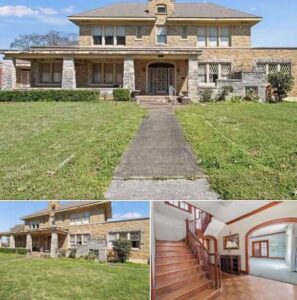
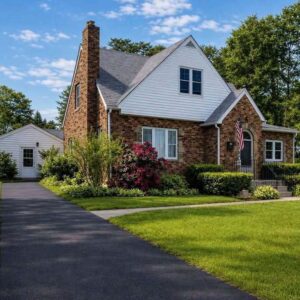
At first glance, the historic home at 1778 Jackson Avenue in Memphis, Tennessee, looks like a beautiful residence from another era.
Its large footprint, mature surroundings, traditional architecture, and historic details immediately give it a distinctive character.
Built in 1930, the property sits within the Vollintine Evergreen Historic District, an area known for older homes and architecture that reflects important chapters of Memphis history.
But this particular house has something that makes it far more unusual than an ordinary historic residence.
Hidden beneath the home is a private chapel.
Yes, a chapel.
Not simply a small room that could be used for meditation or prayer, but a dedicated space that gives the property a sense of mystery and history unlike most houses on the market.
The discovery becomes even more interesting when you consider the size of the property.
The residence offers approximately 4,370 square feet of living space on a generous 0.71-acre corner lot consisting of three separate parcels.
That amount of land is substantial for a historic city property.
From the outside, the house has the kind of presence that immediately makes you wonder about the people who once lived there.
Inside, the rooms continue that impression.
The home features five bedrooms and four bathrooms, providing enough space for a large household or someone looking for a property with room for restoration and customization.
Several of the rooms retain historic elements, including partial hardwood flooring and two fireplaces.
Those details help preserve the atmosphere of an older Memphis home while leaving room for a future owner to make the property their own.
Historic houses often come with an interesting balance.
They can have beautiful craftsmanship and architectural details that are difficult to reproduce today, but they can also require significant maintenance and thoughtful renovation.
This home appears to offer both possibilities.
Someone could approach it as a restoration project, preserving its character while updating the systems and finishes.
Another owner might prefer to modernize selected areas while keeping the features that make the house distinctive.
But the main residence isn’t the only reason the property stands out.
It also includes a separate in-law suite with a full kitchen.
That feature adds a surprising amount of flexibility.
A family could use it as private accommodation for relatives.
Guests could stay there without occupying the main house.
Someone working from home might transform it into a spacious private office or studio.
It could also provide a separate living arrangement for an adult family member who wants independence while remaining close to relatives.
Then there is another structure on the property.
A detached garage apartment provides additional living space.
Having a separate apartment on a historic residential property can create possibilities that go well beyond what a typical five-bedroom home offers.
Together, the main residence, in-law suite, and detached apartment make the property feel almost like a collection of interconnected living spaces rather than a conventional house.
Yet even with all those features, the basement chapel remains the detail that captures the imagination.
Walking into a basement and discovering a chapel is not something most homeowners expect.
Basements are usually associated with storage rooms, mechanical equipment, laundry areas, workshops, recreation rooms, or unfinished spaces.
A chapel is entirely different.
It suggests that the space was created with a specific purpose in mind.
It also raises questions.
Who built it?
Why was it included in the house?
Who worshiped there?
Was it used regularly?
Was it intended for the family, for friends, or for a larger group?
And how many people have stood inside that room over the decades?
Those questions are part of what makes historic properties so fascinating.
A house can tell you what it looks like today, but it cannot always tell you immediately why certain rooms exist.
The chapel may have been part of a family’s religious life.
It may have been connected to the history of the neighborhood.
It could have been a private place for reflection and worship.
Without knowing every detail of its past, the room still provides an unusual connection to the people who lived in the house before.
Imagine entering that basement decades ago.
The rest of the city would have continued moving outside.
Cars would have passed along Jackson Avenue.
Neighbors would have gone about their daily routines.
But below this private residence, people could gather in a quiet room specifically designed for worship.
That contrast is what makes the property memorable.
The house also offers an interesting glimpse into how residential architecture can reflect the needs and values of a particular period.
A large property could accommodate multiple generations.
Separate living spaces could allow relatives to remain close while maintaining privacy.
And a private chapel could become the spiritual center of the household.
Today, lifestyles are different.
Many buyers prioritize open floor plans, modern kitchens, energy efficiency, large closets, and entertainment spaces.
Yet historic homes can offer something modern construction often cannot easily reproduce: a sense of accumulated history.
Every unusual room adds another layer to that story.
In this case, the chapel is particularly powerful because it isn’t simply decorative.
It is a reminder that the home once served purposes beyond sleeping, eating, and entertaining.
It was also a place where people apparently came to reflect, pray, or gather in a more personal setting.
The property itself is located in an established Memphis neighborhood, adding another layer of historical context.
Memphis has experienced enormous changes throughout the twentieth and twenty-first centuries.
Neighborhoods have evolved, businesses have come and gone, and generations of families have moved through the city.
A house that has survived since 1930 has therefore witnessed almost a century of change.
The people who originally walked through its doors lived in a very different Memphis.
The automobiles were different.
Technology was different.
Daily life was different.
And yet the house remained.
Its fireplaces still provide visual reminders of earlier decades.
Its hardwood floors preserve traces of the home’s original character.
Its large rooms demonstrate how residential expectations have changed over time.
And beneath it all sits the chapel.
For a potential buyer, the property could become almost anything.
It could remain a historic family residence.
It could be carefully restored.
The additional living spaces could accommodate relatives or guests.
The detached apartment could become a private retreat.
And the chapel could be preserved as one of the home’s most distinctive features.
A creative owner might even turn it into a library, meditation room, music room, or personal study while maintaining its original character.
But perhaps the most appealing option would be to leave it exactly as it is.
There is something special about entering an old room and knowing that generations of people may have gathered there for reasons that had nothing to do with real estate value.
The chapel gives the property a story.
And stories are often what make historic homes unforgettable.
Many houses can offer five bedrooms.
Many have fireplaces.
Some have guest suites or detached apartments.
Far fewer can say they have a private chapel hidden beneath the main residence.
That one feature transforms the way you look at the entire property.
Instead of seeing only an older house that needs updating, you begin to wonder about its past.
Who stood in those rooms?
Who sat beside those fireplaces?
Who walked down the basement stairs?
Who gathered in the chapel?
And what memories remain hidden within the walls?
That is the appeal of historic architecture.
A modern house may be beautiful because everything is new.
A historic house can be beautiful because nothing about its story is completely new.
Every detail has a past.
At 1778 Jackson Avenue, the unusual combination of a large historic residence, additional living spaces, a detached garage apartment, and a basement chapel creates a property that is difficult to forget.
The chapel is more than an unexpected architectural feature.
It is a doorway into the home’s mystery.
And perhaps someday, a new owner will uncover more of the story behind it.