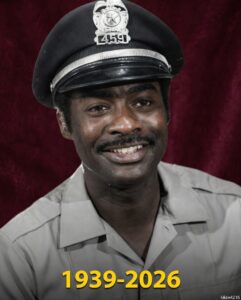
A Foundation Built in Theatre
Before his screen career began, Bernard developed his skills in the demanding environment of stage performance in Philadelphia. Theatre is an unforgiving teacher. There are no second takes, no edits, and no distance between actor and audience. Every gesture must be intentional, every line grounded in truth, and every silence meaningful.
It was in this setting that Bernard learned the habits that would define his professional identity. Preparation was not optional; it was essential. Consistency mattered more than improvisation for its own sake. And perhaps most importantly, he learned that the integrity of the performance mattered more than individual attention.
These early experiences shaped his understanding of acting not as a pursuit of fame, but as a responsibility to the story being told.
Transitioning to Television’s Expanding World
As television entered a period of rapid expansion, offering new creative opportunities and reaching increasingly broad audiences, Bernard made the transition from stage to screen. Unlike some performers who struggled with the shift, he adapted with quiet ease.
He did not attempt to exaggerate his presence for the camera. Instead, he refined it. Where theatre had required projection, television demanded restraint. Where stage acting emphasized physicality, screen performance required subtle emotional calibration. Bernard understood this difference instinctively.
Rather than reinventing himself, he translated what he already knew into a new medium. That continuity gave his performances a grounded quality that made even small roles feel real and lived-in.
A Career Defined by Reliability, Not Spectacle
Throughout the 1970s and 1980s, Bernard appeared in numerous television productions during a time often considered a golden era of episodic storytelling. Series such as Police Woman and The White Shadow benefited from his presence, not because he dominated scenes, but because he stabilized them.
He often played characters that existed within larger narrative frameworks—officers, coaches, professionals navigating complex social environments. These were roles that required believability more than theatrical flair. Bernard’s strength lay in making these characters feel grounded without drawing attention to the mechanics of performance.
Directors valued actors like him because they anchored scenes. Fellow performers trusted him because he listened as much as he spoke. In ensemble storytelling, that kind of presence is invaluable.
He was not an actor who reshaped a show’s identity through celebrity. He was one who reinforced its credibility through consistency.
The Quiet Craft of Supporting Performance
In many ways, Bernard’s career illustrates an often-overlooked truth about television: not every contribution is meant to stand at the center. Some are designed to support, to enhance, and to give dimension to the world being created.
His performances rarely sought to overshadow. Instead, they supported tone, rhythm, and emotional realism. This approach requires discipline. It also requires humility—an understanding that storytelling is collective rather than individual.
There is a temptation in entertainment culture to measure success through visibility. Bernard’s career challenges that assumption. His body of work demonstrates that longevity, respect, and craftsmanship can be equally meaningful markers of achievement.
A Personal Life Grounded in Stability and Faith
Outside of his professional life, Bernard maintained a strong commitment to simplicity and personal grounding. He did not appear to seek the volatility often associated with the entertainment industry. Instead, he prioritized stability, family, and personal faith.
These values shaped how he navigated both success and change. While his career required engagement with a fast-moving and often unpredictable industry, his personal life remained anchored in routine and reflection.
He valued time at home, everyday structure, and relationships that existed outside the demands of performance. This separation between public work and private life allowed him to sustain a sense of balance that many in the industry struggle to maintain.
Faith, in particular, played a meaningful role in shaping his perspective. It provided continuity during periods of change and offered a framework for understanding both success and loss.
Loss and Withdrawal from Public Life
As with many long careers, Bernard’s later years were shaped by personal transition and loss. After the passing of his wife, with whom he shared many years of marriage, he gradually stepped away from public visibility.
This withdrawal was not dramatic or performative. It reflected a natural shift in priorities. Having spent decades contributing to a demanding industry, he chose to focus on reflection, family, and personal peace.
There is a quiet strength in that kind of decision. It reflects an understanding that identity is not solely defined by professional output. Instead, it acknowledges that life has multiple chapters, each with its own purpose.
A Legacy Without Noise
Ed Bernard’s legacy is not defined by headline roles or widely publicized accolades. Instead, it is embedded in the structure of the shows he contributed to and the consistency of his craft.
For many viewers, his name may not be immediately recognizable. Yet his performances likely are. He represents a category of actor whose work forms the foundation of television storytelling—supporting narratives, grounding scenes, and enriching the realism of fictional worlds.
This kind of legacy is often quieter, but it is no less enduring.
Redefining Success in Performance
Bernard’s career invites a broader reconsideration of what success in acting truly means. In a culture that often equates achievement with fame, visibility, or leading roles, his path offers an alternative model.
Success, in his case, can be understood through:
- Longevity across changing eras of television
- Respect from peers and collaborators
- Consistent delivery of grounded, believable performances
- Commitment to craft over personal spotlight
- A stable integration of professional and personal life
These qualities do not always generate headlines, but they create lasting value within the art form itself.
The Enduring Value of Subtle Presence
One of the most important contributions actors like Bernard make is the normalization of authenticity on screen. Not every character needs to be amplified or dramatized. Some need to feel real—like people audiences might encounter in everyday life.
His performances often carried that quality. They did not demand attention, but they rewarded it. In doing so, they helped shape the tone of the productions he was part of, contributing to a more believable and immersive viewing experience.
Conclusion: A Life of Quiet Importance
Ed Bernard’s story is ultimately one of steadiness in an industry defined by change. He did not chase reinvention for its own sake. He did not rely on spectacle to define his career. Instead, he built a life and body of work grounded in discipline, humility, and respect for storytelling.
His contributions remind us that the architecture of television history is not built solely by its stars, but also by the countless performers who give shape, depth, and realism to every scene.